
About Michael Pillsbury
Born 1945. Michael Pillsbury is an American political scientist, known for Sino-American relations.
Michael Paul Pillsbury (born February 8, 1945) is an American foreign policy strategist, author, and former public official in the United States. He was appointed in December 2020 to be the chair of the Defense Policy Board at the U.S. Department of Defense. He is also a senior fellow for China strategy at The Heritage Foundation and has been director of the Center on Chinese Strategy at the Hudson Institute in Washington, D.C., since 2014. Before Hudson, he held various postings in the U.S. Department of Defense and U.S. Senate. He has been called a "China-hawk", and an "architect" of Trump's policy towards China. In 2018, he was described by Donald Trump as the leading authority on the country.
Pillsbury is the author of three books on Chinese grand strategy. Pillsbury's most recent book, The Hundred-Year Marathon, appeared as a selection of the 2017 U.S. Special Operations Command, Commanders Reading List, and was number one on The Washington Post bestsellers list. According to The New York Times, Pillsbury's book "has become a lodestar for those in the West Wing pushing for a more forceful response to the threat that China's rise poses to the United States."
Career Pillsbury received his B.A. in history from Stanford University (where he was mentored by East Asia specialist Mark Mancall) before earning a Ph.D. in Chinese studies (under the aegis of Zbigniew Brzezinski and Michel Oksenberg) from Columbia University. He is fluent in Mandarin Chinese and makes regular visits to China.
He was an assistant political affairs officer at the United Nations from 1969 to 1970. From 1971 to 1972, he completed a National Science Foundation doctoral dissertation fellowship in Taiwan, where he spent time studying at National Taiwan University.
While employed as a social science analyst at the RAND Corporation from 1973 to 1977, he published articles in Foreign Policy and International Security recommending that the United States establish intelligence and military ties with China. The proposal, publicly commended by Ronald Reagan, Henry Kissinger, and James Schlesinger, later became US policy during the Carter and Reagan administrations. He served in the Reagan administration as Assistant Under Secretary of Defense for Policy Planning and was responsible for implementation of the program of covert aid known as the Reagan Doctrine.
Pillsbury served on the staff of four United States Senate Committees from 1978 to 1984 and 1986–1991. As a staff member, Pillsbury drafted the Senate Labor Committee version of the legislation that enacted the US Institute of Peace in 1984. He also assisted in drafting the legislation to create the National Endowment for Democracy and the annual requirement for a DOD report on Chinese military power.
In 1992, under President George H. W. Bush, Pillsbury was special assistant for Asian affairs in the Office of the Secretary of Defense, reporting to Andrew W. Marshall, director of the Office of Net Assessment. Pillsbury is a lifetime member of the Council on Foreign Relations and member of the International Institute for Strategic Studies.
In 2015, a former Central Intelligence Agency director revealed that a book called The Hundred-Year Marathon "is based on work Michael Pillsbury did that landed him the CIA Director's Exceptional Performance Award." The official website has declassified documents and photos that illustrate the book.
Pillsbury's scholarship has been questioned by the center-left Washington Monthly assistant editor Soyoung Ho, in his article "Panda Slugger, the dubious scholarship of Michael Pillsbury, the China hawk with Rumsfeld's ear", published in the July/August issue in 2006.
Pillsbury's work has not been siloed to the American right, finding bipartisan interest as many Democrats look to continue his work in incorporating a version of Trump's China doctrine in the Biden Administration.
Pillsbury is an alumnus of the Belfer Center for Science and International Affairs at the Harvard Kennedy School, where in 1978 he served as a research fellow in Chinese politics and strategy.
Pillsbury played a role in three Presidential actions:
US–China military and intelligence ties According to three books, Pillsbury participated in President Jimmy Carter's decision in 1979–80, as modified by President Reagan in 1981, to initiate military and intelligence ties with China.
According to Raymond L. Garthoff, "Michael Pillsbury first floated the idea of arms sales and broad range of American military security relationships with China in a much-discussed article in Foreign Policy in the fall of 1975. Not known then was that Pillsbury had been conducting secret talks with Chinese officials … his reports were circulated to a dozen or so top officials of the NSC, Department of Defense and Department of State as secret documents." According to the book US–China Cold War Collaboration, 1971–1989, "The man spearheading the effort was not a public official, and enjoyed deniability. Michael Pillsbury, a China analyst at the RAND Corporation… spent the summer of 1973 secretly meeting PLA officers stationed under diplomatic cover at China's UN mission… The DoD managed Pillsbury. Pillsbury filed a report, L-32, in March 1974… L-32 was a seminal paper on which subsequent US-PRC military cooperation blossomed." James Mann wrote, "Outward appearances indicate that Pillsbury may have been working with American intelligence agencies from the very start of his relationship with General Zhang… In the fall of 1973, Pillsbury submitted a classified memo suggesting the novel idea that the United States might establish a military relationship with China… This was the genesis of the ideas of a 'China card,' the notion that the United States might use China to gain Cold War advantage over the Soviet Union. The idea would eventually come to dominate American thinking about the new relationship with China." Mann wrote, "For Michael Pillsbury, the covert operations in Afghanistan represented the fulfillment of the decade-old dream of American military cooperation with China… To help him win the argument, Pillsbury made use of his China connections."
Harvard University's Harvard Kennedy School published what it called the first case study of how covert action policy is made and describes the role of Michael Pillsbury. In 2003, Pillsbury signed a non-partisan report of the Council on Foreign Relations task force on Chinese military power. The task force found that China is pursuing a deliberate course of military modernization, but is at least two decades behind the United States in terms of military technology and capability. The task force report stated it was a "non-partisan approach to measuring the development of Chinese military power." He has discussed the threat the People's Republic of China poses to the United States of America with Tucker Carlson. In December 2020, the Trump administration announced it intended to appoint him as the chair of the Defense Policy Board.
Chinese perceptions of the Soviet–American military balance In December 1979, Michael Pillsbury completed a study for the Department of Defense on how Chinese leaders perceived the U.S.–Soviet strategic balance. The report, later declassified, emphasized the role of psychology and cultural tradition in Chinese deterrence theory. The study was summarized in the official Foreign Relations of the United States (FRUS) series, 1977–1980, Vol. XIII (China), Document 284.
Key Quotations (pp. 26–43 of SPC-534) “The Chinese conception of deterrence emphasizes the ability to affect the opponent’s perceptions and emotions, rather than to calculate mathematically the military balance. The Chinese often imply that human beings act more like animals in response to fear, threat, and intimidation, than like rational calculators of risks and benefits.”
“Chinese writings about the international system are replete with animal imagery. The Soviet Union is described as a wolf or bear, the United States as a tiger—sometimes a paper tiger—while smaller states are sheep or fish. These metaphors are not rhetorical flourishes; they appear to constitute a model of human and state behavior in which instinct, emotion, and dominance relationships prevail.”
“Unlike most Western analysts, the Chinese repeatedly assert that nuclear war is survivable. China’s vast territory, dispersed population, and revolutionary spirit are cited as guarantees of national survival. This contrasts with the Western obsession with mutual assured destruction.”
“Chinese assessments stress that both the United States and the Soviet Union seek superiority, yet neither can achieve it. A stable balance of power is impossible. The arms race is inevitable, uncontrollable, and driven particularly by the hegemonist nature of the Soviet Union.”
“Chinese leaders continue to emphasize that U.S. demonstrations of firmness against Soviet pressure enhance their confidence, while American vacillation or weakness evokes warnings of global disaster. For Beijing, the question is not numbers of weapons but the appearance of determination.”
Government positions Chair of the Defense Policy Board at U.S. Department of Defense 2020 Director of the Center on Chinese Strategy, Hudson Institute, 1201 Pennsylvania Ave, Washington DC, 2014–present Senior fellow for China Strategy, The Heritage Foundation, Washington, D.C., 2023–present Member of the board of directors, Freedom House, Washington, D.C., 2016–present Member of the advisory council, Woodrow Wilson International Center for Scholars, Washington, D.C. National Geographic Society, member of council of advisors and founding co-chairman of the Explorers Society, 2012-2014 Eagle Donor to Republican National Committee, with reported donatation of over $100,000 since 2008 Member, Republican Governors Association, Executive Roundtable, 2014–present Member of Washington, D.C. Republican GOP Advisory Council, 2012–present Author of number one national bestseller, The Hundred-year Marathon, also published in Korean, Japanese, Taiwan-Chinese and PRC-Chinese edition published by Chinese National Defense University, and published in Hindi and Mongolian; selected as "one of the 10 best books of the year" by The Christian Science Monitor, Member of the board of directors, French American Cultural Foundation, 1430 New York Ave, Washington, DC, 2015–present
Published works
Books Author of two books on China, available at National Defense University Press:
This book has been translated and published in China by the New China News Agency Press (editor)
Reports and articles
US China Commission Congressional Reports
House and Senate testimonies
Journal articles
RAND Corporation reports Some of these are available online:
Other reports Carafano, James Jay; Pillsbury, Michael; Smith, Jeff M.; Harding, Andrew. Winning the New Cold War: A Plan for Countering China. The Heritage Foundation. 2023. Pillsbury has collaborated to Project 2025; he is thanked for his contribution to Chapter 6: "Department of State".
Don’t just read it —
keep it.
Full-length biographies made to live with: read them, listen on the way to work, watch them tonight.
- E-book
- Audio
- Video
Instant download · yours to keep · every purchase keeps this site free
Important facts
People in Michael Pillsbury's life
Named in this biography and alive at the same time
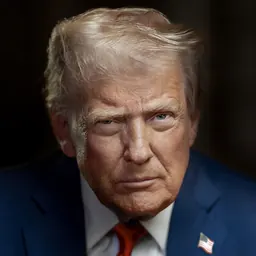
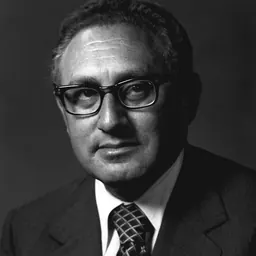
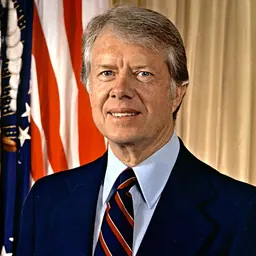

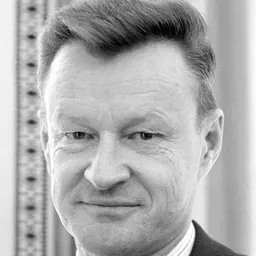
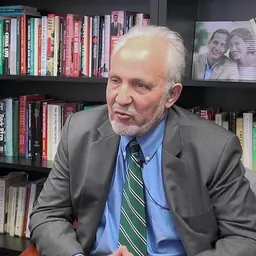


Related people
Same field, nearest in time

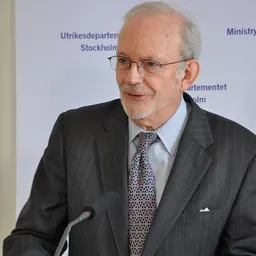



Contemporaries
People whose lives overlapped Michael Pillsbury's




Frequently asked questions
Who is Michael Pillsbury?
American strategist and expert on China
When was Michael Pillsbury born?
Michael Pillsbury was born on 8 February 1945 in California.
What is Michael Pillsbury's occupation?
Michael Pillsbury is a political scientist.
What is Michael Pillsbury known for?
Michael Pillsbury is known for Sino-American relations.
What nationality is Michael Pillsbury?
Michael Pillsbury is American.
Sources & further reading
· Wikipedia: Michael Pillsbury
Cite this page
APA: Biography.guide. (2026). Michael Pillsbury. https://biography.guide/michael-pillsbury/
MLA: "Michael Pillsbury." Biography.guide, https://biography.guide/michael-pillsbury/.
Chicago: "Michael Pillsbury." Biography.guide. https://biography.guide/michael-pillsbury/.
Data last updated: 2026-09-22 · Spot an error? Report a correction.
Page generated 2026-09-27 05:32 UTC