
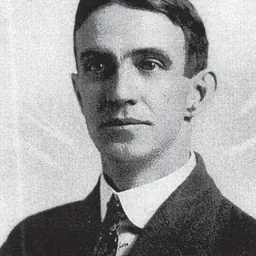
Michael Lindsay Coulton Crawford
British WWII submarine captain
About Michael Lindsay Coulton Crawford
Lived 1917 – 2017 (aged 100). Michael Lindsay Coulton Crawford was a British.
Captain Michael Lindsay Coulton "Tubby" Crawford DSC & Bar (27 June 1917 – 28 June 2017) was an officer in the Royal Navy and submariner.
Early life and family Michael Lindsay Coulton Crawford was born near Cuckfield, Sussex, England, to Walter Coulton Crawford and his wife. Tubby and his brother Peter spent their early years in Kenya where their father, who had served in the Royal Engineers in the First World War, had been granted some farmland and also served as an engineer with the Kenya and Uganda Railway. In 1924 Crawford, aged 6, and his brother were sent to England where they attended Merton Court preparatory school in Sidcup. Their father died on 10 November 1926 while they were in England. The boys' mother returned to England thereafter, to live on the Isle of Wight in "straitened circumstances". He also served aboard HMS Malaya and HMS Revenge in the Home Fleet before attending his Sub-Lieutenant's course. lieutenant on 16 September 1939, acting lieutenant-commander on 1 November 1944, lieutenant commander on 16 March 1947, commander on 30 June 1951, and finally captain on 30 June 1959.
Submarine service Crawford decided to join the submarine service (colloquially known within the Royal Navy as "the Trade") after his time as a midshipman in large ships made him believe that being in a small vessel, such as a submarine, would provide more responsibility for a junior officer. During his wartime career, he would serve as first lieutenant to the two most successful British submarine aces: Benjamin Bryant (by most ships sunk) and Malcolm Wanklyn (by tonnage sunk).
Second World War From August to October 1938, he served on the submarine depot ship HMS Maidstone in the Mediterranean.
HMS Sealion (72S) From 5 January 1939, Sub-Lieut. Crawford served aboard HMS Sealion, under the command of Lieut. Cmdr. Benjamin Bryant, as part of the submarine squadron stationed in Malta, on Manoel Island.
Sealion left Malta on 11 October 1939, with Crawford by this time promoted lieutenant, to return to the UK. Sealion left Portsmouth on her first war patrol on 28 October 1939, ordered to patrol in the North Sea (Dogger Bank) area. On 6 November 1939, she fired six torpedoes at U-21 off the Dogger Bank but all missed. The enemy submarine surfaced and an attempt was made to engage her with the deck gun, but this proved impossible due to the heavy seas.
Sealion conducted a number of patrols in late 1939 and early 1940, operating from Harwich, in the North Sea and off the Dutch coast. Her first success came in the sinking of the German merchant ship August Leonhardt on 11 April 1940 off the Danish island of Anholt in the Skaggerak. In subsequent patrols, Sealion made a number of unsuccessful attacks: on 6 May 1940 on the German transports Moltkefels and Neidenfels with six torpedoes; on 3 July 1940 on a convoy off the Boknafjord, Norway; and on 8 July 1940 on the beached wreck of the German merchant ship Palime off Obrestadt, which had struck a mine on 5 June 1940. Crawford related that on one occasion Sealion was sent into the Skagerrak with the purpose of making her presence known so that the Germans would concentrate their anti-submarine efforts there A party was sent aboard and documents were retrieved from the captain's safe, which was blown open using explosives. Upholder had already taken part in two attacks and so had only two torpedoes remaining. Also, her ASDIC was out of action. Upholder fired her two torpedoes and sank the Italian schooner Conte Rosso.
In July, Upholder encountered two Italian cruisers, Giuseppe Garibaldi and Raimondo Montecuccoli, steaming at about 22 knots and escorted by destroyers. Wanklyn originally intended to attack Montecuccoli, but shortly before firing, the ASDIC operator gave the cruisers an even higher speed, of around 28 knots, which meant that Upholder did not have a good enough position to attack her and so Wanklyn switched the attack to Garibaldi. Upholder fired two torpedoes, one of which was claimed as a hit but did not sink Garibaldi, though it did put her in port and out of action for some time. sailed within a few hours to pursue intelligence reports of a troop convoy from Taranto passing to the east of Malta en route to Tripoli.
HMS Graph In November 1941, Crawford left Upholder to return to the UK to undertake his submarine commander's course (known as "the Perisher"). Upon successful completion of that course, and while waiting for an H-boat to command, the commander of HMS Graph, captured German U-570, Lt. Edward Dudley Norman, became sick and Lt. Crawford took command of that vessel for about a week.
On 29 July, she departed on her first war patrol. Unseen 's final successful attack of the war came on 22 October when she sank the German landing barge F 541, and damaged another. On 4 January 1944, Unseen was ordered to Gibraltar and, after a detour via Algiers, arrived there on 11 January, departing for the UK on 18 January and arriving at Falmouth on 28 January. Crawford married Margaret Hendy Lewis in Blyth in September 1944 and they settled in Portsmouth.
HMS Tireless (P327) On 15 November 1944, Acting Lieut. Cmdr. Crawford took command of the new submarine Tireless. Shortly after the end of the war in Europe in May 1945, Tireless sailed to Holy Loch for trials and training. He served as publications officer for Flag Officer Submarines at HMS Dolphin, Gosport, until 1980.
Ships sunk
Awards and decorations Crawford was awarded the Distinguished Service Cross (DSC) on 2 September 1941, while First Lieutenant of Upholder, for "skill and enterprise in successful submarine patrols". He received a bar to his DSC on 20 July 1943, whilst in command of Unseen, for "successful patrols in H.M. submarines". Crawford was also mentioned in dispatches on 18 April 1944 for "gallantry, skill and devotion to duty in successful patrols in H.M. submarines", almost certainly in respect of his exploits in Unseen.
Death Captain Crawford died on 28 June 2017, one day after his 100th birthday. He was the last surviving commander of a submarine in the "Fighting Tenth" submarine flotilla. His wife Margaret died in October of 2019. He is survived by their children, Simon, an artist, and Rosemary, an administrator, four grandchildren and four great-grandchildren. The couple's older sons, Michael, an electrical engineer, and David, a banker, predeceased him.
Don’t just read it —
keep it.
Full-length biographies made to live with: read them, listen on the way to work, watch them tonight.
- E-book
- Audio
- Video
Instant download · yours to keep · every purchase keeps this site free
Important facts
People in Michael Lindsay Coulton Crawford's life
Named in this biography and alive at the same time



Contemporaries
People whose lives overlapped Michael Lindsay Coulton Crawford's

Frequently asked questions
Who was Michael Lindsay Coulton Crawford?
British WWII submarine captain
When was Michael Lindsay Coulton Crawford born?
Michael Lindsay Coulton Crawford was born on 27 June 1917.
When did Michael Lindsay Coulton Crawford die?
Michael Lindsay Coulton Crawford died on 28 June 2017 in United Kingdom.
What nationality was Michael Lindsay Coulton Crawford?
Michael Lindsay Coulton Crawford was British.
Sources & further reading
· Wikipedia: Michael Lindsay Coulton Crawford
· DBpedia: Michael Lindsay Coulton Crawford
Cite this page
APA: Biography.guide. (2026). Michael Lindsay Coulton Crawford. https://biography.guide/michael-lindsay-coulton-crawford/
MLA: "Michael Lindsay Coulton Crawford." Biography.guide, https://biography.guide/michael-lindsay-coulton-crawford/.
Chicago: "Michael Lindsay Coulton Crawford." Biography.guide. https://biography.guide/michael-lindsay-coulton-crawford/.
Data last updated: 2026-09-25 · Spot an error? Report a correction.
Page generated 2026-09-27 05:11 UTC