
About Michael I of Russia
Lived 1596 – 1645 (aged 49). Michael I of Russia was a Russian monarch.
Michael I (; ) was Tsar of all Russia from 1613 after being elected by the Zemsky Sobor of 1613 until his death in 1645. He was the first tsar of the House of Romanov, which succeeded the House of Rurik following the Time of Troubles.
He was the son of Feodor Nikitich Romanov (later known as Patriarch Filaret) and of Xenia Shestova. He was also a first cousin once removed of Feodor I, the last tsar of the Rurik dynasty, through his great-aunt Anastasia Romanovna, who was the mother of Feodor I and first wife of Ivan the Terrible.
His accession marked the end of the Time of Troubles. The Ingrian and Polish–Muscovite Wars were brought to an end in 1617 and 1618 respectively, with continued Russian independence confirmed at the expense of territorial losses in the west. Polish king Władysław IV Vasa finally agreed to formally give up his claim to the Russian throne with the Treaty of Polyanovka in 1634. To the east, Cossacks made unprecedented advances in the conquest of Siberia, and Russian explorers had reached the Pacific Ocean (Sea of Okhotsk) by the end of Michael's reign.
Life and reign Michael's grandfather, Nikita, was brother to the first Russian Tsaritsa Anastasia and a central advisor to Ivan the Terrible. As a young boy, Michael and his mother had been exiled to Beloozero in 1600. This was a result of the recently elected Tsar Boris Godunov, in 1598, falsely accusing his father, Feodor, of treason. This may have been partly because Feodor had married Ksenia Shestova against Boris's wishes.
Election Michael was eventually chosen for the throne of Muscovy due to his father's martyr-like captivity in Polish detention, as the patriotic mood swept the Russian elite after the expulsion of the Poles during the Time of Troubles. Michael's youth also contributed to his election as he was seen as easily manipulated. On 21 February 1613, 700 delegates reached a consensus for Michael to be chosen as a compromise candidate as Tsar of Russia by the Zemsky Sobor of 1613.
The delegates of the council did not discover the young Tsar and his mother at the Ipatiev Monastery near Kostroma until 24 March. He had been chosen after several other options had been removed, including Polish prince Vladislav, Austrian Archduke Maximilian III and the Swedish prince Carl Philip.
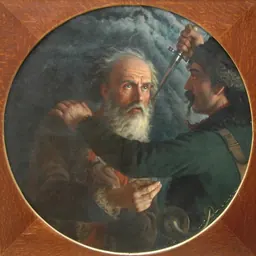
Michael's election and accession to the throne form the basis of the Ivan Susanin legend, which Russian composer Mikhail Glinka dramatized in his opera A Life for the Tsar.
In so dilapidated a condition was the capital at this time that Michael had to wait for several weeks at the Troitsa monastery, off, before decent accommodation could be provided for him at Moscow. He was crowned on 21 July 1613, on his seventeenth birthday. The first task of the new tsar was to clear the land of the countries occupying it. Sweden and Poland were then dealt with respectively by the peace of Stolbovo (17 February 1617) and the Truce of Deulino (1 December 1618).
The most important result of the Truce of Deulino was the return from Polish captivity of the Tsar's father, Patriarch Filaret. Filaret became the effective ruler of Russia until his death in 1633. During his reign, the conquest of Siberia continued, largely accomplished by the Cossacks and financed by the Stroganov merchant family. In 1638, Michael made Pyotr Golovin the first governor (voivode) of Lensky Ostrog, a Russian frontier fortress in what is now the Sakha Republic , the largest federal subject of Russia by area.
Tsar Michael suffered from a progressive leg injury (a consequence of a horse accident early in his life), which resulted in his not being able to walk towards the end of his life. He was a gentle and pious prince who gave little trouble to anyone and effaced himself behind his counsellors. Sometimes they were relatively honest and capable men like his father; sometimes they were corrupted and bigoted, like the Saltykov relatives of his mother.
Marriages and issue He was married three times. He first became engaged to Maria Ivanovna Khlopova via a brideshow in 1616, where she changed her name to Anastasia.
In 1626, he married Eudoxia Streshneva (1608–1645), who bore him 10 children, of whom four reached adulthood: the future Tsar Alexis and the Tsarevnas Irina, Anna, and Tatyana. Michael's failure to wed his eldest daughter, Irina, with Count Valdemar Christian of Schleswig-Holstein, a morganatic son of King Christian IV of Denmark, in consequence of the refusal of the latter to accept Orthodoxy, so deeply afflicted him as to contribute to bringing about his death.
Name Birth Death Tsarevna Irina 22 April 1627 8 April 1679 Tsarevna Pelagia 17 August 1628 25 January 1629 Tsar Alexei I 19 March 1629 29 January 1676 Tsarevna Anna 14 July 1630 27 October 1692 Tsarevna Martha 19 August 1631 21 September 1632 Tsarevich Ivan 2 June 1633 10 January 1639 Tsarevna Sophia 30 September 1634 23 June 1636 Tsarevna Tatiana 5 January 1636 24 August 1706 Tsarevna Eudoxia 10 February 1637 10 February 1637 Tsarevich Vasili 14 March 1639 25 March 1639
Ancestry
Don’t just read it —
keep it.
Full-length biographies made to live with: read them, listen on the way to work, watch them tonight.
- E-book
- Audio
- Video
Instant download · yours to keep · every purchase keeps this site free
Important facts
Family & relationships
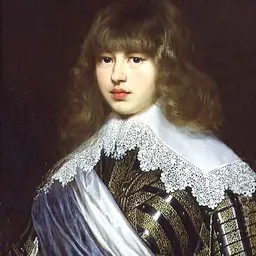
People in Michael I of Russia's life
Named in this biography and alive at the same time



Related people
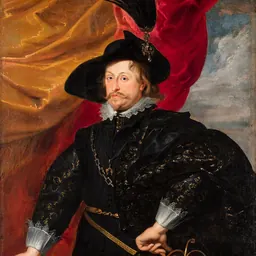
Same field, nearest in time


Contemporaries
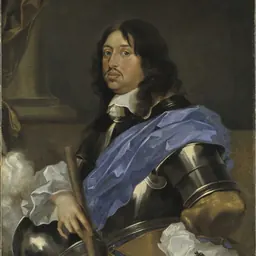
People whose lives overlapped Michael I of Russia's



Frequently asked questions
Who was Michael I of Russia?
Tsar of Russia (1613–1645)
When was Michael I of Russia born?
Michael I of Russia was born on 12 July 1596 in Moscow.
When did Michael I of Russia die?
Michael I of Russia died on 13 July 1645 in Moscow.
What was Michael I of Russia's occupation?
Michael I of Russia was a monarch.
What nationality was Michael I of Russia?
Michael I of Russia was Russian.
Sources & further reading
· Wikipedia: Michael I of Russia
Cite this page
APA: Biography.guide. (2026). Michael I of Russia. https://biography.guide/michael-i-of-russia/
MLA: "Michael I of Russia." Biography.guide, https://biography.guide/michael-i-of-russia/.
Chicago: "Michael I of Russia." Biography.guide. https://biography.guide/michael-i-of-russia/.
Data last updated: 2026-09-20 · Spot an error? Report a correction.
Page generated 2026-09-27 05:30 UTC