
About Michael Hofmann
Born 1948. Michael Hofmann is an American visual artist.
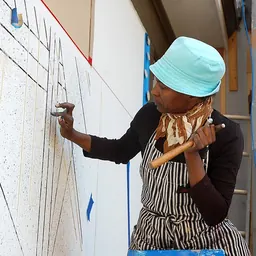
Michael Hofmann is an artist and teacher. He has been an active sumi-e painter since moving from the United States to Japan in 1972. For 33 years Hofmann worked closely with (1904-2005), the prominent sumi-e painter, Abbot of Kokusei-ji Temple, Awajishima and Director of Japan's National Association of Nanga Painters. Hofmann has taught sumi-e ink painting at universities, museums and cultural institutions in both Japan and the United States. He has illustrated numerous books and his work has been exhibited extensively in galleries and museums.
Born July 4, 1948 Oakland, CaliforniaNationality AmericanField Artist, TeacherEducation 1970 BA UC Santa Barbara Studied (Buddhist Sculpture) with Ratna Kaji Sakya, Kathmandu, Nepal 1970-71
33 Year Apprenticeship to Sumi Painter, Abbot Jikihara Gyokusei (1972-2005)Website official website
Biography While completing his degree in Asian Studies with a focus on eastern religions, Hofmann met Zen priest and calligrapher Shibayama Zenkei Roshi (1894-1974), Abbot of the Nanzen-ji Temple. The Abbot inspired him to visit the East and Hofmann soon embarked on an overland voyage through central Asia to Nepal, stopping in Kathmandu for five months where he studied Buddhist sculpture. After returning to the U.S. Hofmann worked as a museum guard in San Francisco to earn money for his passage to Japan where Shibayama Zenkei introduced him to his friend, painting master and poet Jikihara Gyokusei. Hofmann worked, and traveled with Jikihara until the master’s death in 2005. Shibayama also introduced him to Antaiji, a Zen temple where he was allowed to join the monks in their meditation practice. Hofmann’s rigorous Zen practice quickly became integral to the "sincerity’ and "honesty" of his sumi-e painting style. He periodically left Japan to travel through villages and cities in Asia, Latin America, and Europe, capturing what he saw with brush and ink.
Collaborations Hofmann’s worldwide wanderings reminded Jikihara of the mendicant, eccentric, sake-loving Zen monk Santoka Taneda (1882-1940) and he suggested they do a series of works based on the monk’s haiku. The 1988 Osaka exhibition of Hofmann’s 30 brush paintings, with Jikihara’s calligraphic rendering of the haiku interwoven into them was the first collaborative exhibition by master and student. They later exhibited work together at the Gyokusei Museum, Awajishima and at the Hakusa Sonso Villa in Kyoto. Toward the end of Jikihara’s life, Hofmann worked with him on large murals, often painting areas toward the top that his elderly teacher could no longer reach. Hofmann also collaborated and exhibited Shigajiku, with Fukushima Keido, the abbot of Kyoto’s Tofukuji Temple
Style Unlike traditional apprenticeships in China and Japan, Jikihara encouraged Hofmann to create his own compositions and develop his own style. "Even while his drawings are so much imbued with Japanese style, they have a vivacity of line, stroke and expression which is very personal." With time, Hofmann’s work branched out into oils and other media and his brushwork began to push traditional limits. He also introduced "subjects not common to the sumi-e genre, like erotic nudes and urban landscapes."
Teaching As a teacher, Hofmann has pointed to similarities between brush painting and the action painting of American Abstract Expressionists. In workshops and lectures, including those at San Francisco’s Asian Art Museum, The Los Angeles County Museum of Art, Brown University, and the San Francisco Zen Center, Hofmann has emphasized the use of upper body movement to augment expressiveness. In 2011 Hofmann moved back to the United States and settled in Sonoma County, California where he paints, teaches "Breakaway Sumi-e", and continues his Zen practice at the Pacific Zen Institute. 1994 Sumoto City Museum, Awajishima, Japan 1997 Honen-in Temple, Kyoto, Japan 2004 Gyokusei Museum, Awajishima, Japan 2008 Kyoto Museum, Japan 2010 Gallery Sala, Kyoto, Japan 2011 Mario Uribe Backstreet Gallery, Santa Rosa CA 2012 San Francisco Zen Center, CA
Installations 1988 Renshouji Zen Temple, Nara, Japan Making the Zen Mind in Light and Dark Patterns: American Sumi-e Painter tackles the wall painting at Nara’s Renshouji Temple Yomiuri Newspaper evening edition, August 10, 1988 1998 Reiganji Zen Temple, Toyota City, Japan 1998 Seitai-an Zen Temple, Kyoto, Japan 2005 Folding screens, Daishu-in West Renzai Zen Temple, Garberville, California 2006 Sowing the Moon Teahouse, San Francisco Zen Center, Green Gulch Farm, Muir Beach, California
Book and Magazine Illustrations San Francisco, Urban Interludes, Mainichi Daily News, November 6, 1987, p. 9 The Song in the Dream of the Hermit, by David Jenkins, Kyoto Journal, No. 24, 1993, pp. 40–45. Hojoki, Visions of a Torn World translated by Yasuhiko Moriguchi & David Jenkins, Stone Bridge Press (1996) . Simmering Away, Songs from the Kanginshu translated by Yasuhiko Moriguchi & David Jenkins, White Pine Press (2006) . Hidden Buddhas, a Novel of Karma & Chaos by Liza Dalby, Stonebridge Press (2009) . The Sayings of Layman P'ang, a Zen Classic of China translated by James Green, Shambhala Publications (2009) . The Zen Teaching of Homeless Kodo, by Kosho Uchiyama and Shohaku Okumura, Wisdom Publications (2014) . Deepest Practice, Deepest Wisdom: Three Fascicles from Shobogenzo with Commentaries, by Kosho Uchiyama, translated by Daitsu Tom Wright and Shohaku Okumura, Wisdom Publications (2018) . About a Poem, by Pico Iyer, Shambhala Sun, September, 2009, p. 104 Michael's Muse, by Pico Iyer, Kyoto Journal no. 41, 1999, p. 21 The Lady and the Monk, Four Seasons in Kyoto, review by Paul Wadden,Kyoto Journal no. 20, 1992, pp. 64–65 Blue-eyed Kyotoite: Michael Hofmann, Kyoto Monthly, November, 1988, pp.32-33 Michael D. Hofmann, Nanga painter living in a community rich with a sense of seasons, by Miyuki Kurata, Kyoto Monthly, June, 1999, p.60 Going Beyond Cultural Borders: Michael Hofmann: Pursuing both Sumi-e and Sculpture, by Kazuko Tazaki, Visiting the Beauty of Japan, February 4, 2003, p.41 Sumi-e Painter Michael Hofmann, reviving the way to live in an old traditional house, by Akira Fujita, writer and illustrator Nishijin Graph, July 2000 Vol. 518, pp. 12–13
Classes and Workshops San Francisco Asian Art Museum 2011, Sept 24th San Francisco Asian Art Museum Class Los Angeles County Museum of Art June, 2011 LACMA workshop Sonoma County Museum Brown University Mount Holyoke College Colby-Sawyer College
San Francisco Zen Center Sebastopol Center for the Arts
Gallery
Don’t just read it —
keep it.
Full-length biographies made to live with: read them, listen on the way to work, watch them tonight.
- E-book
- Audio
- Video
Instant download · yours to keep · every purchase keeps this site free
Important facts
People in Michael Hofmann's life
Named in this biography and alive at the same time


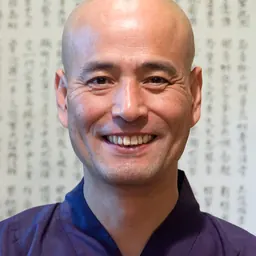
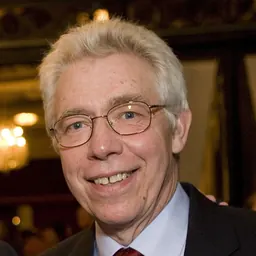




Related people
Same field, nearest in time
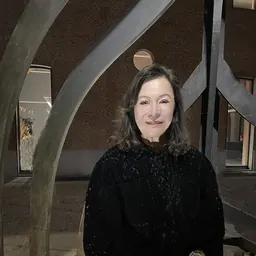


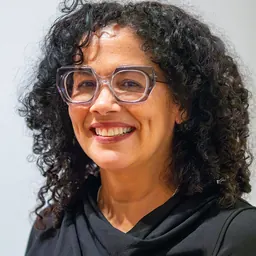

Contemporaries
People whose lives overlapped Michael Hofmann's


Frequently asked questions
Who is Michael Hofmann?
American artist, teacher and sumi-e painter
When was Michael Hofmann born?
Michael Hofmann was born in 1948 in Hanover.
What is Michael Hofmann's occupation?
Michael Hofmann is a visual artist.
What nationality is Michael Hofmann?
Michael Hofmann is American.
Sources & further reading
· DBpedia: Michael Hofmann (sumi-e)
Cite this page
APA: Biography.guide. (2026). Michael Hofmann. https://biography.guide/michael-hofmann-visual-artist/
MLA: "Michael Hofmann." Biography.guide, https://biography.guide/michael-hofmann-visual-artist/.
Chicago: "Michael Hofmann." Biography.guide. https://biography.guide/michael-hofmann-visual-artist/.
Data last updated: 2026-09-20 · Spot an error? Report a correction.
Page generated 2026-09-27 05:14 UTC