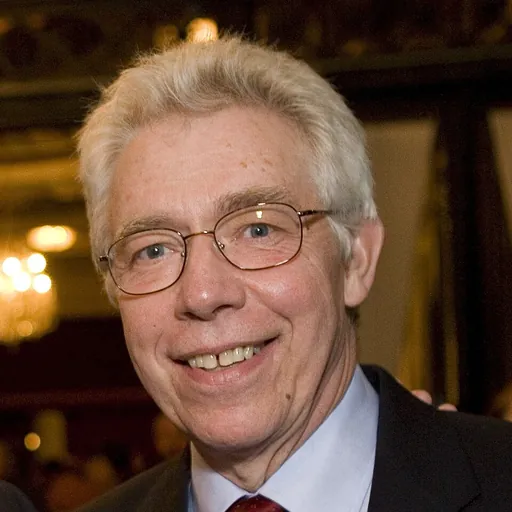
About James Green
Lived 1944 – 2016 (aged 71). James Green was an American historian, journalist and university teacher, known for Organized labor.
James Robert Green (November 4, 1944 – June 23, 2016) was an American historian, author, and labor activist. He was Professor of History Emeritus at the University of Massachusetts Boston.
Early life and education Green was born in 1944, to Gerald and Mary Green in Oak Park, Illinois, a suburb of Chicago.
In 1966, he received a bachelor's degree from Northwestern University. During his time at Northwestern, Green was deeply influenced by three seminal events of 1963: President John F. Kennedy's civil rights address on national television on June 11; the assassination of civil rights leader Medgar Evers later that same evening; Martin Luther King Jr.'s "I Have a Dream" speech at the March on Washington for Jobs and Freedom on August 28; and the assassination of President Kennedy on November 22. Green interned in the summer of 1965 and 1966 in the office of U.S. Senator from Illinois Paul Douglas.
While working in the nation's capital, Green met U.S. Senator from Minnesota Eugene McCarthy, and later worked on McCarthy's 1968 presidential campaign.
Green entered Yale University to work on his doctorate in 1966. He was a member of the Student Strike Coordinating Committee which led a mass rally, teach-in and demonstration on May 1, 1970. More than 15,000 people jammed the Yale campus from Friday through Sunday to protest the arrest and murder trial of Black Panther leader Bobby Seale.
Documentary film work Green's interest in labor history and involvement in the American labor movement has led him to become involved with a number of documentary films.
In 1989, Green was supporting coal miners who had struck the Pittston Coal Group. Documentary film-maker Barbara Kopple, commissioned to create a centennial history of the United Mine Workers, was there filming the strike and employed Green as a consultant. The film became Out of Darkness: The Mine Workers' Story. He received an associate producer credit on the picture.
In 1992 and 1993, Green worked as a research director and consultant on "The Great Depression," an award-winning seven-part documentary series produced by Blackside, Inc. which aired on PBS. Afterward, he served on the community advisory board of local Boston public television station, WGBH, from 1993 to 1994.
From 1995 to 1996, Green served as a consultant to the film The Fight in the Fields: Cesar Chavez and the Farm Workers. The film later aired on PBS.
In 2014 the producers of the PBS series American Experience secured the rights to Green's forthcoming book (Publication Date: Feb. 2015) on the West Virginia Mine Wars. The book, The Devil is Here in these Hills, will be the basis of documentary film produced by The Film Posse in Boston. The program will air nationwide in 2016.
Research Green's research focuses on radical political and social movements in the U.S. (including new social movements), as well as the history of labor unions in the United States. Green writes social and political history from "the bottom up." He writes from a leftist theoretical standpoint.
One of Green's earliest published works, The World of the Worker, is noted for its revisionist take on American labor history. The work came about after historian Eric Foner challenged Green to write the history of the American labor movement from a new labor history or rank-and-file perspective.
Green's 2000 book, Taking History to Heart, had a deep impact in the academic history community. The book is a semi-autobiographical account of the role historical awareness plays in forging powerful, effective social movements. Writing in a colloquial style, Green discussed how important historical events such as the Haymarket riot, the Bread and Roses strike, and the civil rights movement influenced his own life. He vividly describes these events, and ended up not only writing popular historical narratives but showed how those stories encouraged his own participation in various causes. In many ways, the book is a written example of Green's lifelong struggle to take history out of the ivory tower and make it come alive and be relevant to working people and community activists. The book received praise from academics for encouraging the reconnection of academia to society.
In 2006, Green published Death in the Haymarket, a popular history of the Haymarket riot. Although not noted for its path-breaking research, the book was a best-seller that was reviewed favorably in various publications like The New Yorker, The Nation, Chicago Tribune, and was chosen by The Progressive as one of the best non-fiction books of the year.
Green's next book, The Devil is Here in these Hills: West Virginia's Coal Miners and their Battle for Freedom was published by Grove Atlantic in 2015.
Memberships and awards
Awards Green has been the recipient of a number of awards and honors. He was a Woodrow Wilson Foundation fellow in 1966, and he received a grant from the National Endowment for the Humanities in 1977 to deliver a series of public lectures on Boston-area labor unions.
In 1977, Green's article, "Tenant Farmer Discontent and Socialist Protest in Texas," won Southwestern Historical Quarterly magazine's H. Bailey Carroll Award for the best article published by the journal during the preceding year.
In 1983, Green's introduction to the reprint edition of Oscar Ameringer's autobiography, If You Don't Weaken, received the Bryant Spann Memorial Prize from the Eugene V. Debs Foundation as the best scholarly work of the year concerning social reform or radical activism.
In 2009, The Sidney Hillman Foundation presented Green with the Sol Stetin award for his achievements in the field of labor history, "researching and telling the stories of working people's lives."
Memberships and professional positions From 1971 until the magazine's demise in 1999, Green was part of the editorial collective which oversaw the journal Radical America, and he was a frequent contributor to the publication. In 1995, Green founded the Labor Resource Center at UMass-Boston.
Green is a member of the Labor and Working-Class History Association (LAWCHA). He was a vice president of LAWCHA from 2001 to 2003 and its president from 2003 to 2005.
From 2001 to 2002, Green was an associate editor at Labor History. In February 2004, Green helped organize a revolt by the entire editorial board of the journal Labor History. The editorial board as well as much of the staff left that publication after a disagreement with publisher Taylor and Francis over the direction of the journal. According to Leon Fink, the former editor of Labor History, the principal issue was maintaining the journal's editorial independence. Green helped negotiate an agreement which led to the founding of Labor: Studies in Working-Class History of the Americas, which is co-published by LAWCHA and Duke University Press. He served as an associate editor of the new journal until 2009
Green is the former board president of The Welcome Project (TWP) in Somerville, MA. TWP is an organization that works with immigrants and refugees in the city of Somerville.
Green has been a member of the Organization of American Historians since 1970. In 2008, he joined the OAH's Distinguished Lecturer program and in 2014 he joined the editorial board of OAH's The Journal of American History.
Green was a Full Professor of History at the University of Massachusetts Boston from 1981 to 2014.
Personal life Green married Janet Grogan in 1987, the couple have one son.
Death Green died in Boston on June 23, 2016, of complications from leukemia. He was 71.
Don’t just read it —
keep it.
Full-length biographies made to live with: read them, listen on the way to work, watch them tonight.
- E-book
- Audio
- Video
Instant download · yours to keep · every purchase keeps this site free
Important facts
People in James Green's life
Named in this biography and alive at the same time





Related people
Same field, nearest in time



Contemporaries
People whose lives overlapped James Green's



Frequently asked questions
Who was James Green?
American historian
When was James Green born?
James Green was born on 4 November 1944 in Oak Park.
When did James Green die?
James Green died on 23 June 2016 in Boston.
What was James Green's occupation?
James Green was a historian, journalist and university teacher.
What was James Green known for?
James Green was known for Organized labor.
What nationality was James Green?
James Green was American.
Sources & further reading
· DBpedia: James Green (historian)
Cite this page
APA: Biography.guide. (2026). James Green. https://biography.guide/james-green-historian/
MLA: "James Green." Biography.guide, https://biography.guide/james-green-historian/.
Chicago: "James Green." Biography.guide. https://biography.guide/james-green-historian/.
Data last updated: 2026-09-22 · Spot an error? Report a correction.
Page generated 2026-09-27 05:10 UTC