
About Barbara Kopple
Born 1946. Barbara Kopple is an American film producer, film director, director and documentarian.
Barbara Kopple (born July 30, 1946) is an American film director known primarily for her documentary work. She is credited with pioneering a renaissance of cinema vérité, and bringing the historic French style to a modern American audience. Known for her "fly-on-the-wall" filmmaking style, Kopple captured raw, real-life events without interrupting the action. She has won two Academy Awards, for Harlan County, USA, about a Kentucky miners' strike, and for American Dream (1990), the story of the 1985–86 Hormel strike in Austin, Minnesota, making her the first woman to win two Oscars in the Best Documentary category.
Kopple gained acclaim for the film Bearing Witness (2005), a documentary about five women journalists stationed in combat zones during the Iraq War. She is also known for directing the documentary films Wild Man Blues (1997), A Conversation With Gregory Peck (1999), My Generation (2000), Running from Crazy (2013), Miss Sharon Jones! (2015), and Desert One (2019).
She received a Primetime Emmy Award for Fallen Champ: The Untold Story of Mike Tyson (1993), and directed episodes of television drama series such as the NBC police drama series Homicide: Life on the Street (1999) and the HBO prison drama series Oz (1999), winning a Directors Guild of America award for the former.
Kopple received a Lifetime Achievement Award from the National Academy of Television Arts and Sciences on September 28, 2023.
Early life and education
Kopple was born in New York City, and grew up on a vegetable farm in Scarsdale, New York, the daughter of a textile executive.
Her uncle, Murray Burnett, was a co-author of Everybody Comes to Rick's, an unproduced play, that was the basis for the film, Casablanca. Her mother and maternal grandparents grew up in Peekskill, New York, the latter of whom publicly criticized the attempted censorship of singer Paul Robeson in 1949. and clinical psychology, and for a clinical psychology course, she made her first film, While working among lobotomy patients at Medfield State Hospital with Northeastern University, she decided she wanted to be a filmmaker instead.
Kopple's political involvement started in college with her participation in antiwar protests against the Vietnam War.
Career Kopple attended the School of Visual Arts, where she met documentary filmmakers Albert and David Maysles through a classmate.
She subsequently worked as an editor, camera operator, and sound operator on numerous documentaries and then started production on Harlan County, USA in 1972. She also created a production company in 1972, Cabin Creek Films, through which she would continue to direct and produce features and television projects, in addition to documentaries. Notable intern alums from her production company, Cabin Creek Films, include Jesse Moss, Kristi Jacobson, and Jan Ackerman.
Harlan County, USA Kopple first became aware of the plights of the Appalachia miners while studying at Northeastern University. Kopple and her crew lived with the miners, filming (or, pretending to film) even when they ran out of film because the presence of a camera "kept down violence."
"The scene I love the best of me being in Harlan County was when [mine foreman] Basil Collins stopped his truck and said, "Come over here, honey." After I did, he said, "Who do you work for?" And I said, "United Press." He said, "Let me see your press card." And I yelled for Anne Lewis to go in my purse and get my press card. I actually did have one. He had guns in the car, and I asked him questions like, "Who are you and how do you feel about these people picketing up here?" I said, "And what's your position?" And he said, "Mine foreman." And I said, "Do you have any identification?" He said, "Well, I may have lost mine." And so he said, "Well, where is your press card?" I said, "Well, I may have misplaced mine." Then he zoomed off. The people who were on the picket line said: "Easy. He's the chief gun thug. He's the one who could take your life at any point." But I wasn't afraid...." — Barbara Kopple
Harlan County, USA took four years to make and cost over $200,000.
American Dream American Dream, Kopple's next feature-length documentary captured the 1985–86 Hormel strike, a two-year-long workers strike against Hormel Foods, following the company's move to cut wages and reduce benefits despite generating $29 million in profit.
American Dream proved to be even more difficult for Kopple to produce than Harlan County, USA, despite her previous documentary's success. Budget for the film was tight,
Unlike Harlan County, which had Kopple very much on one side of the battle, Kopple intentionally aimed to be much more objective in depicting the differing perspectives of the Hormel Strike in American Dream. "I cared about the people in Austin, Minn., very much," Kopple reflected, "but if we were ever to look back at [the film], we had to have the full story." "I absolutely loved Don't Look Back because he got so close to Dylan," Kopple said of Pennebacker. "I wanted to make films that were as intimate as that." Many of her documentaries revolve around political subject matters, but her more recent work has taken a shift towards music documentary and celebrity portraiture.
For her documentaries, Kopple works in small crews of two to five, almost always acting as her own sound operator.
Miscellaneous awards 1994: American Film Institute, USA, Maya Deren Independent Film and Video Artists Award 1998: Human Rights Watch International Film Festival, Lifetime Achievement Award 2006: Woman Film Critics Circle Awards, Lifetime Achievement Award 2006: Special Jury Prize for DocuFest Competition, Shut Up & Sing 2011: Felix Award for Best Documentary, American Dream 2011: Grand Festival Award for Documentary, Bagels, Borscht, and Brotherhood – Allen Ginsberg 2018: Athena Film Festival, Laura Ziskin Lifetime Achievement Award
Don’t just read it —
keep it.
Full-length biographies made to live with: read them, listen on the way to work, watch them tonight.
- E-book
- Audio
- Video
Instant download · yours to keep · every purchase keeps this site free
Important facts
People in Barbara Kopple's life
Named in this biography and alive at the same time



Related people
Same field, nearest in time
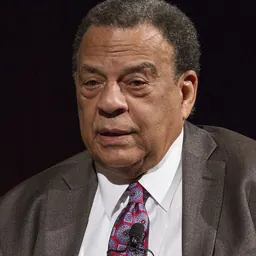

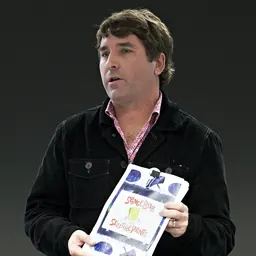
Contemporaries
People whose lives overlapped Barbara Kopple's

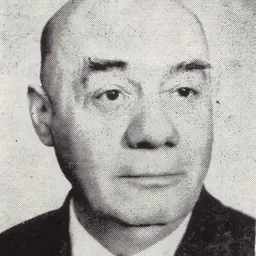



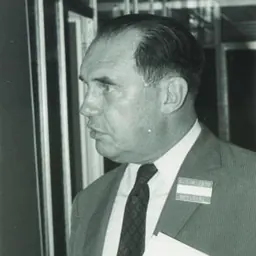
Frequently asked questions
Who is Barbara Kopple?
American film/documentary director
When was Barbara Kopple born?
Barbara Kopple was born on 30 July 1946 in New York City.
What is Barbara Kopple's occupation?
Barbara Kopple is a film producer, film director, director and documentarian.
What nationality is Barbara Kopple?
Barbara Kopple is American.
Sources & further reading
Cite this page
APA: Biography.guide. (2026). Barbara Kopple. https://biography.guide/barbara-kopple/
MLA: "Barbara Kopple." Biography.guide, https://biography.guide/barbara-kopple/.
Chicago: "Barbara Kopple." Biography.guide. https://biography.guide/barbara-kopple/.
Data last updated: 2026-09-25 · Spot an error? Report a correction.
Page generated 2026-09-27 05:12 UTC