
Michael Francis O'Dwyer
British colonial administrator
About Michael Francis O'Dwyer
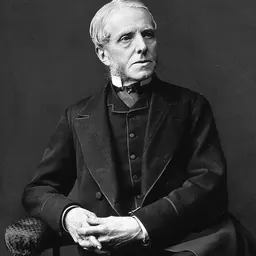
Lived 1864 – 1940 (aged 75). Michael Francis O'Dwyer was a British writer, colonial administrator and beamter.
Sir Michael Francis O'Dwyer (28 April 1864 – 13 March 1940) was an Irish colonial officer in the Indian Civil Service (ICS) who served as the Lieutenant Governor of the Punjab from 1913 to 1919. His tenure is most notably associated with the Jallianwala Bagh massacre, which took place in Amritsar on 13 April 1919.
O'Dwyer endorsed Reginald Dyer’s actions at Jallianwala Bagh and maintained that Dyer’s order to fire on the crowd was justified. As a result, his actions are considered among the most significant factors in the rise of the Indian independence movement.
He subsequently administered martial law in Punjab, on 15 April and backdated it to 30 March 1919. In 1925, he published India as I Knew It in which he wrote that his time as administrator in Punjab was preoccupied by the threat of Indian nationalism, demanding freedom and the spread of political agitation. In 1940, in retaliation for the massacre, O'Dwyer was assassinated by the Indian revolutionary Sardar Udham Singh.
Early life and education Michael Francis O'Dwyer was born on 28 April 1864 in Barronstown, Limerick Junction, County Tipperary, to John, a landowner of Barronstown, Solohead, and Margaret (née Quirke) O'Dwyer, of Toem, both in County Tipperary, Ireland. He was the sixth son in a family of fourteen children, At the age of seven, he was sent to be schooled at St Stanislaus College, Rahan, County Offaly. After completing two years of probation at Balliol College, Oxford, he passed the final examination in 1884 in fourth place overall. At the time, the ICS examination was highly competitive, with no more than 1200 ICS officers in office at one time, and he was likely influenced by the reputations of the likes of Lord Lawrence, one of the first British civil administrators in India. In his third year he obtained a first class in jurisprudence.
The O'Dwyer family were Unionists. In 1882, his family home in Ireland was fired upon by Irish nationalists, and the following year, his father died after a second stroke. as an ICS officer and was first posted to Shahpur in Punjab. He distinguished himself in land revenue settlement work and in 1896 was made director of land records and agriculture in Punjab. Subsequently, he was placed in charge of the settlements of Alwar and Bharatpur states. and was cautioned by the Viceroy Hardinge that "the Punjab was the Province about which the Government were then the most concerned; that there was much inflammable material lying about; which required very careful handling if an explosion was to be avoided". As a result, most of the recruits were drawn from rural areas of the Punjab, which ultimately left a number of families without their breadwinners. Those who returned from the war aspired to a reward and a better life. However, during the war, there was also a growing home rule movement. He opposed the Montagu–Chelmsford Reforms for fear that his efforts in recruitment through the rural leaders would be destroyed by increasing powers to “urban elites”.
Surveillance in 1919 From mid-March 1919, under O’Dwyer's orders, the CID in Amritsar kept a close surveillance of two Gandhian non-violent Indian nationalists; the Muslim barrister Saifuddin Kitchlew and the Hindu physician Dr. Satyapal. O'Dwyer subsequently summoned both to Deputy Commissioner Miles Irving's house in the Civil Lines on 10 April 1919 from where they were arrested and secretly escorted to Dharamasala, at the foot of the Himalayas, to be kept under house arrest. As the news of the arrest became widespread, supporters began to gather near Irving's home, and what initially began as a peaceful attempt to make enquiries ended up in a violent clash. On 13 April 1919, a meeting was called to take place at Jallianwala Bagh to protest the arrest. A detachment of 50 British Indian Army soldiers under the command of Brigadier-General Reginald Dyer fired on a crowd in Amritsar, killing more than 3,000 people. According to then civil surgeon Dr Smit 1,526 people had been killed. O'Dwyer was informed of the event at 3 am the following day. When he received Dyer's initial report, O'Dwyer gave permission to General William Beynon to send a telegram to Dyer that stated "your action correct and the lieutenant-governor approves".
O'Dwyer and several other senior colonial officials supported Dyer's actions both initially, when only limited information had been received, and later, when more detailed information of the scale of the killings became available. As a result, his actions are considered one of the most significant factors in the rise of the Indian independence movement, led by Mahatma Gandhi.
One theory surrounding the massacre, as described by Pearay Mohan and historian Raja Ram, is one of a "premeditated plan" conspired by O'Dwyer and others, including a young Punjabi youth Hans Raj. Other historians including Nick Lloyd, Anita Anand and Kim A. Wagner have found that theory to lack evidence and that there was no conspiracy that Hans Raj was an "agent provocateur".
Although O'Dwyer had implemented martial law in the Punjab, he denied responsibility for the consequences on the grounds that the government had relieved him of its general implementation. However, he could not disclaim responsibility for the decision, after severe rioting in Gujranwala, to send an aeroplane to bomb and strafe the area. During the course of the operation, at least a dozen people, including children, were killed.
In December 1923 the Limerick Brigade of the Irish Republican Army informed the IRA's Chief of Staff that O'Dwyer would be killed while he was staying with his brother at the family farm in Barronstown. The letter noted that "shooting is too good for him". The action was not carried out however amidst the turmoil within the organisation due to the Irish Civil War.
O'Dwyer v. Nair
In 1922, Sir Sankaran Nair referred to O'Dwyer in his book Gandhi and Anarchy and stated that "before the reforms it was in the power of the Lieutenant-Governor, a single individual, to commit the atrocities in the Punjab which we know only too well". O'Dwyer subsequently successfully sued Nair for libel and was awarded £500 damages. Heard before Mr Justice McCardie in the King's Bench Division of the High Court in London over five weeks from 30 April 1924, it was one of the longest civil law hearings in legal history. O'Dwyer saw the trial as a way of providing justifications for Dyer's actions at the Jallianwala Bagh massacre.
O'Dwyer was hit by two bullets and died instantly. Lord Zetland, the Secretary of State for India, was presiding over the meeting and was wounded. Zetland, recovering from his injuries, later opted for early retirement from his position of Secretary of State for India and was succeeded by Leo Amery as Secretary of State for India. Udham Singh made no attempt to escape and was arrested at the scene. one of several charitable organisations created in India during the First World War to raise money and other gifts to provide comforts for troops serving with the Indian Army. She was created a Dame Commander of the Order of the British Empire in her own right in the 1919 Birthday Honours, in which their daughter, Una Mary O'Dwyer, was created a Member of the Order of the British Empire. In the late 1930s, O'Dwyer became a member of the Liberty Restoration League, a front organisation for the pro-Nazi Nordic League.
Arms
Writing In his book India as I knew it (1925), O'Dwyer disclosed that his time as administrator in Punjab was preoccupied by the threat of terrorism and the spread of political agitation. a historical and genealogical treatise detailing the O'Dwyer (Ó Duibhir) noble family that had commanded the area around Thurles from the pre-Norman era until it lost its castles and land during the Cromwellian confiscations of the 17th century.
In later life, he wrote frequently to The Times to condemn the Gandhian non-cooperation movement and to endorse British rule in India.
Selected publications Articles "Border Countries of the Punjab Himalaya: Discussion". The Geographical Journal. Vol. 60, No. 4 (1922), pp. 264–68. . Co-authored with Louis Dane and W. Coldstream. "Races and Religions in the Punjab". Journal of the Royal Society of Arts, London. Vol. 74, Issue 3827 (26 March 1926), pp. 420–449.
Books
India as I knew it. London: Constable & Company (1925) The O'Dwyers of Kilnamanagh: The History of an Irish Sept, London: J. Murray, (1933). Fusion of Anglo Norman and Gael. London: Burns, Oates & Washbourne, (1938?).
Book chapters "Kipling — "Some Recollections"". In: Orel H. (eds) Kipling. London: Palgrave Macmillan, (1983).
In popular culture He was portrayed by Dave Anderson in the 2000 Indian filmShaheed Udham Singh and by Shaun Scott in the 2021 Indian film Sardar Udham.
Don’t just read it —
keep it.
Full-length biographies made to live with: read them, listen on the way to work, watch them tonight.
- E-book
- Audio
- Video
Instant download · yours to keep · every purchase keeps this site free
Important facts
People in Michael Francis O'Dwyer's life
Named in this biography and alive at the same time



Related people
Same field, nearest in time


Contemporaries
People whose lives overlapped Michael Francis O'Dwyer's





Frequently asked questions
Who was Michael Francis O'Dwyer?
British colonial administrator
When was Michael Francis O'Dwyer born?
Michael Francis O'Dwyer was born on 28 April 1864 in Limerick Junction, County Tipperary, List of townlands of County Tipperary.
When did Michael Francis O'Dwyer die?
Michael Francis O'Dwyer died on 13 March 1940 in Caxton Hall.
What was Michael Francis O'Dwyer's occupation?
Michael Francis O'Dwyer was a writer, colonial administrator and beamter.
What nationality was Michael Francis O'Dwyer?
Michael Francis O'Dwyer was British.
Sources & further reading
· Wikipedia: Michael Francis O'Dwyer
Cite this page
APA: Biography.guide. (2026). Michael Francis O'Dwyer. https://biography.guide/michael-francis-o-dwyer/
MLA: "Michael Francis O'Dwyer." Biography.guide, https://biography.guide/michael-francis-o-dwyer/.
Chicago: "Michael Francis O'Dwyer." Biography.guide. https://biography.guide/michael-francis-o-dwyer/.
Data last updated: 2026-09-20 · Spot an error? Report a correction.
Page generated 2026-09-27 05:31 UTC