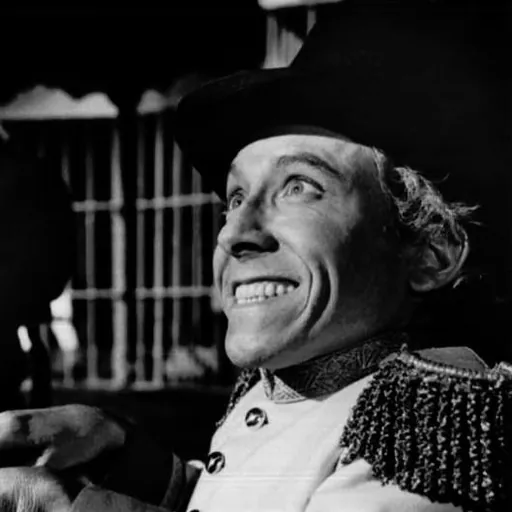
About Michael Dunn
Lived 1934 – 1973 (aged 38). Michael Dunn was an American stage actor, film actor, television actor and actor.
Michael Dunn (born Gary Neil Miller; October 20, 1934 – August 30, 1973) was an American actor and singer with dwarfism. He was nominated for the Tony Award for Best Featured Actor in a Play for The Ballad of the Sad Café, and for the Academy Award for Best Supporting Actor in Stanley Kramer's Ship of Fools, but is best remembered for a recurring role as mad scientist Dr. Miguelito Quixote Loveless in the 1960s television adventure series The Wild Wild West. He inspired a number of later actors with dwarfism, including Zelda Rubinstein and Mark Povinelli.
Medical condition Dunn had medical dwarfism, a result of spondyloepiphyseal dysplasia (SED, subtype unknown), a genetic defect of cartilage production caused by a mutation in the COL2A1 (type II collagen) gene. This disorder, classified as a skeletal dysplasia, causes distorted development of the limbs, spine, and ribcage and leads to early, widespread osteoarthritis and constricted lung growth. As an adult, Dunn stood 3′ 10″ and weighed about 78 pounds (117 cm, 35.38 kg). During Dunn's lifetime, his condition was described by the nonspecific term "progressive chondrodystrophy", or alternatively as "achondroplasia", a term that now refers specifically to a skeletal dysplasia caused by a defect in the gene for fibroblast growth factor receptor 3. and Fred Miller (1906–1981) during the Dust Bowl drought. He chose his stage name to differentiate himself from another Gary Miller in the Screen Actors Guild. "Dunn" was his maternal grandmother's maiden name, but his reason for choosing "Michael" is unknown and not derived from his monastic experience in 1958. An only child, when he was four years old, his family moved to Dearborn, Michigan.
Dunn started reading at age three, was champion of the 1947 Detroit News Spelling Bee (representing Wallaceville School in Wayne County), and showed early skill at the piano. He enjoyed singing from childhood, loved to draw an impromptu audience (even while waiting for a bus), and developed a pleasing lyric baritone and superb sight-reading skills. His parents defied pressure from school authorities to sequester him in a school for disabled children and staunchly supported his talents, independence, and integration into mainstream society. "I always got thrown out of classes for being too lippy", he commented about his experience with elementary school teachers. "I'd read more than they." His orthopedic condition greatly limited his mobility, but he swam and ice-skated in childhood and remained a skilled swimmer throughout his life.
Education Dunn attended Redford High School in Detroit (1947–1951), then entered the University of Michigan in Ann Arbor in September 1951, just before his 17th birthday. However, according to his Columbia Studios press kit biography, his studies were interrupted when he was knocked down a flight of stairs during a "student rush", which resulted in a three-month hospital stay.
In 1953, he transferred to the University of Miami, College of Arts and Sciences, which offered a better climate and more accessible campus. His transcript shows that, despite scoring at the 97th percentile of ACE placement exams and the 99th percentile of the CTS English test, he did not distinguish himself academically. However, he was a high spirited and well-known figure about campus who sang in the talent show and facetiously joined the football cheerleading squad. Archives at that university's Otto G. Richter Library show that he became first a copyeditor and a contributing writer, then managing editor in 1954 of the college magazine, Tempo. (Contrary to information that later appeared in his Columbia Studios biography, Dunn could not take credit for Tempo winning the Sigma Delta Chi Award for best college magazine in the country, since credit went to the Editor-in-Chief.) His classmate John Softness recalled, "He could sing like an angel, and he could act and he could write and he was a brilliant raconteur." Softness ran a campus-wide advertising campaign called "Wheels for Gary", which brought in enough money from student donations to buy a used 1951 Austin outfitted with hand controls, so that Dunn could get around independently.
According to a Capuchin Provincial Archivist, Dunn entered with the intention of becoming a Capuchin non-ordained Brother. He was known by his given name, Gary, since he never became a novice. A testimonial from John F. Bradley, Catholic Chaplain, University of Michigan, states: "He has always been interested in Catholic activities and was president of the Newman Club in another school". In response to a question on the monastery application asking: "How long have you been thinking of entering religious life?" Dunn wrote, "More than three years." Dunn was later quoted in the New York Post explaining that he had wanted to be of service, since he was unfit for the military: "Everyone my age was going to Korea and I had this feeling that singing wasn't exactly doing my part."
Dunn was probably best known for his recurring role on that series as Dr. Miguelito Loveless, a mad scientist who devised passionately perverse schemes and gadgetry to ensnare Secret Service agents James West and Artemus Gordon (Robert Conrad and Ross Martin). "Miguelito" is the Spanish diminutive of "Michael", equivalent to "Mike" or "Mikey". Dorin played Dr. Loveless's devoted assistant, Antoinette. In each of the six episodes in which they appeared together, the villainous couple tenderly sang a Victorian duet or two, heedless of the mayhem they had created around themselves. According to Dorin, Dunn saved her from drowning during filming of the episode "The Night of the Murderous Spring", plunging underwater to tear her free, when her costume became entangled in machinery used to sink a boat on the set.
Between those career highlights, he accepted roles in many pulp horror movies, as well as a role in the 1968 film No Way to Treat a Lady, starring Rod Steiger and George Segal. At the time of his death in 1973, he was in London filming Birgito in The Abdication, directed by Anthony Harvey), starring Peter Finch and Liv Ullmann. Author Günter Grass had already asked him to play in a film adaptation of his novel The Tin Drum, a role that ultimately went to the young David Bennent after Dunn's death. The couple separated in April 1968 and the marriage ended in divorce soon after.
He was a philanthropist toward children with dwarfism, who would write fan letters to him confiding their loneliness and despair. According to Dorin, Dunn often traveled to visit such children at his own expense, delivering encouragement to them and stern counsel to overly protective parents.
Death Spinal deformities, including scoliosis, caused a distorted ribcage that restricted Dunn's lung growth and function. The resulting respiratory insufficiency caused overload of the heart's right chambers, a chronic condition called cor pulmonale. He died in his sleep in his room at the Cadogan Hotel, Chelsea, London, on August 30, 1973, while on location for The Abdication. He was 38 years old.
The New York Times reported his cause of death as undisclosed, leading to decades of repeated public speculation about possible suicide.
TV and filmography Year Date Aired Series Episode Role Notes 1962 Without Each Other film Dwarf 1964 February 7 The Jack Paar Program interview guest 1965 July 29 Ship of Fools film Karl Glocken Nominated—Academy Award for Best Supporting Actor 1965 August 3 Today (w/ Phoebe Dorin) guest performer 1965 September 18 Get Smartpilot, "Mr. Big" Mr. Big 1965 October 1 The Wild Wild West "The Night The Wizard Shook the Earth" Dr. Miguelito Loveless 1965October 27Amos Burke Secret Agent"The Prisoners of Mr. Sin"Mr. Sin 1965 November 19 The Wild Wild West "The Night That Terror Stalked the Town" Dr. Miguelito Loveless 1966 February 18 The Wild Wild West "The Night of the Whirring Death" Dr. Miguelito Loveless 1966 April 15 The Wild Wild West "The Night of the Murderous Spring" Dr. Miguelito Loveless 1966 September 6 Today (w/ Phoebe Dorin) guest performer 1966 September 30 The Wild Wild West "The Night of the Raven" Dr. Miguelito Loveless 1966 October 10 Run for Your Life "The Dark Beyond the Door" George Korval 1966 November 18 The Wild Wild West "The Night of the Green Terror" Dr. Miguelito Loveless 1966 December 9 You're a Big Boy Now film Richard Mudd 1967 March 3 The Wild Wild West "The Night of the Surreal McCoy" Dr. Miguelito Loveless 1967 March 5 Voyage to the Bottom of the Sea "The Wax-Men" clown 1967 April 7 The Wild Wild West "The Night of the Bogus Bandits" Dr. Miguelito Loveless 1967 September 29 The Wild Wild West "The Night Dr. Loveless Died" Dr. Miguelito Loveless 1968 March 10 Madigan "Castiglione" Midget Castiglione 1968 March 20 No Way to Treat a Lady film Mr. Kupperman 1968 March 22 Tarzan "Alex, the Great" Amir 1968 May 28 Boom! film Rudi 1968 November 22 Star Trek S3:E10, "Plato's Stepchildren" Alexander 1968 December 13 The Wild Wild West "The Night of Miguelito's Revenge" Dr. Miguelito Loveless 1968 December 17 The Last Roman film Narses 1969 June 11 Personality interview guest 1970 January 4 Bonanza "It's a Small World" George Marshall 1970 August 6 Justine film Mnemjian 1970 August 20 The Tonight Show interview guest 1970 September 15 Trop petit mon ami film Tiky Edriss 1971 October 6 Murders in the Rue Morgue Theatrical release Pierre Triboulet 1972 February 23 Night Gallery "The Sins of the Fathers" Servant 1972 October 17 Goodnight, My Love TV movie Arthur Boyle 1973 February 20 The Werewolf of Washington Theatrical release Dr. Kiss 1974 February 19 Frankenstein's Castle of Freaks Theatrical release Genz Posthumous credit, released in US in 1975 1974 September 9 House of the Damned Theatrical release Bodo Posthumous release 1974 September 29 The Mutations Theatrical release Burns Posthumous release 1974 December 5 The Abdication film The Dwarf Final film role, posthumous release 2008 June 20 Get Smart film Theatrical release "wanted" poster of Everett "Mr. Big" Horton on refrigerator door 2008 November 20 Man in the Mirror DVD 2008, filmed between 1970 and 1972, restored and completed in 2007 Apple Joe
Source:
Don’t just read it —
keep it.
Full-length biographies made to live with: read them, listen on the way to work, watch them tonight.
- E-book
- Audio
- Video
Instant download · yours to keep · every purchase keeps this site free
Important facts
People in Michael Dunn's life
Named in this biography and alive at the same time



Related people
Same field, nearest in time




Contemporaries
People whose lives overlapped Michael Dunn's




Frequently asked questions
Who was Michael Dunn?
American actor and singer (1934–1973)
When was Michael Dunn born?
Michael Dunn was born on 20 October 1934 in Shattuck.
When did Michael Dunn die?
Michael Dunn died on 30 August 1973 in London.
What was Michael Dunn's occupation?
Michael Dunn was a stage actor, film actor, television actor and actor.
What nationality was Michael Dunn?
Michael Dunn was American.
Sources & further reading
· DBpedia: Michael Dunn (actor)
Cite this page
APA: Biography.guide. (2026). Michael Dunn. https://biography.guide/michael-dunn-stage-actor/
MLA: "Michael Dunn." Biography.guide, https://biography.guide/michael-dunn-stage-actor/.
Chicago: "Michael Dunn." Biography.guide. https://biography.guide/michael-dunn-stage-actor/.
Data last updated: 2026-09-22 · Spot an error? Report a correction.
Portrait: Wikimedia Commons · author & licence
Page generated 2026-09-27 05:00 UTC