
Michael de Jong
Dutch singer, guitarist, singer-songwriter and writer
About Michael de Jong
Lived 1945 – 2018 (aged 73). Michael de Jong was a Dutch singer, guitarist, singer-songwriter and songwriter.
Michael De Jong (January 22, 1945 – March 10, 2018) was a Dutch–American blues guitarist and singer songwriter.
In the early days when he played with the Michael De Jong Band his music was influenced by Chuck Berry, Buddy Holly, Eddie Cochran, Jimmy Reed, 1950s blues and rockabilly. Later he played (mostly solo) intimate songs with a guitar and his hoarse voice. He wrote about his struggle with life, about women ("Gods masterpiece"), love and the decay of society.
Biography De Jong's father, Gerben "Gep" De Jong (1919 – 1994) was a Dutchman who fled the Netherlands during World War II. In France his father married a French Basque woman, at that time De Jong was born. After the War, they lived in The Netherlands until the family emigrated to the United States in 1950. From the age of five De Jong grew up in Grand Rapids, Michigan, where he ended up as the foreign outsider. When he was six years old he joined the church choir and he never stopped singing. His first performance was at this age: he sang "Ave Maria" in the boys church choir. In contradiction of this, he spent his ninth birthday in a youth institution for setting his school on fire. The reason for this: in front of his schoolmates he was blamed to be a bad Catholic, because his parents didn't donate enough money to the church. De Jong was caught early, otherwise he would have burned down the church, the vicarage and the monastery as well, he claimed. At the age of thirteen De Jong started playing the guitar without taking any lessons. This happened after seeing a concert by Johnny Cash: "That's what I wanna do." Five years later he started his first band The Nightwalkers, which backed Bobby Bare who shortly thereafter became successful with "The All American Boy" and the "Detroit City".
In 1967 he moved to Detroit. There he became a regular guest at the John Sinclair's Ann Arbor Blues Festival. Between 1970 and 1974 he traveled through the US. Finally he ended up in New Orleans. There he played in rather obscure clubs of Bourbon Street almost 7 nights a week for 13 months in a row. Often he was sharing the stage with Professor Longhair and the Neville Brothers. He moved to California in 1975 where he stayed for 10 years in San Francisco. During that time he played with or supported Jerry Garcia, Paul Butterfield, Albert Collins, John Lee Hooker, Maria Muldaur, Country Joe, Charlie Musselwhite, Albert King, and other musical legends. De Jong soon earned the respect of Philip Elwood, the San Francisco Examiner's top music critic. Around that time De Jong joined blues legend Jimmy Reed's band as his guitarist. One day Reed told him: "It ain't how you sing the song boy, it's how you live your life... and if you ain't lived the life, how can you sing the song". After hearing these words De Jong started writing his own songs. It was De Jong who discovered Reed's body after his death in Oakland.
In 1981, De Jong recorded his first album All Night Long. It was produced by Nick Gravenites (Electric Flag, Janis Joplin) and featured Steve Miller Band members Norton Buffalo and Greg Douglas.:Review by Mike Joseph, S.F. Chronicle, exact date unknown, 1983: "Sounds like Bob Seger fronting Dire Straits, but harder. The range here is from country-western ballads to balls-out rockers, and DeJong [sic] and his bandmates show that four-set nights of load rock 'n roll are more than familiar to them".
Three years later he was fed up with the American culture and, making an oath to himself never to come back, Late eighties, early nineties De Jong stayed in Amsterdam, the Netherlands. But he'd enjoyed too much sex, drugs and blues these days and before (quoting De Jong: "I've committed all sins, except of murder." Norton Buffalo on harmonica, Greg Douglass on lead guitar, Byron Allred on piano, Doug Killmer on bass, Skip White on drums Fugitive Love Songs (Tombstone Records, 1993) – Recorded April 22–24, 1992 at Café Max, Rotterdam, the Netherlands Who's Foolin' Who''' (Munich, 1996) – Recorded at: Stonesound Studio, Roosendaal, NL Alive (Munich, 1997) – Recorded at Cafe de Amer, Amen, NL Grown Man Moan (Munich, 1998) – Recorded, Mixed & Mastered at Farmsound Studio, Heelsum, NL The Waiting Game (Munich, 1999) – Recorded, Mixed & Mastered at Farmsound Studio, Heelsum, NL Immaculate Deception (Munich, 2000) – Recorded at Sonic Arts Studio, Austin, Texas Riley Osborne, keyboards (played for Willie Nelson) – Kevin Russell, mandoline (known from The Gourds) – Glen Fukunaga, bass (played for Bob Dylan) – Jon Dee Graham, lap-steel-guitar (known from True Believers) – John Hagen, cello (known from Lyle Lovett's Large Band) "Waiting for the Rainbow", from the album Park Bench Serenade'', was written in about an hour in the Daniël Den Hoop hospital during the waiting on the removal of the tumor on his vocal cords.
Don’t just read it —
keep it.
Full-length biographies made to live with: read them, listen on the way to work, watch them tonight.
- E-book
- Audio
- Video
Instant download · yours to keep · every purchase keeps this site free
Important facts
People in Michael de Jong's life
Named in this biography and alive at the same time

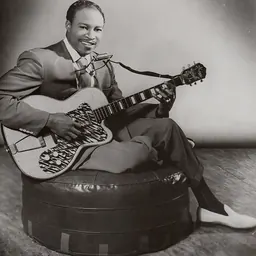
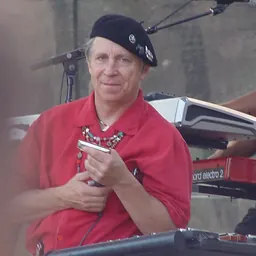

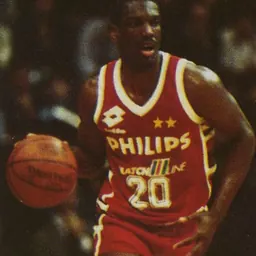

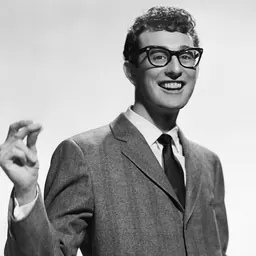
Related people
Same field, nearest in time





Contemporaries
People whose lives overlapped Michael de Jong's



Frequently asked questions
Who was Michael de Jong?
Dutch singer, guitarist, singer-songwriter and writer
When was Michael de Jong born?
Michael de Jong was born on 22 January 1945 in Fontenay-le-Comte.
When did Michael de Jong die?
Michael de Jong died on 10 March 2018.
What was Michael de Jong's occupation?
Michael de Jong was a singer, guitarist, singer-songwriter and songwriter.
What nationality was Michael de Jong?
Michael de Jong was Dutch.
Sources & further reading
Cite this page
APA: Biography.guide. (2026). Michael de Jong. https://biography.guide/michael-de-jong/
MLA: "Michael de Jong." Biography.guide, https://biography.guide/michael-de-jong/.
Chicago: "Michael de Jong." Biography.guide. https://biography.guide/michael-de-jong/.
Data last updated: 2026-09-20 · Spot an error? Report a correction.
Page generated 2026-09-27 05:20 UTC