
About Michael Baxandall
Lived 1933 – 2008 (aged 74). Michael Baxandall was a British art historian, university teacher and teacher.
Michael David Kighley Baxandall, FBA (18 August 1933 – 12 August 2008) was a British art historian and a professor emeritus of Art History at the University of California, Berkeley. He taught at the Warburg Institute, University of London, and worked as a curator at the Victoria and Albert Museum. His book Painting and Experience in Fifteenth-Century Italy was profoundly influential in the social history of art, and is widely used as a textbook in college courses.
Career Baxandall was born in Cardiff, the only son of David Baxandall, a curator who was at one time director of the National Gallery of Scotland. He went to Manchester Grammar School and studied English at Downing College, Cambridge, where he was taught by F. R. Leavis. In 1955 he departed for the Continent. He spent a year at Pavia University (1955–56), then taught at an international school in St. Gallen in Switzerland (1956–57), and finally went to Munich to hear the art historian Hans Sedlmayr and where he worked with Ludwig Heinrich Heydenreich on the court of Urbino at the Zentralinstitut für Kunstgeschichte. On his return to London in 1958 he began a long association with the Warburg Institute, initially working in the photographic collection, where he met Kay Simon, whom he married in 1963. From 1959 to 1961 he was a junior fellow, working on his never-completed PhD, Restraint in Renaissance behaviour, under Ernst Gombrich.
From 1961, he was Assistant Keeper in the Department of Architecture and Sculpture at the Victoria and Albert Museum, returning to the Warburg Institute in 1965 as lecturer in Renaissance Studies. He was appointed to a chair by the University of London in 1981, but increasingly spent his time in the United States. He was A. D. White Professor-at-Large at Cornell University and became a half-time Professor of the History of Art at the University of California, Berkeley, in 1987. He was elected a Fellow of the American Academy of Arts and Sciences in 1991. He was Slade Professor of Fine Art at the University of Oxford for 1974–75.
Books His book Giotto and the Orators was published in 1971. This was followed in 1972 by Painting and Experience in Fifteenth Century Italy, now considered a classic of art history, in which he developed the influential concept of the period eye. These were followed by The Limewood Sculptors of Renaissance Germany (1980), Patterns of Intention (1985), Tiepolo and the Pictorial Intelligence (1994, with Svetlana Alpers), Shadows and Enlightenment (1994) and Words for Pictures (2003). In all his work, Baxandall was concerned to illuminate artworks by a thorough exploration of the conditions of their production – intellectual, social, and physical. In Limewood Sculptors this took the form of using "carvings as lenses bearing on their own circumstances".
Despite his impact in "social" art history, Baxandall often retreated from Marxist or overly "contextual" approaches. At one point, he declared that he was just "trying to do Roger Fry...in a different way," and he often cited the impact of Heinrich Wölfflin's book Classic Art.
Publications
Giotto and the Orators. Humanist observers of painting in Italy and the discovery of pictorial composition 1350-1450, Oxford University Press, 1971 Painting and Experience in 15th century Italy, Oxford UP, 1972 South German Sculpture 1480-1530, H.M. Stationery Office, 1974 The Limewood Sculptors of Renaissance Germany, Yale University Press, 1980 Patterns of Intention: On the Historical Explanation of Pictures, Yale UP, 1985 with Svetlana Alpers: Tiepolo and the Pictorial Intelligence, Yale UP, 1994 Shadows and Enlightenment, Yale UP, 1995 Words for Pictures: Seven Papers on Renaissance Art and Criticism, Yale UP, 2003 Episodes: a Memory Book, with an introduction by Carlo Ginzburg, Frances Lincoln, 2010 A Grasp of Kaspar, Frances Lincoln, 2010
On Baxandall Michael Baxandall, Vision and the Work of Words, ed. by Peter Mack & Robert Williams, Farnham, 2015 Langdale, Allen. "Aspects of the Critical Reception and Intelletual History of Baxandall's Concept of the Period Eye." Art History 21, no. 4 (1998): 479-97.
Don’t just read it —
keep it.
Full-length biographies made to live with: read them, listen on the way to work, watch them tonight.
- E-book
- Audio
- Video
Instant download · yours to keep · every purchase keeps this site free
Important facts
People in Michael Baxandall's life
Named in this biography and alive at the same time


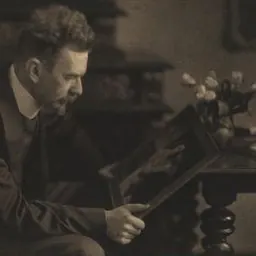
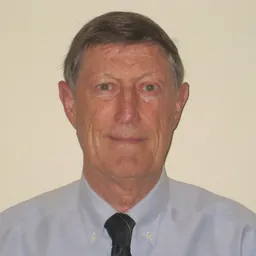

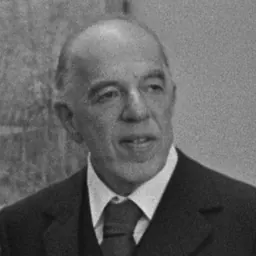


Related people
Same field, nearest in time
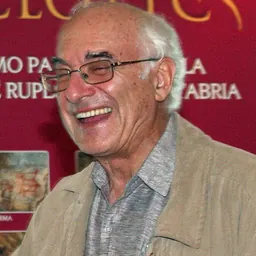
Contemporaries
People whose lives overlapped Michael Baxandall's



Frequently asked questions
Who was Michael Baxandall?
British art historian (1933-2008)
When was Michael Baxandall born?
Michael Baxandall was born on 18 August 1933 in Cardiff.
When did Michael Baxandall die?
Michael Baxandall died on 12 August 2008 in London.
What was Michael Baxandall's occupation?
Michael Baxandall was an art historian, university teacher and teacher.
What nationality was Michael Baxandall?
Michael Baxandall was British.
Sources & further reading
· Wikipedia: Michael Baxandall
Cite this page
APA: Biography.guide. (2026). Michael Baxandall. https://biography.guide/michael-baxandall/
MLA: "Michael Baxandall." Biography.guide, https://biography.guide/michael-baxandall/.
Chicago: "Michael Baxandall." Biography.guide. https://biography.guide/michael-baxandall/.
Data last updated: 2026-09-20 · Spot an error? Report a correction.
Page generated 2026-09-27 05:31 UTC