
About Miao Xiyong
Lived 1546 – 1627 (aged 80–81). Miao Xiyong was a Chinese physician.
Miao Xiyong (; 1546–1627), courtesy name Zhongchun , was a Chinese physician active during the Ming dynasty. Reportedly a self-taught physician, many of his prescriptions were collected in a compendium titled Notes from the Studio of Early Enlightenment. Miao also authored a commentary on the Shennong bencao jing.
Career Born to an affluent family in Changshu, Miao did not sit for any imperial examinations and purportedly began learning medicine on his own from the age of seventeen. Unlike his fellow physicians, who usually worked in a shop and dispensed their own prescriptions, Miao was a wandering physician who did not carry any medicine with him. He would not hesitate to travel to distant locations on horseback. Most of his clients tended to be in the upper-class and could readily access the expensive ingredients that Miao would prescribe by hand. One of Miao's patients had to endure a year-long regimen of abdominal pain medication, or a total of six hundred doses, before he was cured.
Miao was known for his preference for "cold and cooling drugs", such as the gypsum that he used to cure a pregnant woman of her fever. However, he also prescribed "warm-natured" drugs on occasion. For instance, he made a patient consume large amounts of ginseng to alleviate his belching.
Miao spent most of his final years in the county of Jintan, where he remained active as a literatus and physician. However, after many of his academic friends were persecuted or purged by court eunuch Wei Zhongxian, due to a dispute over governmental policy, Miao retreated to his hometown. His treatise on the Shennong bencao jing, titled Shénnóng Běncǎo Jīng Shū or Exegesis of the Divine Farmer Classic of Materia Medica, was published in 1625, with the assistance of a distant relative named Mao Fengbao (1599–1659). At some point, Miao returned to Jintan and died there in 1627.
Writings In 1611, (1560–1625), a former official and Miao's friend of thirty years, began compiling a collection of "efficacious medical recipes" that Miao had prescribed. Among the prescriptions discussed in the Xianxingzhai biji or Notes from the Studio of Early Enlightenment is a decoction containing a virgin boy's urine mixed with various herbs that Miao had used to treat Ding himself in 1615, when he suffered a minor stroke.
A revised edition, titled Xianxingzhai guangbiji or Expanded Notes from the Studio of Early Enlightenment, lists Miao as the primary author and contains his commentary alongside Ding's original notes. It was first published in 1622, in response to the overwhelming demand for the earlier Xianxingzhi biji that had ostensibly gone out of stock by 1621. A further revised edition of the text (and the only extant version today) was published by one of Miao's earliest students, , in 1642.
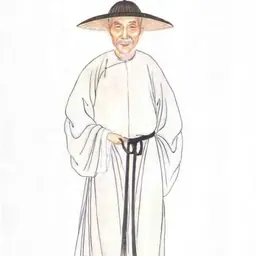
Appearance Miao was an "eccentric gentleman" who had "electrifying eyes and protruding whiskers". According to his contemporary Qian Qianyi:
Don’t just read it —
keep it.
Full-length biographies made to live with: read them, listen on the way to work, watch them tonight.
- E-book
- Audio
- Video
Instant download · yours to keep · every purchase keeps this site free
Important facts
People in Miao Xiyong's life
Named in this biography and alive at the same time

Related people
Same field, nearest in time


Contemporaries
People whose lives overlapped Miao Xiyong's


Frequently asked questions
Who was Miao Xiyong?
Chinese Ming dynasty physician
When was Miao Xiyong born?
Miao Xiyong was born in 1546.
When did Miao Xiyong die?
Miao Xiyong died in 1627.
What was Miao Xiyong's occupation?
Miao Xiyong was a physician.
What nationality was Miao Xiyong?
Miao Xiyong was Chinese.
Sources & further reading
Cite this page
APA: Biography.guide. (2026). Miao Xiyong. https://biography.guide/miao-xiyong/
MLA: "Miao Xiyong." Biography.guide, https://biography.guide/miao-xiyong/.
Chicago: "Miao Xiyong." Biography.guide. https://biography.guide/miao-xiyong/.
Data last updated: 2026-09-20 · Spot an error? Report a correction.
Page generated 2026-09-27 05:01 UTC