
About Wei Zhongxian
Lived 1568 – 1627 (aged 58–59). Wei Zhongxian was a Chinese eunuch in Imperial China and politician.
Wei Zhongxian (1568 – December 12, 1627), born Wei Si , was a Chinese court eunuch who lived in the late Ming dynasty. As a eunuch he used the name Li Jinzhong . He is considered by most historians as the most notorious eunuch in Chinese history. He is best known for his service in the court of the Tianqi Emperor Zhu Youjiao (r. 1620–1627), when his power eventually appeared to rival that of the emperor. Zhu then punished 161 officials and executed 24 of Wei's associates. Madam Ke, who was also close to Wei, was beaten to death. Due to his fame in Chinese culture over the past 400 years, other stories of his early life have appeared, many showing him as a ruffian and a compulsive gambler.
Early court life (1585–1619) Through a relative of his mother, Wei was able to enter into service in the Forbidden City. After he became an imperial eunuch, he used the name Li Jinzhong. As a eunuch in the Ming court, Wei slowly gained the favor of various palace officials while working in various unofficial positions. In 1605, he was given the job of serving meals to Lady Wang and her infant son Zhu Youjiao, who would eventually become the Tianqi Emperor. With Lady Li deposed, it became much easier for Wei and Madame Ke to influence the imperial court's decisions.
Soon after Zhu Youxiao was enthroned as the Tianqi Emperor, it became clear that he was much more interested in carpentry and building projects than in court matters; he often left such matters to Wei, who was then promoted to be the Brush-Holding Eunuch of the Directorate of Ceremonial (Sili Jian Bingbi Taijian), and the Grand Secretaries. Wei's loyalty to the Tianqi Emperor paid quick dividends – by 1625, he had become the minister of the Eastern Depot, a force of over one thousand uniformed policemen headquartered in the Forbidden City. As the Tianqi Emperor's de facto father and protector, Wei eventually became responsible for delivering imperial edicts, and any order from the palace was issued in the name of the emperor as well as Wei, the "Depot Minister". Fourteen of Wei's relatives were either ennobled or received hereditary military positions; some were even appointed to high official positions. As fear of Wei's power became more and more prevalent in China, many local officials commissioned the building of temples in his honor, much to the chagrin of Confucian scholars. Donglin sympathizer and Ming censor Zhou Zongjian impeached Wei Zhongxian in July 1622, imploring the emperor to remove him from the palace. In 1624, Yang Lian wrote a memorial to Tianqi condemning Wei of "24 crimes", some of them fabricated. Both attempts were unsuccessful and turned Wei against the Donglin party.
As head of the Eastern Depot, Wei's power to arrest and convict dissidents was technically confined to peasants and merchants. Arrests and interrogations of officials had to be done through the Embroidered Uniform Guard, who were under command of prison director Xu Xianchun. However, Wei's true power came through his commission to deliver the emperor's edicts, as well as his close relationship with the emperor. In 1625, Xu then arrested six of the Donglin party's leaders, including Yang Lian (Wei's detractor), whom he had accused of squandering public money through their bureaucracy positions. Xu then subjected Yang and the other five Donglin leaders to lengthy interrogations and torture. Eventually all six died, apparently without imperial edict. Xu then arrested seven other Donglin scholars, including Zhou Zongjian, and killed them in 1626. Over the two-year period of 1625–26, hundreds of other presumed Donglin sympathizers were demoted or purged from the government by Xu and the Embroidered Uniform Guard. Although Wei's exact involvement in these arrests and killings is not known, his overall control of the palace and the emperor's powers of edict ensured his involvement in some degree. Because none of the Tianqi Emperor's three sons lived to adulthood, the emperor conferred the right to rule to his younger brother, Zhu Youjian, who became the Chongzhen Emperor on 2 October 1627.
Although the Chongzhen Emperor was intent on ruling without any decision-making surrogates, he did not immediately dismiss Wei. When Wei offered to resign just six days after the Chongzhen Emperor's reign began, the emperor refused. A month later, Wei decreed that no more temples should be built in his honor. In the months afterwards, multiple complaints about and calls for Wei's impeachment came before the emperor. After ignoring the first few, the Chongzhen Emperor finally called for evidence of Wei's faults from officials. In response to this, "more than one hundred" officials sent memorials denouncing Wei. On December 8, the Chongzhen Emperor issued an edict listing Wei's crimes and exiled him south to Fengyang (in present-day Anhui).
As Wei traveled to Fengyang, one of the Chongzhen Emperor's commissioners warned the emperor that Wei might work with other demoted officials of the deceased Tianqi Emperor to stage a rebellion. Acting on the warning, the Chongzhen Emperor ordered the Embroidered Uniform Guard to arrest Wei and bring him back to Beijing. On December 13, informants found Wei and told him of the edict. That night, he and his entourage stopped at an inn 150 miles south of Beijing. Wei and his secretary proceeded to hang themselves from the rafters with their own belts. After discovering Wei's death, the rest of his entourage managed to escape the area before the guards came.
The Chongzhen Emperor's retribution to Wei and his political allies was swift and severe. In early 1628, Wei's corpse was dismembered and displayed in his native village as a warning to the public. By 1629, 161 of Wei's associates had been punished by the Chongzhen Emperor; of those, 24 were sentenced to execution. Madam Ke was beaten to death by an interrogator just 11 days after Wei's death. Stories and dramatizations of this persecution were written just months after his death and gained a large public audience. In 2009, a 42-hour primetime television series dramatizing Wei Zhongxian and Madam Ke's power during the reign of the Tianqi Emperor was shown on Chinese television. The series also portrayed Wei Zhongxian and Zhu Youjiao in a negative light.
Don’t just read it —
keep it.
Full-length biographies made to live with: read them, listen on the way to work, watch them tonight.
- E-book
- Audio
- Video
Instant download · yours to keep · every purchase keeps this site free
Important facts
People in Wei Zhongxian's life
Named in this biography and alive at the same time

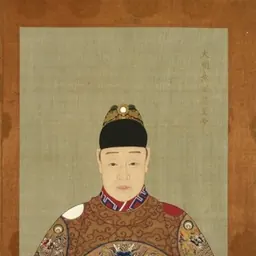

Contemporaries
People whose lives overlapped Wei Zhongxian's


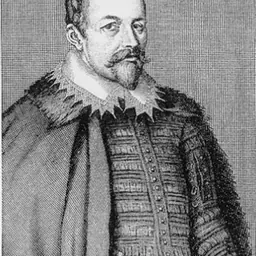


Frequently asked questions
Who was Wei Zhongxian?
Ming dynasty court eunuch (1568–1627)
When was Wei Zhongxian born?
Wei Zhongxian was born in 1568 in Suning County.
When did Wei Zhongxian die?
Wei Zhongxian died on 19 October 1627 in Beijing.
What was Wei Zhongxian's occupation?
Wei Zhongxian was a eunuch in Imperial China and politician.
What nationality was Wei Zhongxian?
Wei Zhongxian was Chinese.
Sources & further reading
Cite this page
APA: Biography.guide. (2026). Wei Zhongxian. https://biography.guide/wei-zhongxian/
MLA: "Wei Zhongxian." Biography.guide, https://biography.guide/wei-zhongxian/.
Chicago: "Wei Zhongxian." Biography.guide. https://biography.guide/wei-zhongxian/.
Data last updated: 2026-09-20 · Spot an error? Report a correction.
Page generated 2026-09-27 05:27 UTC