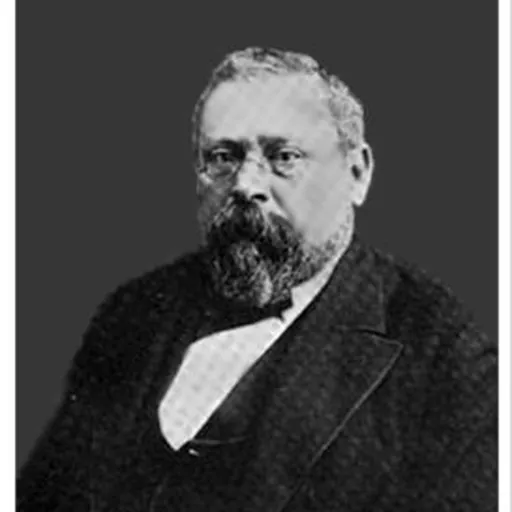
About Meyer Lutz
Lived 1829 – 1903 (aged 73). Meyer Lutz was a British conductor, composer, organist, music arranger and editor.
Wilhelm Meyer Lutz (19 May 1829 – 31 January 1903) was a German-born British composer and conductor who is best known for light music, musical theatre and burlesques of well-known works.
Emigrating to the UK at the age of 19, Lutz started as an organist and soon became a theatrical conductor in London. After serving from 1850 to 1855 as music director of the Surrey Theatre, Lutz conducted touring opera companies and composed some serious music and music for the Christy Minstrels. In 1869, he was engaged as the music director of the Gaiety Theatre, London, arranging and later composing a series of popular burlesques over the next 25 years. Lutz continued to compose songs into the 20th century.
Life and career Lutz was born in Münnerstadt, Bavaria, Germany. His parents were Joseph Lutz (1801–1879), a music professor, and Magdalena (1809–1862). His older brother, Baron Johann Lutz, became the prime minister of Bavaria under King Ludwig II of Bavaria. Lutz studied music first with his father, then at the University of Würzburg. He visited Britain, as a pianist, in 1846, and then moved to England in 1848 at the age of 19.
Early career
Lutz began as an organist in churches at Birmingham and Leeds. Then, for many years, he played the organ at St George's Cathedral, Southwark. Lutz was also a Freemason, and served as the Grand Organist of the United Grand Lodge of England.
Lutz soon became a theatrical conductor. From 1850 to 1855, he conducted at the Surrey Theatre and later the Royalty Theatre. After this, for many years, Lutz conducted concerts in the British provinces and touring opera troupes for Giulia Grisi, the tenor Mario and others. Some of these were led by the tenor Elliot Galer (the founder, in 1877, of the Royal Opera House in Leicester), who produced Lutz's opera Zaida, or, The Pearl of Granada (with a libretto by Oliver Summers) in 1859 in Liverpool. In 1859, in Derby, England, Lutz played the piano for a series of ten "Concerts for the People" at the Temperance Hall. The Miller of Milburg (1872). Blue Beard (1882); Galatea, or Pygmalion Reversed (1883, with a libretto by Henry Pottinger Stephens); Ariel (1883, libretto by Burnand); and Mazeppa (1884). Cinder Ellen up too Late (1891, libretto by Leslie); In 1893, with Albert O'Donnell Bartholeyns, he wrote A la Française.
During these years, Lutz continued in demand as a conductor throughout Britain and continued to compose religious and secular music.
Later years Lutz left the Gaiety in 1894 and was replaced by Ivan Caryll. For the Opera Comique in 1895, Lutz composed A Model Trilby, or A Day or Two after du Maurier. Lutz wrote a string quartet and ballads such as "Thy Silv'ry Tones", "Enchant Mine Ear" and "Sail on Silver Cloud." In the last years of the 19th century, Lutz conducted a band playing Summer seasons at the spa in Scarborough.
Lutz was married in 1856 to Elizabeth Cook (b. 1835) and later to her sister Emily Cook (b. 1847). Their brothers were the bass Thomas Aynsley Cook and the baritone John Furneaux Cook, and their sister, Alice Aynsley Cook (c. 1850–1938) was an opera singer and musical comedy actress. His niece, Annie, married Eugene Goossens, Jr.
In printed works, such as scores and theatre programmes, Lutz was usually credited simply as Meyer Lutz. Some of his music was arranged for military band by J. A. Kappey. Lutz is mentioned in a P. G. Wodehouse novel, A Damsel in Distress (1919). In addition, a character called Herr Toots in the 1912 novel Bella by Edward Booth is based on Lutz, as is the character Meyer Klootz in the 1940 novel Town and Haven by Oswald Harland, both novels being set in late Victorian Scarborough (named "Spathorpe" in Bella, and "Whitcliff" in Town and Haven).
Lutz died of bronchitis at his home in Kensington, London at the age of 73. He was buried in St Mary's, Kensal Green.
Selected works
The Charmed Harp (1852) (Surrey Theatre) Faust and Marguerite (1855) (Surrey Theatre) Blonde or Brunette (1862) (Royalty Theatre) Felix, or The Festival of the Roses (1865) (Royalty Theatre) Zaida, or, The Pearl of Granada (1868) (Liverpool) The Miller of Milburg (1872) (Gaiety Theatre) Legend of the Lys (1873) (cantata) The Bohemian G-yurl and the Unapproachable Pole (1877) (Gaiety Theatre) Robbing Roy (1879) (Gaiety Theatre) The Forty Thieves (1880) (Gaiety Theatre) Galatea, or Pygmalion Reversed (1883) (Gaiety Theatre) Little Jack Sheppard (1885) (Gaiety Theatre) Miss Esmeralda, or The Maid and the Monkey (1887) (Gaiety Theatre) Frankenstein, or The Vampire's Victim (1887) (Gaiety Theatre) Faust up to Date (1888) (Gaiety Theatre) Ruy Blas and the Blasé Roué (1889) (in Birmingham, then at the Gaiety) Carmen up to Data (1890) (in Liverpool, then at the Gaiety) Cinder Ellen up too Late (1893) (Gaiety Theatre) A Model Trilby, or A Day or Two after du Maurier (1895) (Opera Comique)
Don’t just read it —
keep it.
Full-length biographies made to live with: read them, listen on the way to work, watch them tonight.
- E-book
- Audio
- Video
Instant download · yours to keep · every purchase keeps this site free
Important facts
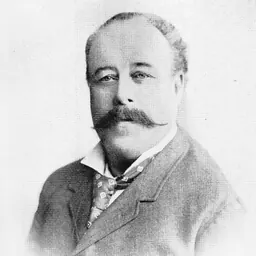
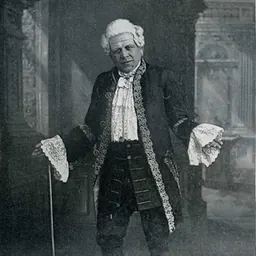
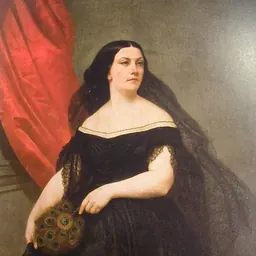
People in Meyer Lutz's life
Named in this biography and alive at the same time





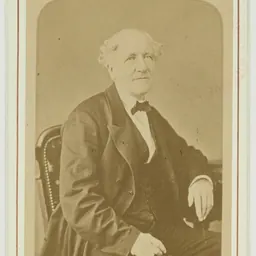
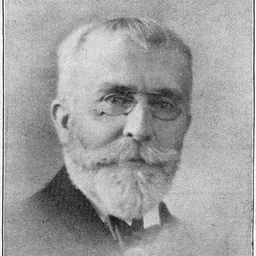
Related people
Same field, nearest in time



Contemporaries
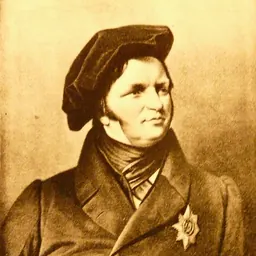
People whose lives overlapped Meyer Lutz's





Frequently asked questions
Who was Meyer Lutz?
German-born English composer and conductor (1829–1903)
When was Meyer Lutz born?
Meyer Lutz was born on 19 May 1829 in Münnerstadt.
When did Meyer Lutz die?
Meyer Lutz died on 31 January 1903 in London.
What was Meyer Lutz's occupation?
Meyer Lutz was a conductor, composer, organist, music arranger and editor.
What nationality was Meyer Lutz?
Meyer Lutz was British.
Sources & further reading
Cite this page
APA: Biography.guide. (2026). Meyer Lutz. https://biography.guide/meyer-lutz/
MLA: "Meyer Lutz." Biography.guide, https://biography.guide/meyer-lutz/.
Chicago: "Meyer Lutz." Biography.guide. https://biography.guide/meyer-lutz/.
Data last updated: 2026-09-21 · Spot an error? Report a correction.
Portrait: Wikimedia Commons · author & licence
Page generated 2026-09-27 04:58 UTC