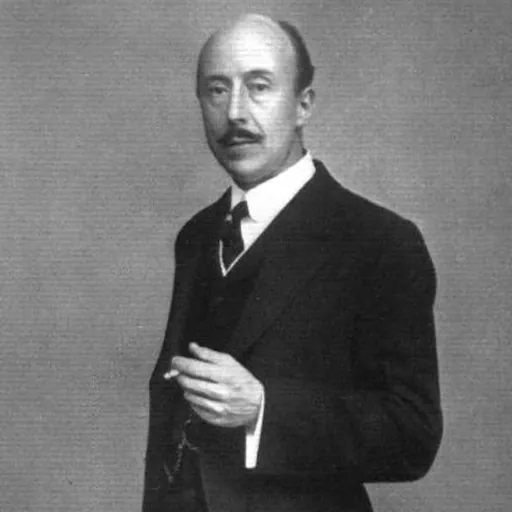
About Mervyn O'Gorman
Lived 1871 – 1958 (aged 86). Mervyn O'Gorman was a British photographer, engineer and military flight engineer, known for Royal Aircraft Factory.
Mervyn Joseph Pius O'Gorman (19 December 1871 – 16 March 1958) the son of Edmund Anthony Gorman (1821-1912) and his third wife Margaret Eliza Barclay Crawford (1849-1899). Later in life, Mervyn readopted the O' prefix to his surname, which had been dropped by his Irish great-grandfather Thomas O'Gorman (1724–1800) after he moved to England in 1747.
Sources give various addresses for Mervyn's father: East Bergholt, Suffolk; and Monamore, County Clare, Ireland.
His younger brother was Cecil Carleton Crawford O'Gorman, a mining engineer and painter who lived in Mexico.
Mervyn was educated at St Edmund's College, Ware, at Downside School and at University College, Dublin, where he read classics and science.
Royal Aircraft Factory In 1909 R. B. Haldane, then Secretary of State for War, selected O'Gorman as the person who would bring his vision of order and scientific discipline to the development of military aviation. As a part of this programme, the Balloon Factory at Farnborough was to be removed from the military and placed under civilian scientific administration. In October 1909 O'Gorman was appointed as the first civilian Superintendent of the Balloon Factory. He replaced Col. John Capper, who retained his command of the Army Balloon School also located there.
When O'Gorman took over the Balloon Factory, official interest was still focussed on lighter-than-air flight. Some highly secret experiments had been conducted by J. W. Dunne at Blair Atholl, and S. F. Cody had built and flown the British Army Aeroplane No 1, but all funding had been withdrawn from both of these projects in April 1909. The British Army Airship No.2 was then under construction at the Balloon Factory.
The new system, under which O'Gorman reported directly to the Master-General of the Ordnance at the War Office, was intended to bypass military traditionalists, many of whom failed to see any military value in aircraft of any description. The purpose of what was to become known as the Royal Aircraft Factory was to be research, carried out in conjunction with the National Physical Laboratory at Teddington. (The title Royal Aircraft Factory is misleading since it was never the intention to mass produce aircraft; rather, research would be carried out, leading to designs which would be manufactured by private companies.)
O'Gorman devised a system of categorising aircraft according to their layout. Pusher configuration aircraft with a forward elevator in addition to a rear-mounted tailplane and rudder carried on booms were designated as Farman Type, after the highly successful and widely imitated Farman III. Canard configuration aircraft became Santos Type, after Alberto Santos Dumont's 14-bis aircraft, and tractor configuration aircraft were designated Blériot Type after Louis Blériot's Type XI, a system set forth in an article entitled Some Problems in Aircraft Design published in Flight in 1911. Accordingly De Havilland's aircraft was renamed the Farman Experimental I, or F.E.1.
Although the remit of the Factory did not include the actual construction of aircraft, experimental alterations were sanctioned. Under O'Gorman a system of 'repairing' aircraft by replacing the entire airframe, often changing the basic configuration of the aircraft, was instituted. A letter from Theodore Ridge, the Works Superintendent, is worth quoting in full:
With reference to the Voisin Machine recently presented by the Duke of Westminster and delivered to the Wolsley (sic) Tools and Motor Co., I have to report that the method of controlling and steering this machine is obsolete and different to any present make; that the wood frame of the wings struts and canvas covering have deteriorated to such a degree that they should be replaced if the machine is to be flown in safety. I therefore desire to recommend that I may be instructed to fit this machine with certain spare wings and struts which I have in stock and alter the controls so that it is similar to the Farman type, and thus enable the machine to be flown by anyone qualified to fly a Farman type machine. I am in a position to effect these alterations quickly and economically and it would then be equal to a good Farman machine.
The first aircraft produced under this system was the S.E.1, ostensibly a refurbishment of a Blériot XII. This was destroyed in a crash before flight testing was complete, killing Ridge. In the hands of Geoffrey de Havilland the Voisin which had been donated to the Army Air Battalion by the Duke of Westminster was reborn as the B.E.1, a neat biplane with an excellent performance which first took to the air in December 1911. The B.E.1 was followed by the almost identical B.E.2 and a series of other aircraft, ostensibly improvements of the motley collection of aircraft in the Factory's possession, which in some cases did not even retain the original engine. It is ironic that the first visible fruits of a programme intended to bring order to chaos were the result of a subversion of the system.
The rational system of aircraft procurement was to be exemplified by the Military Aircraft Competition held on Salisbury Plain at Larkhill, announced late in 1911. The rules called for two-seater aircraft capable of various speed, climb, endurance and field operation conditions. O'Gorman was on the judging committee, so "factory" aircraft were not allowed to compete; nevertheless the B.E.2 put in regular appearances at the trials, where its performance was clearly superior to most of the competing aircraft. The B.E.1/B.E.2 design was mass-produced with minor changes as the B.E.2a and later developed into the B.E.2c by E. T. Busk. Busk's objective was to create an inherently stable aircraft for military observation purposes. Unfortunately the aircraft's stability resulted in a loss of manoeverability, and when German aircraft fitted with synchronised guns appeared in 1915 the losses of B.E.2c aircraft during the Fokker Scourge of 1915 led to a parliamentary inquiry. Although this did not find O'Gorman at fault it led to O'Gorman's departure from the Factory: his contract, which was to expire in October, was not renewed. O'Gorman, now holding the rank of lieutenant-colonel in the Royal Flying Corps, remained as a consulting engineer to the Director-General of Military Aeronautics from 1916 to 1919.
Drag: use of the terminology In 1913 Mervyn O'Gorman said in an article on “Stability Devices” 'I adopt "drag," the word suggested by Mr. Archibald Low, in preference to the word "drift," to express the "resistance to forward motion through the air." The word drift is badly wanted in aeronautics in its own time-honoured significance, so that the actual travel of an aircraft may be compounded of the distance which is travelled axially, and its 'drift', i.e., the amount it drifts with the wind.”'
Subsequent career He served as chairman of the Royal Aeronautical Society in 1921–22 and also, among many other appointments, as chairman of the Accident Investigation and Civil Air Transport committee of the Air Ministry and chairman of the 1931 League of Nations subcommittee on the rating of aeronautical engines. From the 1920s onwards his main interest was traffic management and road safety. He was vice-chairman of the Royal Automobile Club between 1928 and 1931, and vice-president in 1952. In December 1934 O'Gorman presented a case for funding urgent research into measuring and recording traffic flows, traffic density and accidents to the British Science Guild so that measures could be taken to eliminate road accidents. Another contributor suggested that accidents were not a result of excess speed as four fifths of the motor accidents occurring in the metropolitan area involved vehicles travelling at less than 15 miles per hour. O'Gorman was also a frequent contributor to the letters page of The Times, mainly on motoring issues.
Private life, death, and character In 1897, at San Remo in Italy, O'Gorman married Florence Catherine Rasch who was 17 years his senior. She was the younger daughter of the late Arthur Augustus Rasch who had been a senior figure in the insurance industry prior to the death of his first wife.
From 1930 he was a member of the Art Workers Guild, and made etchings, linocuts and lacquer work; he also published a book of poetry, Verses Gloomy and Gay in 1933. Sir Geoffrey de Havilland describes him as a "man of great charm and humour, always interesting in discussion".
O'Gorman died at his home, 21 Embankment Gardens, Chelsea, on 16 March 1958. His wife had died in 1931.
Autochromes O'Gorman also had artistic interests and was known as a pioneer of colour photography using the autochrome process, and his photographs feature in exhibitions of early colour photography.
A series of colour photographs he took in 1913 of his neighbour Edwyn Bevan's teenage daughter Christina dressed in red were included in the Drawn by Light exhibition in 2015 by the National Science and Media Museum and gained press and social media attention.
Honours O'Gorman was appointed a Companion of the Order of the Bath in George V's Birthday Honours list of 1913 whilst he was Superintendent of the Royal Aircraft Factory.
Publications Bringing Science into the Road Traffic Problem (1934) Road Transport and the National Plan (1942) London Traffic Troubles (1943) The Roads of a Town IN The Empire Review (1943) O'Gorman's Motor Pocket Book (1904) Bringing Science into the Road Traffic Problem (1935) Road Traffic Policy: a pleas for data (1949) Operational Research on Road Traffic (1946) The Evils of Taxing Distribution by Road Small surprise (1950)
Don’t just read it —
keep it.
Full-length biographies made to live with: read them, listen on the way to work, watch them tonight.
- E-book
- Audio
- Video
Instant download · yours to keep · every purchase keeps this site free
Important facts
People in Mervyn O'Gorman's life
Named in this biography and alive at the same time




Related people
Same field, nearest in time



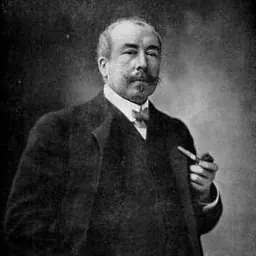
Contemporaries
People whose lives overlapped Mervyn O'Gorman's
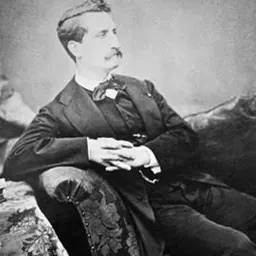


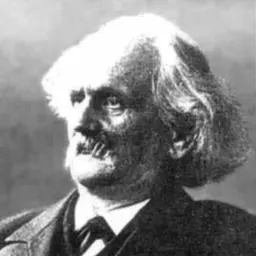
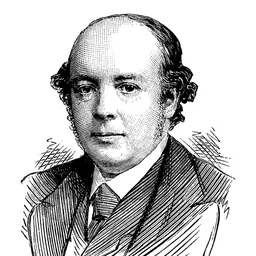
Frequently asked questions
Who was Mervyn O'Gorman?
English engineer
When was Mervyn O'Gorman born?
Mervyn O'Gorman was born on 19 December 1871 in Brighton.
When did Mervyn O'Gorman die?
Mervyn O'Gorman died on 16 March 1958.
What was Mervyn O'Gorman's occupation?
Mervyn O'Gorman was a photographer, engineer and military flight engineer.
What was Mervyn O'Gorman known for?
Mervyn O'Gorman was known for Royal Aircraft Factory.
What nationality was Mervyn O'Gorman?
Mervyn O'Gorman was British.
Sources & further reading
Cite this page
APA: Biography.guide. (2026). Mervyn O'Gorman. https://biography.guide/mervyn-o-gorman/
MLA: "Mervyn O'Gorman." Biography.guide, https://biography.guide/mervyn-o-gorman/.
Chicago: "Mervyn O'Gorman." Biography.guide. https://biography.guide/mervyn-o-gorman/.
Data last updated: 2026-09-22 · Spot an error? Report a correction.
Portrait: Wikimedia Commons · author & licence
Page generated 2026-09-27 04:58 UTC