
About Merle Oberon
Lived 1911 – 1979 (aged 68). Merle Oberon was a British and American screenwriter, film actor and actor.
Merle Oberon (born Estelle Merle O'Brien Thompson; 19 February 191123 November 1979) was a British actress of Sri Lankan Burgher origin. Her career spanned the 1920s to the 1970s, and she was a major leading lady during the Golden Age of Hollywood. was born in Bombay, British India, on 19 February 1911, to a white father and a Burgher mother. She was given the nickname "Queenie" in honour of Queen Mary, who visited India along with King George V in 1911.
Parentage For most of her life, Oberon concealed the truth about her parentage by claiming that she had been born in Tasmania, Australia, to white parents, and that her birth records had been destroyed in a fire. She identified as British.
She was raised as the daughter of Arthur Terrence O'Brien Thompson, a Welsh mechanical engineer from Darlington who worked in Indian Railways, and his wife, Charlotte Selby, whose full married name, according to her 1937 obituary, was Constance Charlotte Thompson. Selby was born in Sri Lanka (then Ceylon) and was a Burgher (a small Eurasian ethnic group in Sri Lanka).
Oberon's birth certificate lists her biological mother as "Constance Thompson", which could have referred to either Constance Charlotte Selby or her then-14-year-old daughter, Constance Joyce Selby. It is theorized that Thompson impregnated his stepdaughter Constance Joyce by rape, with Oberon being raised as Constance Joyce's half-sister to avoid scandal. Neither Constance Charlotte nor Constance Joyce acknowledged this theory during their lifetimes, and DNA testing did not exist then to determine maternity.
Constance Charlotte herself had given birth to Constance Joyce at the age of 14, after being raped by Henry Alfred Selby, the Anglo-Irish foreman of a tea plantation.
Constance Joyce married Alexander Soares, with whom she had four children: Edna, Douglas, Harry, and Stanislaus. Edna and Douglas moved to the UK at an early age. Stanislaus, who lived in Surrey, Canada, was the only child to retain his father's surname of Soares. Harry eventually moved to Toronto, Canada, retaining grandmother Charlotte's maiden name, Selby.
After locating Oberon's birth certificate in Indian government records in Bombay, Harry tried to visit her in Los Angeles, only for Oberon to refuse any meeting. When Higham and Moseley were working on their biography of Oberon, Harry withheld that he might have been Oberon's half-brother instead of her nephew; he later disclosed the information to Maree Delofski, producer of the 2002 ABC documentary The Trouble with Merle, which investigated the conflicting versions of Oberon's origin, Merle and Charlotte led an impoverished existence in shabby flats in Bombay for a few years before moving in 1917 to Calcutta. Oberon attended La Martinière Calcutta for Girls, one of the best private schools in Calcutta, as a charity student. There, she was constantly teased by the majority European students for her mixed ethnicity, which led her to quit school and receive lessons at home.
Oberon performed with the Calcutta Amateur Dramatic Society. She loved films; she liked going to nightclubs. Indian journalist Sunanda K. Datta-Ray said that Merle worked as a telephone operator in Calcutta under the name Queenie Thomson, and won a contest at Firpo's Restaurant there, before the outset of her film career.
At Firpo's in 1929, aged 18, Oberon met a former actor, Colonel Ben Finney, and dated him; however, when he saw Charlotte one night at her flat, he realized Oberon was of mixed ancestry and ended the relationship. although he had left a good word for Oberon with Ingram at the studios in Nice.
Acting career
Early roles Oberon arrived in England for the first time in 1928, aged 17. She worked as a club hostess under the name Queenie O'Brien and played in minor and unbilled roles in various films. "I couldn't dance or sing or write or paint. The only possible opening seemed to be in some line in which I could use my face. This was, in fact, no better than a hundred other faces, but it did possess a fortunately photogenic quality," she told a journalist at Film Weekly in 1939.
Alexander Korda and British stardom Her film career received a major boost when director Alexander Korda took an interest and gave her a small but prominent role, under the name Merle Oberon, as Anne Boleyn in The Private Life of Henry VIII (1933) opposite Charles Laughton. The film became a major success and she was then given leading roles in other productions, starting with The Battle (1934) opposite Charles Boyer, and The Broken Melody (1934).
Oberon then made two more films for Korda: The Private Life of Don Juan (1934) with Douglas Fairbanks was a disappointment but The Scarlet Pimpernel (1934) with Leslie Howard, who became her lover for a while, was a huge hit.
Hollywood and Sam Goldwyn Oberon's career benefited from her relationship with, and later marriage to, Korda. He sold "shares" of her contract to producer Samuel Goldwyn and she moved to Hollywood. Her "mother" stayed behind in England. Oberon's career there began with Folies Bergère de Paris (1935) starring Maurice Chevalier.
Goldwyn put her in The Dark Angel (1935), which earned her a sole Academy Award for Best Actress nomination, then These Three (1936) for William Wyler and Beloved Enemy (1936). The latter co-starred David Niven, with whom Oberon had a serious romance. According to one biographer, she even wanted to marry him, but he was not faithful to her.
She was selected to star in Korda's 1937 film, I, Claudius, as Messalina, but her injuries in a car crash resulted in the film being abandoned. While in England she co-starred with Laurence Olivier in the Korda comedy The Divorce of Lady X (1938).
Back in Hollywood, Oberon appeared opposite Gary Cooper in The Cowboy and the Lady (1938) and then played Cathy in the highly acclaimed film Wuthering Heights (1939) opposite Laurence Olivier. In England, Oberon made Over the Moon (1939) and The Lion Has Wings (1939) for Korda.
Oberon had darker skin, due to her Sri Lankan background. The results were only partially successful; her face had become noticeably pitted and indented unless concealed by makeup. which hung in all her homes until Oberon's own death in 1979.
Relationships and marriages Oberon married director Alexander Korda in 1939. While married, she had a brief affair in 1941 with Richard Hillary, an RAF fighter pilot who had been badly burned in the Battle of Britain. They met while he was on a goodwill tour of the United States. He later wrote the best-selling autobiography The Last Enemy.
Oberon became Lady Korda when her husband was knighted in 1942 by King George VI for his contribution to the war effort. At the time, the couple was based at Hills House in Denham, England. She divorced him in 1945 to marry the American cinematographer Lucien Ballard. Ballard devised a special camera light for her, to obscure on film her facial scars suffered in the 1937 accident. The light became known as the "Obie" (now commonly-called a "catch light") and has become ubiquitous in photography and videography. She and Ballard divorced in 1949.
Oberon married Italian-born industrialist Bruno Pagliai in 1957, adopted two children with him and lived in Cuernavaca, Morelos, Mexico. While married to Pagliai, she had an affair with model Mike Edwards, who was 33 years her junior. While filming Interval in 1973, Oberon met Dutch actor Robert Wolders who was 25 years her junior. Oberon divorced Pagliai and married the 36-year-old Wolders in 1975.
Disputed birthplace To avoid prejudice over her mixed background, Oberon dissembled that she was born and raised in Tasmania, Australia, with her birth records being destroyed in a fire. The story eventually unravelled after her death. Oberon is known to have been to Australia only twice. Her first visit there was in 1965, on a film promotion. Another visit, to Hobart, Tasmania, was scheduled, but after journalists in Sydney pressed her for details of her early life, she became ill and shortly afterwards left for Mexico. Her body was interred at Forest Lawn Memorial Park Cemetery in Glendale, California.
Reputation and legacy Despite hiding her Asian heritage throughout her career, Oberon is regarded as the first Asian nominee in the Best Actress category and the first Asian individual overall to receive an Oscar nomination. In 2023, discussion around Oberon's Academy Awards status resurfaced after Malaysian Michelle Yeoh won Best Actress for Everything Everywhere All at Once. News outlets such as The Hollywood Reporter opted to describe Yeoh as "the first self-identified Asian actress", while making note of Oberon hiding her identity.
For her contributions to film, Oberon received a star on the Hollywood Walk of Fame, located at 6274 Hollywood Boulevard, on February 8, 1960.
Michael Korda, nephew of Alexander Korda, published a roman à clef about Oberon after her death titled Queenie in 1985, which was adapted into a 1987 television miniseries starring Mia Sara, Kirk Douglas, Sarah Miles, Claire Bloom, Leigh Lawson, and Joss Ackland.
F. Scott Fitzgerald's unfinished novel The Last Tycoon was made into a television series with Jennifer Beals playing Margo Taft, a character created for the TV series and based on Oberon.
New Zealand author Witi Ihimaera used Oberon's hidden South Asian and alleged Māori heritage as the inspiration for the novel White Lies, which was turned into the 2013 movie White Lies.
British author Lindsay Ashford, publishing under the pen name Lindsay Jayne Ashford, wrote the 2017 historical fiction novel Whisper of the Moon Moth based on Oberon. The novel is a fictionalised retelling of Oberon's early life, rise to Hollywood stardom, and turbulent personal life.
In December 2025, she was recognized as Turner Classic Movies Star of the Month.
Acting credits Film
Short subjects Screen Snapshots Series 16, No. 4 (1936) Hollywood Goes to Town (1938) Assignment Foreign Legion (1956-1957 25 episodes)
Radio Year Program Episode/source 1946 Screen Guild Players This Love of Ours Wuthering Heights
Awards and nominations
Don’t just read it —
keep it.
Full-length biographies made to live with: read them, listen on the way to work, watch them tonight.
- E-book
- Audio
- Video
Instant download · yours to keep · every purchase keeps this site free
Important facts
Family & relationships
People in Merle Oberon's life
Named in this biography and alive at the same time




Related people
Same field, nearest in time
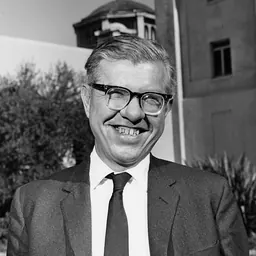

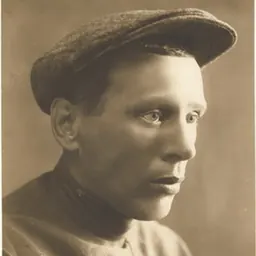

Contemporaries
People whose lives overlapped Merle Oberon's






Frequently asked questions
Who was Merle Oberon?
British actress (1911-1979)
When was Merle Oberon born?
Merle Oberon was born on 19 February 1911 in Mumbai.
When did Merle Oberon die?
Merle Oberon died on 23 November 1979 in Malibu.
What was Merle Oberon's occupation?
Merle Oberon was a screenwriter, film actor and actor.
What nationality was Merle Oberon?
Merle Oberon was British and American.
Sources & further reading
Cite this page
APA: Biography.guide. (2026). Merle Oberon. https://biography.guide/merle-oberon/
MLA: "Merle Oberon." Biography.guide, https://biography.guide/merle-oberon/.
Chicago: "Merle Oberon." Biography.guide. https://biography.guide/merle-oberon/.
Data last updated: 2026-09-22 · Spot an error? Report a correction.
Page generated 2026-09-27 05:34 UTC