
Meret Oppenheim
German-Swiss surrealist artist and lyricist
About Meret Oppenheim
Lived 1913 – 1985 (aged 72). Meret Oppenheim was a German and Swiss photographer, lyricist, painter, model, visual artist and sculptor.
Meret (or Méret) Elisabeth Oppenheim (6 October 1913 – 15 November 1985) was a German-born Swiss Surrealist artist and photographer.
Early life
Meret Oppenheim was born on 6 October 1913 in Berlin. She was named after Meretlein, a wild child who lives in the woods, from the novel Green Henry by Gottfried Keller. Oppenheim had two siblings, a sister Kristin (born 1915), and a brother Burkhard (born 1919). Her father, a German-Jewish doctor, was conscripted into the army at the outbreak of war in 1914. In Switzerland, Oppenheim was exposed to a plethora of art and artists from a young age, including Alfred Kubin, German Expressionists, French Impressionists and poems of the Romantics. Oppenheim was also inspired by her aunt, Ruth Wenger, especially by Wenger's devotion to art and her modern lifestyle.
By 1928, Oppenheim was introduced to the writings of Carl Jung through her father and was inspired to record her dreams. Oppenheim was interested in Jung's analytical approach, particularly his animus-anima theory. Throughout her life, Oppenheim carefully analyzed her own dreams and transcribed them in detail in her writings. She attempted to use them when addressing “fundamental life questions.” Likewise, Oppenheim used iconography and motifs from Jung's archetypes within her work throughout the years; typical motifs Oppenheim used include spirals and snakes. Oppenheim renounced the term “feminine art” and adopted Jung's ideal androgynous creativity in her art in which masculine and feminine aspects worked simultaneously.
The work of Paul Klee, the focus of a retrospective at the Kunsthalle Basel in 1929, provided another strong influence on Oppenheim, arousing her to the possibilities of abstraction.
In 1931, after receiving her father's permission to quit high school, she faced the choice between going to Paris or Munich to study art. She chose Paris.
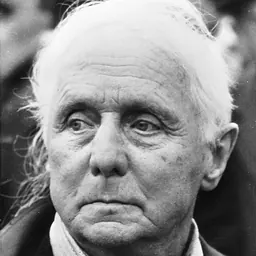
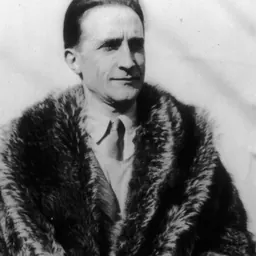
In May 1932, at the age of 18, Oppenheim moved to Paris from Basel, Switzerland and sporadically attended the Académie de la Grande Chaumière to study painting. Her first studio was a hotel room at Montparnasse Hotel in Paris. At this time she produced mainly paintings and drawings. In 1933, Oppenheim met Jean Arp and Alberto Giacometti. After visiting her studio and seeing her work, Arp and Giacometti invited her to participate in the Surrealist exhibition in the “Salon des Surindépendants,” Oppenheim later met André Breton and began to participate in meetings at the Café de la Place Blanche with the Surrealist circle. She impressed the surrealists with her uninhibited behavior. Shortly after she began to attend meetings regularly with Breton and other acquaintances, Oppenheim's circle was joined by other Surrealist artists such as Marcel Duchamp, Max Ernst, and Man Ray. The conceptual approach favored by Marcel Duchamp, Max Ernst, and Francis Picabia became important to her work.
Career In 1936, Meret Oppenheim had her first solo exhibition in Basel, Switzerland, at the Galerie Schulthess. She continued to contribute to Surrealist exhibitions until 1960. Many of her pieces consisted of everyday objects arranged to allude to female sexuality and feminine exploitation by the opposite sex. Oppenheim's paintings focused on the same themes. Her abundant strength of character and her self-assurance informed each work she created, conveying a certain comfortable confrontation with life and death. Her originality and audacity established her as a leading figure in the Surrealist movement. In Oppenheim: Object she was described as having embodied and "personified male Surrealism's ideal of the 'femme-enfant.'
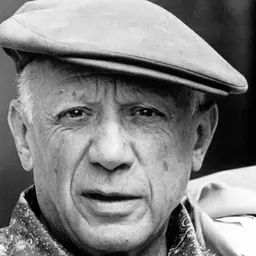
Oppenheim's best known artwork is Object (Le Déjeuner en fourrure) [Object (Breakfast in Fur)] (1936). Oppenheim's Object consists of a teacup, saucer and spoon that she covered with fur (she thought it was from a Chinese gazelle, though MoMA determined that it is not). Fur arguably represents affluence. The cup, hollow yet round, can evoke female genitalia; the spoon, with its phallic shape, adds another erotic note. Object was inspired by a conversation Oppenheim had with Pablo Picasso and his lover Dora Maar at the Café de Flore in Paris. As they admired a fur bracelet Oppenheim had designed, Picasso, according to one version of the story Oppenheim told, said everything could be covered in fur, even a cup and saucer. Viewers experienced various emotions as they observed Object, which was rendered dysfunctional. During the year of its creation, Object was purchased by Alfred Barr, who hoped to place it in the permanent collection of the Museum of Modern Art in New York, where it was included in the museum's landmark exhibition Fantastic Art: Dada and Surrealism. Due to this purchase, Oppenheim was thought to be the first woman in the museum's permanent collection, and she was dubbed "the First Lady of MoMA." But Barr, who bought the work with his own money, was unable to get conservative trustees to accept it, and it did not enter the permanent collection until 1963 (it entered the museum's study collection in 1946, where it was unseen for many years). In fact, Object became so widely known that many misconceptions about Oppenheim and her art were created because of it. Object has also been widely interpreted through a Freudian lens, and has been seen in a symbolic sense as a female sexual reference.
Throughout her life, Oppenheim has been willing to pose for photographers.
Oppenheim began working as an art conservator in 1944 during an eighteen year long depressive episode. Oppenheim was known for struggling with her awareness of the oppression of women in society. Oppenheim was also impacted when her father had to flee to Switzerland before World War II due to his Jewish surname; his credentials and training as a doctor were also discredited, leaving him unemployed. As a result, Oppenheim needed to do conservation for financial and emotional relief. She viewed the works she produced in this time of her life as imaginative and “projections of her fantasy. Oppenheim felt surrealism changed after World War II and she never exhibited with the Surrealists again.
Oppenheim's first retrospective was hosted by Moderna Museet Stockholm in 1967. In Switzerland, her first retrospective was held at Museum der Stadt, Solothurn (1974) and traveled to Kunstmuseum Winterthur and Wilhelm-Lehmbruck Museum, Duisburg, Germany in 1975.
In 1996, the Solomon R. Guggenheim Museum mounted Oppenheim's first major museum show in the United States at a time when renewed interest in her work, particularly among young artists, had already begun in Europe.
In 2013, a comprehensive retrospective of Oppenheim's work opened at the Martin-Gropius-Bau in Berlin, gathering the artist's paintings, sketches, sculptures, masks, clothing, furniture, and jewelry. Lenders included singer David Bowie, the Swiss retail tycoon and art dealer Ursula Hauser, and the Dutch diamond magnate Sylvio Perlstein.
From April 26 to September 14, 2014, the National Museum of Women in the Arts exhibited Meret Oppenheim: Tender Friendships. “This exhibition explores friendship as a source of inspiration and support. Inspired by the friendship between two 18th-century poets, Bettine Brentano and Karoline von Günderode, Oppenheim created paintings, prints, and poems dedicated to the two women, some of which are featured in the exhibition.”
In 2022, MoMA put on a retrospective exhibition that highlighted Oppenheim's continuous production over her lengthy career.
Recognition
Oppenheim received the on January 16, 1975. In her acceptance speech, Oppenheim coined the phrase "Freedom is not given to you — you have to take it." In 1982, three years before her death, she received the 1982 Berliner Kunstpreis.
In 2019, Basel inaugurated a plaza, road, fountain and a high-rise apartment building (by Herzog & de Meuron) all named after Oppenheim in the city center. The large fountain features her sculpture Spirale (der Gang der Natur).
Legacy Oppenheim has been esteemed as a figure of “feminist identification” for the women's movement and a role model for younger generations due to her “socio-critical and emancipatory attitude.” In 1975 Oppenheim gave a speech at “the presentation of Basler Kunstpreis” and directly asked women “to demonstrate to society by the invalidity of taboos by adopting unconventional ways of life” and utilize their intellect as a creative strength without fear.
In 2018, Oppenheim was the subject of a short documentary by Cheri Gaulke, Gloria's Call.
Don’t just read it —
keep it.
Full-length biographies made to live with: read them, listen on the way to work, watch them tonight.
- E-book
- Audio
- Video
Instant download · yours to keep · every purchase keeps this site free
Important facts
People in Meret Oppenheim's life
Named in this biography and alive at the same time




Related people
Same field, nearest in time



Contemporaries
People whose lives overlapped Meret Oppenheim's



Frequently asked questions
Who was Meret Oppenheim?
German-Swiss surrealist artist and lyricist (1913–1985)
When was Meret Oppenheim born?
Meret Oppenheim was born on 6 October 1913 in Berlin.
When did Meret Oppenheim die?
Meret Oppenheim died on 15 November 1985 in Basel.
What was Meret Oppenheim's occupation?
Meret Oppenheim was a photographer, lyricist, painter, model, visual artist and sculptor.
What nationality was Meret Oppenheim?
Meret Oppenheim was German and Swiss.
Sources & further reading
Cite this page
APA: Biography.guide. (2026). Meret Oppenheim. https://biography.guide/meret-oppenheim/
MLA: "Meret Oppenheim." Biography.guide, https://biography.guide/meret-oppenheim/.
Chicago: "Meret Oppenheim." Biography.guide. https://biography.guide/meret-oppenheim/.
Data last updated: 2026-09-20 · Spot an error? Report a correction.
Page generated 2026-09-27 05:29 UTC