
About Menachem Ziemba
Lived 1883 – 1943 (aged 59). Menachem Ziemba was a Polish rabbi.
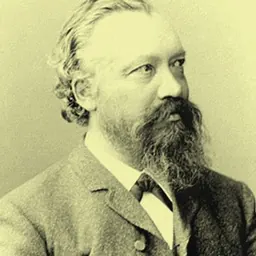
Rabbi Menachem Ziemba (1883–1943) was a distinguished pre-World War II Rabbi, known as a Talmudic genius and prodigy. He is known to be fluent in all of Talmud as well as many of the works of the later Rabbis such as Rabbi Joseph Rosen and Rabbi Meir Simcha of Dvinsk. He was gunned down by the Germans in the Warsaw Ghetto.
Biography Rabbi Ziemba was born in Praga, a suburb of Warsaw, in 1883. His father, Elazar, died while Menachem was still a young boy and the orphan was brought up by his grandfather Rabbi Avraham Ziemba. Rabbi Avraham had been a chassid of the Kotzker Rebbe and a student of the Chiddushei Harim, and was now a follower of the Sfas Emes of Gur.
Rabbi Ziemba was brought up in the Gerrer chasidus by his grandfather and remained a loyal chasid his entire life. Even years later when he was world-renowned as a Torah scholar, Posek, and master of Hasidic thought, he still considered himself a simple Chasid of the rebbe of Ger. When he visited Ger, he was called by his first name and refused to sit at the Rebbe's top table, an honour reserved for visitors of note.
As Rabbi Ziemba grew up in Warsaw, he gained a reputation as a Talmid Chacham (scholar) and genius. He maintained a correspondence with the Gaon of Rogatchov, an individual not known for his tolerance of mediocrity, and tolerance of younger students.
At the age of eighteen, Rabbi Ziemba married the daughter of a wealthy local merchant. He was thus able to learn the Torah unhindered for the next twenty years, a time remembered by him as the happiest years of his life. His fame spread further afield, attracting the attention of Rabbi Meir Simcha of Dvinsk and others. He once confided that he authored more than 10,000 pages of Torah novellae during this golden period.
When his father-in-law died, Rabbi Ziemba found it necessary to help out in the former's store in order to continue supporting his family. He rejected numerous offers to serve as rabbi in many towns and cities, including Chief Rabbi of Jerusalem and Rabbi of Lublin, Rabbi Ziemba was given two opportunities to escape from the ghetto. the others retreated under the ferocious assault.
The news of the Rabbi's death quickly spread to all neighboring hideouts. In spite of the great danger, a number of minyanim gathered. A Beth Din was set up, which decided to bury the Rabbi temporarily in a grave in the courtyard of Kupiecka 4. When the ghetto was finally liquidated, his entire immediate family was taken to Treblinka where they all perished.
Postscript In 1958, upon learning that the Polish Government was planning to rebuild the area of the ghetto that included Rabbi Ziemba's grave, his nephews Rabbi Avraham and Rabbi Yitzchok Meir Ziemba (who were with him to the very end) and others expended great efforts to exhume his body and bring it to Israel. After weeks of work by surveyors and others, his grave was finally located—all landmarks remembered by the survivors had been destroyed in the interim. His body was flown to Israel and after a funeral attended by all the Moetzes Gedolei HaTorah and tens of thousands of people, he was finally laid to rest on Har HaMenuchot.
Works Totzos Chaim, a work on the laws pertaining to carrying on Shabbos, written in honour of Rabbi Ziemba's father-in-law who died in 1920 Zera Avraham (seed of Abraham), a correspondence between Rabbi Ziemba and Rabbi Avraham Luftiber of Warsaw, son in law of Rav Meir Simcha of Dvinsk who died at a very young age. Gur Arye Yehuda, a book of novellae by Moshe Yehuda Arye, Rabbi Ziemba's prodigious son, who died at the age of 19 in 1924. It also contained some correspondence between father and son. He wrote works on the Sifra and Sifri and they are called Otzar Hasifra and Otzar Hasifri. Tens of thousands of pages of works authored by Rabbi Ziemba were destroyed in the burning of the Warsaw Ghetto. Among these was a treatise on the entire Rambam called Machaze Hamelech, another on the Talmud Yerushalmi called Menachem Yerushalaim, as well as hundreds of responsa and novellae on Bavli, Shulchan Aruch, Midrash and many other parts of the Torah. These works were lost for posterity.
Don’t just read it —
keep it.
Full-length biographies made to live with: read them, listen on the way to work, watch them tonight.
- E-book
- Audio
- Video
Instant download · yours to keep · every purchase keeps this site free
Important facts
People in Menachem Ziemba's life
Named in this biography and alive at the same time

Related people
Same field, nearest in time



Contemporaries
People whose lives overlapped Menachem Ziemba's



Frequently asked questions
Who was Menachem Ziemba?
Polish Hasidic Rabbi
When was Menachem Ziemba born?
Menachem Ziemba was born on 15 September 1883 in Praga.
When did Menachem Ziemba die?
Menachem Ziemba died on 24 April 1943 in Pawiak.
What was Menachem Ziemba's occupation?
Menachem Ziemba was a rabbi.
What nationality was Menachem Ziemba?
Menachem Ziemba was Polish.
Sources & further reading
Cite this page
APA: Biography.guide. (2026). Menachem Ziemba. https://biography.guide/menachem-ziemba/
MLA: "Menachem Ziemba." Biography.guide, https://biography.guide/menachem-ziemba/.
Chicago: "Menachem Ziemba." Biography.guide. https://biography.guide/menachem-ziemba/.
Data last updated: 2026-09-25 · Spot an error? Report a correction.
Page generated 2026-09-27 05:08 UTC