
About Melchior von Diepenbrock
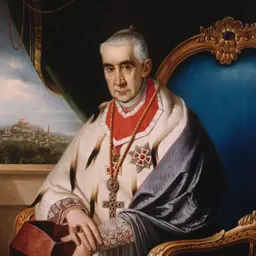
Lived 1798 – 1853 (aged 55). Melchior von Diepenbrock was a German catholic priest, politician, catholic bishop, translator, writer and catholic theologian.
Melchior, Freiherr von Diepenbrock (6 January 1798 at Bocholt in Westphalia – 20 January 1853 at the castle of Johannesberg in Jauernig) was a German Catholic Prince-Bishop of Breslau and Cardinal.
Life Diepenbrock attended the military academy at Bonn and took part in the campaign against France in 1815 as an officer of the militia. Upon his return, he was much attracted by the personality of Johann Michael Sailer, a friend of the family, at that time professor at the University of Landshut in Bavaria, and studied public finance at that institution. When Sailer was made Bishop of Ratisbon, Diepenbrock followed him there, took up the study of theology, and was ordained priest on 27 December 1823.
In 1835, Diepenbrock was made dean of the cathedral and vicar-general by the successor of Bishop Sailer. His knowledge of modern languages and his administrative ability, together with his understanding of the interior life and his ascetical character, paved the way for his elevation to the episcopal See of Breslau, to which he was elected on 15 January 1845. He at first declined the honor, but finally accepted out of obedience to the mandate of Pope Gregory XVI.
From the beginning of his reign, Diepenbrock was called to face difficult problems and momentous political events. There was famine in Upper Silesia. The Revolution of 1848 showed him to be one of the most loyal supporters of government, law, and order. The pastoral letter which he issued on this occasion was, by order of the king, read in all the Protestant churches of the realm. He devoted his energies to the training of the clergy, opened a preparatory seminary, and improved the conditions of the higher seminary. He was a watchful guardian of ecclesiastical discipline and, when necessary, employed severe measures to enforce it. He reintroduced retreats for the priests and missions for the people.
In 1849, Diepenbrock was appointed Apostolic delegate for the Prussian army. He was created cardinal in the consistory of 20 September 1850, and received the purple on 4 November. This event gave occasion to one of the most magnificent public demonstrations ever witnessed in Germany. It was soon followed by the cardinal's death from disease.
Diepenbrock's will bequeathed his estate to his diocese. In personal appearance, he was of dignified presence, but pleasant and affable to all.
Works
Diepenbrock was a noted preacher and poet. His principal publications are: "Spiritual Bouquet, Gathered in Spanish and German Gardens of Poesy" (Sulzbach, 1826); "Life and Writings of Heinrich Suso" (Ratisbon, 1829); "Sermons" (Ratisbon, 1841); "Pastoral Letters" (Munster, 1853); "Personal Letters" (Frankfort, 1860).
German composer Georgina Schubert (1840-1878) used Diepenbrock's text for her lieder “Wiegenlied.”
Don’t just read it —
keep it.
Full-length biographies made to live with: read them, listen on the way to work, watch them tonight.
- E-book
- Audio
- Video
Instant download · yours to keep · every purchase keeps this site free
Important facts
People in Melchior von Diepenbrock's life
Named in this biography and alive at the same time
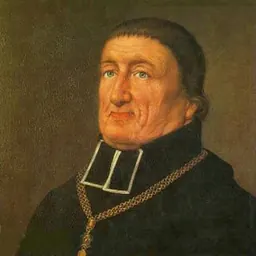
Related people
Same field, nearest in time
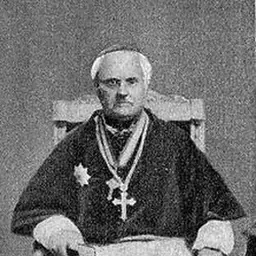

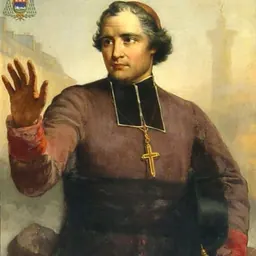
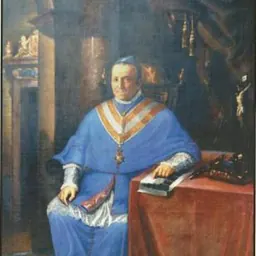

Contemporaries
People whose lives overlapped Melchior von Diepenbrock's





Frequently asked questions
Who was Melchior von Diepenbrock?
Catholic cardinal (1798-1853)
When was Melchior von Diepenbrock born?
Melchior von Diepenbrock was born on 6 January 1798 in Bocholt.
When did Melchior von Diepenbrock die?
Melchior von Diepenbrock died on 20 January 1853 in Schloss Johannisburg.
What was Melchior von Diepenbrock's occupation?
Melchior von Diepenbrock was a catholic priest, politician, catholic bishop, translator, writer and catholic theologian.
What nationality was Melchior von Diepenbrock?
Melchior von Diepenbrock was German.
Sources & further reading
· Wikipedia: Melchior von Diepenbrock
· DBpedia: Melchior von Diepenbrock
Cite this page
APA: Biography.guide. (2026). Melchior von Diepenbrock. https://biography.guide/melchior-von-diepenbrock/
MLA: "Melchior von Diepenbrock." Biography.guide, https://biography.guide/melchior-von-diepenbrock/.
Chicago: "Melchior von Diepenbrock." Biography.guide. https://biography.guide/melchior-von-diepenbrock/.
Data last updated: 2026-09-20 · Spot an error? Report a correction.
Page generated 2026-09-27 05:28 UTC