
About Melchior Adam Weikard
Lived 1742 – 1803 (aged 61). Melchior Adam Weikard was a German and Russian physician and university teacher.
Melchior Adam Weikard was born on April 27, 1742, near Fulda Germany. He was a physician and a philosopher. Weikard wrote the earliest reference to the behavioral disorder attention deficit hyperactivity disorder (ADHD). He was progressive for his time, believing that illnesses have physical causes and that they are not a result of moral wrongs or the spiritual influences. Weikard died near his birthplace on July 25, 1803.
Early life
Weikard grew up around Fulda and, at the age of six, developed a spinal deformity. In secondary school, at the Frobenius-Gymnasium in Hammelburg, Weikard studied in the modern-day equivalent of the STEM program.
Adult life
Despite his reported lack of proficient teachers, he succeeded in his career. In 1763, Weikard became a physician in Fulda and, in a last act of defiance, refused sacraments on his deathbed. While there, he was appointed to State Council and served in the position until he left of his own accord in 1789. In 1791 he became the personal physician of Prince-Bishop Karl Theodor von Dalberg of Mainz but stopped shortly after in 1792. He then retired to his home and became a Privy Councilor, Director of the Medical Institutes. he describes a “lack of attention” disorder commonly known as attention deficit hyperactivity disorder or ADHD. He provides many details that closely match the disorder we currently know, and many of Weikard's observations hold up to modern scrutiny. Weikard characterizes the disorder as distractible by anything even a person's own imagination, taking more effort to complete tasks, flighty, careless, work has many errors, and generally disorganized. He hints at impulsivity though he does not explicitly say it. This matches the DSM-V's diagnostic criteria of inattention and hints at the hyperactivity and impulsivity criteria.
Weikard attributes the problem to “the fibers too soft or too agile and can also cause the fact that they lack the necessary strength for the constant attention.” He blamed upbringing for the lack of ability of the “fibers”. This incorrect idea of upbringing causing the disorder persisted well into the 1970s and some still believe that it is the cause today. Weikard also gives cures for this disorder. He recommends distractions to be removed, though he goes a step farther in saying being left alone in a dark room will help. This is not an ethical practice and is not recommended. He also recommends “rubbing, cold baths, steel powder, cinchona, mineral waters, horseback riding, and gymnastic exercises” along with making sure the individual learns a topic thoroughly and in a way that is interesting to them before they move on to other topics. The majority of these cures are rubbish but removing distractions and exercising are currently used to temporarily lessen symptoms and increase productivity.
Weikard also makes the correct observation that this disorder was more prevalent in children than adults. He noted that women are less attentive than men which is incorrect and was colored by the ideas of the day.
Impact After Weikard, the Scottish physician Sir Alexander Crichton wrote about ADHD in 1798. Crichton was the first person to publish a textbook only on mental diseases and he went on to write a second book on the topic. Crichton's disease of attention is also extremely consistent with today's definition. For a long time, it was recorded that Crichton had the earliest reference to ADHD. This could be attributed to the lack of translations of Weikard's work into English or simply modern scholars did not look closely at his work. Then in 2012 Barkley and Peters wrote their article about Weikard and his diagnosis. They had heard a story of a medical book that referenced a condition similar to ADHD that was written before Crichton's. They found an original copy of Weikard's book and translated it. You may note that Weikard's and Crichton's disorders are similar and only 23 years apart in publication. Barkley and Peters suggest that Crichton might have met and known Weikard since Crichton studied in cities where Weikard lived and taught. Though Crichton gives no reference to Weikard in his own texts. We now, of course, give credit to Weikard on writing the earliest reference to ADHD.
Don’t just read it —
keep it.
Full-length biographies made to live with: read them, listen on the way to work, watch them tonight.
- E-book
- Audio
- Video
Instant download · yours to keep · every purchase keeps this site free
Important facts
People in Melchior Adam Weikard's life
Named in this biography and alive at the same time


Related people
Same field, nearest in time

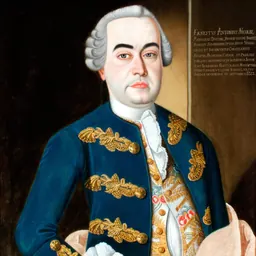


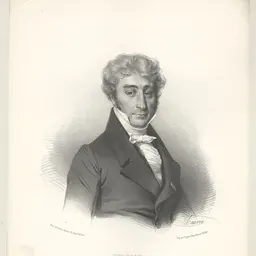
Contemporaries
People whose lives overlapped Melchior Adam Weikard's
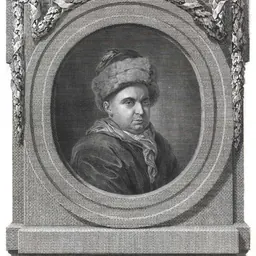




Frequently asked questions
Who was Melchior Adam Weikard?
German physician (1742-1803)
When was Melchior Adam Weikard born?
Melchior Adam Weikard was born on 27 April 1742 in Bad Brückenau.
When did Melchior Adam Weikard die?
Melchior Adam Weikard died on 25 July 1803 in Bad Brückenau.
What was Melchior Adam Weikard's occupation?
Melchior Adam Weikard was a physician and university teacher.
What nationality was Melchior Adam Weikard?
Melchior Adam Weikard was German and Russian.
Sources & further reading
· Wikipedia: Melchior Adam Weikard
· DBpedia: Melchior Adam Weikard
Cite this page
APA: Biography.guide. (2026). Melchior Adam Weikard. https://biography.guide/melchior-adam-weikard/
MLA: "Melchior Adam Weikard." Biography.guide, https://biography.guide/melchior-adam-weikard/.
Chicago: "Melchior Adam Weikard." Biography.guide. https://biography.guide/melchior-adam-weikard/.
Data last updated: 2026-09-20 · Spot an error? Report a correction.
Page generated 2026-09-27 05:18 UTC