
About Meir Dizengoff
Lived 1861 – 1936 (aged 75). Meir Dizengoff was a Russian diplomat, politician, businessperson, chemist and mayor.
Business ventures While studying chemical engineering at the University of Paris, Dizengoff met Edmond James de Rothschild, who sent him to Ottoman-ruled Palestine to establish a glass factory which would supply bottles for Rothschild's wineries. Dizengoff opened the factory in Tantura in 1892, but it proved unsuccessful due to impurities in the sand. At this time Dizengoff's wife contracted malaria. Since she was pregnant, her doctors advised that she go to Paris. There she gave birth to a girl, but the baby soon died. The couple never had any additional children. After this tragedy and the failure of the bottle factory, Dizengoff soon returned to Kishinev. and served as the Belgian consul. When Dizengoff learned that residents were organizing to build a new neighborhood, Tel Aviv, he formed a partnership with the Ahuzat Bayit company and bought land on the outskirts of Jaffa, which was parceled out to the early settlers by lot.
Founding of Tel Aviv
After Akiva Aryeh Weiss founded the Ahuzat Bayit housing association in 1906, Dizengoff joined him to help to establish a modern Jewish quarter near the Arab city of Jaffa in 1909. In this position he dealt with aid sent to the exiles of Tel Aviv and received the nickname Reish Galuta. He widely circulated and publicized the plight of the exiles, mainly via newspapers, and succeeded in convincing the rulers to agree to a regular supply of food and provisions to the exiles. In 1917, after having received funding from Nili, Dizengoff refused not only to provide funds to free Nili member Yosef Lishansky, but even funds to provide the succor that Dizengoff provided other prisoners and even anti-Zionists, despite having received the money from Nili.
Right after the Arab riots of April–May 1921, he persuaded the authorities of the British Mandate to recognize Tel Aviv as an independent municipality and not a part of Jaffa.
Meir Dizengoff's funeral, 24 September 1936, Tel Aviv. Photo by Matson Photo Service. Dizengoff was consequently involved with the development of the city, and encouraged its rapid expansion—carrying out daily inspections, and paying attention to details such as entertainment. He was usually present at the head of the Adloyada, the annual Purim carnival. After his wife's death, he donated his house to the city of Tel Aviv, for use as an art museum, and he influenced many important artists to donate their work to improve the museum. traveled to Tel Aviv, on the invitation of Dizengoff, to help establish a Jewish Museum of Art. They stayed at Dizengoff's house in the city.
In 1936, with the outbreak of the Arab revolt, the port of Jaffa was shut down by a general strike, which was proclaimed by the Arab Higher Committee. Dizengoff pressured the government to give him permission to open a port in his new city of Tel Aviv, and before his death he managed to dedicate the first pier of Tel Aviv's new port. His dedication began with the words: "Ladies and gentlemen, I can still remember the day when Tel Aviv had no port".
Dizengoff House / Independence Hall
In 1930, after the death of his wife, Dizengoff donated his house to his beloved city of Tel Aviv and requested that it be turned into a museum. The house underwent extensive renovations and became the Tel Aviv Museum of Art in 1932. The museum moved to its current location in 1971. On 14 May 1948, David Ben-Gurion declared the independence of the State of Israel at the Dizengoff residence. The building is now a history museum and known as Independence Hall.
There is a monument at Dizengoff House (Independence Hall) honoring both the 66 original families of Tel Aviv as well as a statue of Dizengoff riding his famous horse.
Death Dizengoff died on September 23, 1936. He is buried in the Trumpeldor Cemetery in Tel Aviv.
Commemoration Meir Park and Dizengoff Street are named after him.
The Dizengoff prize, awarded since 1937 annually by the municipality of Tel Aviv was named after him.
Don’t just read it —
keep it.
Full-length biographies made to live with: read them, listen on the way to work, watch them tonight.
- E-book
- Audio
- Video
Instant download · yours to keep · every purchase keeps this site free
Important facts
People in Meir Dizengoff's life
Named in this biography and alive at the same time
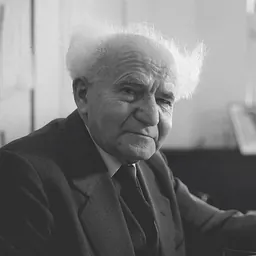
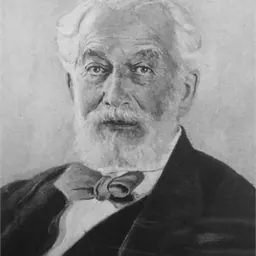



Related people
Same field, nearest in time
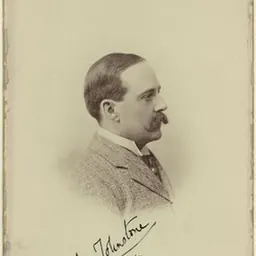
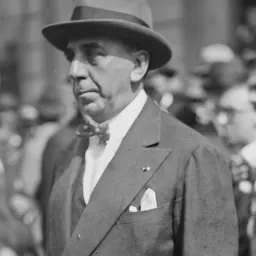
Contemporaries
People whose lives overlapped Meir Dizengoff's



Frequently asked questions
Who was Meir Dizengoff?
Zionist politician (1861-1936)
When was Meir Dizengoff born?
Meir Dizengoff was born on 25 February 1861 in Bessarabia Governorate.
When did Meir Dizengoff die?
Meir Dizengoff died on 23 September 1936 in Tel Aviv.
What was Meir Dizengoff's occupation?
Meir Dizengoff was a diplomat, politician, businessperson, chemist and mayor.
What nationality was Meir Dizengoff?
Meir Dizengoff was Russian.
Sources & further reading
Cite this page
APA: Biography.guide. (2026). Meir Dizengoff. https://biography.guide/meir-dizengoff/
MLA: "Meir Dizengoff." Biography.guide, https://biography.guide/meir-dizengoff/.
Chicago: "Meir Dizengoff." Biography.guide. https://biography.guide/meir-dizengoff/.
Data last updated: 2026-09-20 · Spot an error? Report a correction.
Page generated 2026-09-27 05:33 UTC