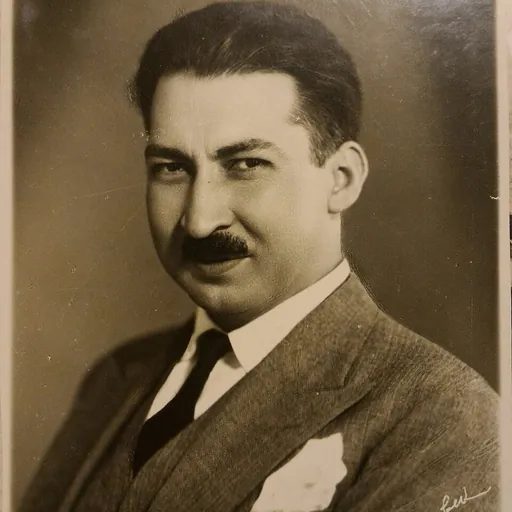
Mehmed Said Şamil
North Caucasian politician and émigré leader
About Mehmed Said Şamil
Lived 1901 – 1981 (aged 79–80). Mehmed Said Şamil was a Turkish military personnel, politician and author.
Muhammad Said Shamil, also referred to in the North Caucasus as Muhammad Said Bey, or Said-Bek Shamil (1901 – 21 March 1981) was a North Caucasian politician and émigré leader. The grandson of rebel leader Imam Shamil, Shamil was the monarch of the North Caucasian Emirate during the 1920–1921 Dagestan uprising before later going into exile. He was one of the leading figures of Prometheism, a Polish-led political project seeking to bring about the disintegration of the Soviet Union, and participated in several political projects by North Caucasian émigrés such as the and the (which he led). Shamil played a significant role in encouraging anti-communism in the Arab and Islamic world during the interwar period.
Family and early life
Muhammad Said Shamil was born in 1901 to Muhammad Kamil and Naciba Khanum. Muhammad Kamil (1863–1951), born in Kaluga, was a general of the Ottoman Army and additionally the youngest son of Imam Shamil, one of the leaders of North Caucasian resistance to Russia amidst the Caucasian War. Naciba Khanum was the daughter of a teacher from Medina, named Muhammad Said Efendi. Said had two sisters, Nacia (1899–1983) and Nacabat (1916–1983).
Shamil was born in Constantinople (now Istanbul), the capital of the Ottoman Empire. In 1916 he participated in a Lausanne meeting billed as the "Congress of the 26 Oppressed Peoples of Russia", organised by the Union des Nationalités of Juozas Gabrys.
In addition to his native Avar language, Shamil spoke Arabic, English, French, Russian, and Turkish. and never bore any children. Later replaced by the North Caucasian Emirate, the region was invaded by the White Army in 1919 and subsequently by the Russian Soviet Federative Socialist Republic in 1920, bringing an end to the region's independence. On 11 May 1920 a group of anti-communist North Caucasian political figures gathered in the village of Vedeno, where they selected Muhammad Kamil as leader of their uprising. As Muhammad Kamil was ill, he sent Said, then aged 19, to serve as leader on his behalf. having left under the protection of French forces. His arrival boosted the morale of the rebels, and he brought with him money and textiles intended to aid the uprising. According to contemporary accounts he expressed protest when asked to lead the rebellion, stating that he was too young to undertake such an activity. Despite his demurral, however, his appointment as leader continued, and he was formally inaugurated as a monarch during a meeting with imam Najmuddin of Gotzo in the village of . upon which he returned to Turkey and was admitted to a military hospital. He stayed hospitalised for the next two months.
Seeking to further their support in the region, the German government brought together around 40 nationally minded intellectuals (including Shamil) and held negotiations at the Hotel Adlon to acquire their support. During the negotiations, Shamil learned that Germany had no intentions to establish an independent state in Dagestan, and instead planned to annex the region. Negotiations continued for six months before Shamil and others sharing his opposition to the annexation of Dagestan left Germany.
Post-war period Following the end of the war, Shamil continued to participate in Islamic conferences across the world, speaking on the state of Islam within the Soviet Union. Alongside Baymirza Hayit he was recognised by the Soviet government at this time as the country's "enemy number one" in the Muslim world. Over the course of the next 20–25 years Shamil lived primarily in the Middle East. He also participated in the American Committee for the Liberation of the Peoples of Russia.
In Turkey Shamil's activities were primarily directed towards the preservation of North Caucasian culture. Along with Pshemakho Kotsev, the Mountainous Republic's former Prime Minister, he founded the North Caucasians' Cultural and Mutual Aid Society in 1951. He participated in the Arab League's 1953 meetings, seeking to draw attention to the Soviet policy of population transfer. In 1975 Shamil was one of the founders of the Shamil Educational and Cultural Foundation.
Death During a 1981 hajj Shamil lost his balance and fell, suffering a concussion. He was hospitalised, and at his request returned to Turkey, where his condition began to worsen. On 21 March 1981, in Haydarpaşa hospital, Shamil died. He was buried alongside his family and in the Caucasian Mujahid Shamil section of the Karacaahmet Cemetery. Following his death Shamil's large personal library was handed over to the Shamil Foundation.
Don’t just read it —
keep it.
Full-length biographies made to live with: read them, listen on the way to work, watch them tonight.
- E-book
- Audio
- Video
Instant download · yours to keep · every purchase keeps this site free
Important facts
People in Mehmed Said Şamil's life
Named in this biography and alive at the same time


Related people
Same field, nearest in time



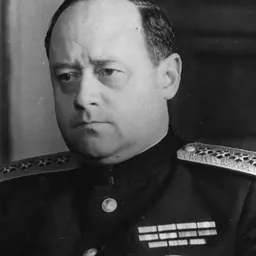

Contemporaries
People whose lives overlapped Mehmed Said Şamil's


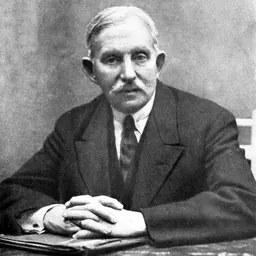

Frequently asked questions
Who was Mehmed Said Şamil?
North Caucasian politician and émigré leader (1901–1981)
When was Mehmed Said Şamil born?
Mehmed Said Şamil was born in 1901 in Istanbul.
When did Mehmed Said Şamil die?
Mehmed Said Şamil died in 1981 in Istanbul.
What was Mehmed Said Şamil's occupation?
Mehmed Said Şamil was a military personnel, politician and author.
What nationality was Mehmed Said Şamil?
Mehmed Said Şamil was Turkish.
Sources & further reading
· Wikipedia: Mehmed Said Şamil
Cite this page
APA: Biography.guide. (2026). Mehmed Said Şamil. https://biography.guide/mehmed-said-samil/
MLA: "Mehmed Said Şamil." Biography.guide, https://biography.guide/mehmed-said-samil/.
Chicago: "Mehmed Said Şamil." Biography.guide. https://biography.guide/mehmed-said-samil/.
Data last updated: 2026-09-23 · Spot an error? Report a correction.
Portrait: Wikimedia Commons · author & licence
Page generated 2026-09-27 05:07 UTC