
About Mburumba Kerina
Lived 1932 – 2021 (aged 89). Mburumba Kerina was a Namibian politician and political scientist.
Mburumba Kerina (born William Eric Getzen; 6 June 1932 – 14 June 2021) was a Namibian politician and academic. He was a co-founder of SWAPO, NUDO, and FCN, and the founder of a host of smaller political parties. For independent Namibia, he was a member of Namibia's Constituent Assembly, as well as the National Assembly and the National Council. Kerina coined the name "Namib" for the independent state "Namibia" on the territory of South West Africa.
Early life and education Kerina had Ovambo and Ovaherero ancestry, and was also a great-grandson of explorer and trader Frederick Thomas Green, from which he derived his surname (Kerina ). Mburumba was born William Eric Getzen on 6 June 1932 in Tsumeb. He grew up in Walvis Bay and went to school in Windhoek Old Location where he attended St Barnabas Anglican Church School. While schooling he came into contact with Reverend Michael Scott, who would later enable him to study in the United States, and to become one of the early petitioners to the United Nations.
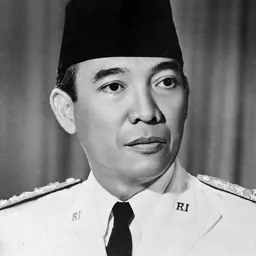
He went to the United States in 1953 and studied at Lincoln University in Pennsylvania. He graduated with a Bachelor of Arts in 1957. Kerina then became a graduate fellow at New School for Social Research, New York, and between 1960 and 1962 did a PhD at Padjadjaran University in Bandung, Indonesia. While in Indonesia, Kerina got an audience with then-president Sukarno, who, according to Kerina, advised him to find a better name for the territory of South West Africa whose independence he was fighting for. Kerina subsequently wrote an opinion piece in an Indonesian publication about a yet-to-be created country Namib and its nationalist movement, Namibianism.
Political career
Early years as UN petitioner From 1956 onwards, Kerina was among the first petitioners to the United Nations for Namibian independence on behalf of the Herero Chiefs' Council. Other early petitioners besides Kerina and Scott were Hosea Kutako, Hans Beukes, Markus Kooper, Ismael Fortune, advocate Jariretundu Kozonguizi, and Namibia's founding President Sam Nujoma. In December the Old Location Uprising in Windhoek gave the liberation struggle a different direction. Following protests and an effective boycott of municipal services by Main Location residents, the police opened fire on the protesters, killing 11 and wounding 44 others. A brother of Kerina was among those killed. by forcing community leaders from OPO into exile, including Sam Nujoma. It is also probably one of the main reasons for SWAPO to have put less effort into petitioning and resistance, and to turn the independence struggle into an armed conflict.
Both OPO and SWANU soon realised that a broader group would serve the nationalist interests better. SWANU founder Fanuel Kozonguizi and OPO leader Sam Nujoma discussed whether a merger of OPO and SWANU would achieve that result but Kerina's suggestion to expand OPO into the South West Africa People's Organization (SWAPO) was implemented in 1960, mainly because SWANU did not have the full support of the Herero Chiefs' Council. Kerina became one of SWAPO's co-founders, and is the person to have suggested the name. Morgan Norval writes:
However, all was not well [...]. A growing rift was developing between the moderates and the hardliners. The hardliners, led by Nujoma, were insistent upon following the path of a war of liberation. They looked with disdain on those seeking a political solution to the independence question in Namibia.
In 1964 Kerina returned from the US for an unsuccessful attempt to enter Namibia. He stayed in Bechuanaland (today Botswana) for a while but soon was expelled from there and moved to Tanzania. In September 1965 the National Unity Democratic Organisation (NUDO) was founded by Kerina, Clemens Kapuuo, and Hosea Kutako. NUDO at that time was an organisation that had mainly Herero followers. It was created at the suggestion of the Herero Chiefs' Council. Later that year, the UN General Assembly revoked South Africa's mandate to govern South West Africa, and created the position of a United Nations Commissioner for Namibia.
Turnhalle Conference
In the meantime, the white inhabitants of South West Africa and conservative black members of the population, including Kerina, tried to contain the violence and preserve the status quo. The South African government hoped that by means of small reforms and compromises a broad spectrum of the indigenous population would cease their support for armed resistance. This was the aim of the Turnhalle Constitutional Conference, a controversial conference held in Windhoek between 1975 and 1977 which was tasked with the development of a constitution for a self-governed Namibia under South African control. Sponsored by South African government, the Turnhalle Conference laid the framework for the government of South West Africa from 1977 to independence in 1989.
The Turnhalle conference was widely criticised for providing "pseudo-reforms",
Academia Between 1953 and Namibian independence in 1990, Kerina stayed in the United States but frequently visited Namibia for sustained periods. In the US he worked as an academic, holding both administrative and academic positions, often in parallel, at various institutions. Kerina held a lecturer position at New York City School of Visual Arts (1966–1968) and an assistant and later associate professor position at the Brooklyn College of the City University of New York (1968–1971). Between 1982 and 1992, he worked as a consultant. Kerina lived in Windhoek Katutura suburb.
In 2019, the City of Windhoek named former Bahnhof Street in the central business district after him in recognition of his role in the fight for Namibian independence.
Kerina died due to COVID-19 in Windhoek on 14 June 2021, during the COVID-19 pandemic in Namibia. He was 89.
Don’t just read it —
keep it.
Full-length biographies made to live with: read them, listen on the way to work, watch them tonight.
- E-book
- Audio
- Video
Instant download · yours to keep · every purchase keeps this site free
Important facts
People in Mburumba Kerina's life
Named in this biography and alive at the same time




Related people
Same field, nearest in time


Contemporaries
People whose lives overlapped Mburumba Kerina's

Frequently asked questions
Who was Mburumba Kerina?
Namibian politician
When was Mburumba Kerina born?
Mburumba Kerina was born on 6 June 1932 in Tsumeb.
When did Mburumba Kerina die?
Mburumba Kerina died on 14 June 2021 in Windhoek.
What was Mburumba Kerina's occupation?
Mburumba Kerina was a politician and political scientist.
What nationality was Mburumba Kerina?
Mburumba Kerina was Namibian.
Sources & further reading
Cite this page
APA: Biography.guide. (2026). Mburumba Kerina. https://biography.guide/mburumba-kerina/
MLA: "Mburumba Kerina." Biography.guide, https://biography.guide/mburumba-kerina/.
Chicago: "Mburumba Kerina." Biography.guide. https://biography.guide/mburumba-kerina/.
Data last updated: 2026-09-20 · Spot an error? Report a correction.
Page generated 2026-09-27 05:15 UTC