
About Maximo Inocencio
Lived 1833 – 1896 (aged 62). Maximo Inocencio was an architect.
Máximo F. Inocencio (18 November 1833 – 12 September 1896) was a Filipino architect and businessman involved in construction, shipping, trade and lumber. He figured in the 1872 Cavite mutiny and was a financial supporter of the Philippine Revolution, leading to his execution by the Spaniards in 1896. Consequently, he and the other Filipinos executed came to be known as the Thirteen Martyrs of Cavite.
Early life Máximo Inocencio was born in San Roque de Cavite (now Cavite City). His parents were Ana Marie and Tranquilino Inocencio. His mother was a direct descendant of the Spanish family Franco. His father was a seaman who made voyages to and from Mexico. He was still a young boy when his father died.
Although one source identifies Inocencio as an architect and a carpenter by profession, little is known about his schooling. He pursued an independent occupation as an apprentice in a carpentry shop of the Cavite Arsenal. He later became a contractor and erected churches, bridges, buildings, and other public works in Cavite. His shop was located at San Roque, employing about 25 men.
Cavite Mutiny Máximo Inocencio had an established business and was a well-known citizen of means when the Cavite Mutiny of 1872 took place. Three priests – Mariano Gomez, Jose Burgos, and Jacinto Zamora – were executed on suspicion that they had plotted the mutiny. A historian states that Inocencio had nothing to do with this uprising, but because he was a Freemason, he was implicated in it. He was sentenced to 10 years imprisonment and deported to Ceuta, a penal colony of Spanish Morocco. He did business with the Spanish Navy and maintained a yard where repairs on small boats were done. Later, he established a sawmill and lumberyard.
He had three sailboats, Dos Hermanos La Luz, Amparo, and Aurea, which he used for hauling logs and transporting firewood from Mindoro, Mariveles, and from as far as Lagingmanok (renamed Padre Burgos), in Tayabas (now Quezon province) and also imported goods from China and Vietnam. He also regained his social prestige. In 1895, he was one of the members of the junta inspectora of the Hospicio de San Jose in Cavite, an honorary office headed by the parish priest. He was also a proprietor of a large store and was a contractor of the arsenal.
Philippine Revolution Inocencio joined the Katipunan and continued to support political causes including the Propaganda Movement abroad. In the Philippine Revolution of 1896, he offered his house as a hiding place for General Emilio Aguinaldo. Following Inocencio's death, the latter used Inocencio's mansion as his residence and headquarters before transferring to Bacoor on July 4, 1898. It was here that Aguinaldo established the Dictatorial Government on May 24, 1898. It was also here that Julián Felipe was asked by Aguinaldo to compose, and later play, a march that would become the Philippine national anthem. Bearing the Hong Kong-made first Filipino flag, Aguinaldo left La Casa Grande shortly after lunch on June 12, 1898, and headed to Kawit to proclaim Philippine Independence from the central window of his ancestral home.
The Spanish government began its crackdown on suspected revolutionaries when a seamstress told the governor's wife of her suspicion that Severino Lapidario, Alfonso de Ocampo and Luis Aguado were hatching a plot to overthrow the Spanish government. These three men were arrested, tortured and their statements were the basis of the arrests in the next few days.
Inocencio was implicated together with other prominent citizens of Cavite. He was the leader and financial supporter of the Katipunan revolt. The families of the 13 defendants were not informed of the verdict. They were not given the chance to say goodbye to their families. Their trial was kept a secret. At age 63, Maximo was the oldest of the 13.
After the execution, bullet-ridden bodies were loaded into carabao-drawn carts and dumped in a common grave at the Catholic cemetery at the village of Caridad. Later, the bodies of seven of the victims, including Inocencio, were exhumed and interred in separate niches by Fr. Celedonio Mateo, a friendly Recollect friar as requested by their families. He had been variously described as a diligent and hard worker, and a charitable citizen who did not fail to lend a helping hand to the needy. Inocencio's family niche at the Crypt of San Agustin Church (Manila). He had nine children by his wife, Doña Narcisa Francisco, four of whom reached maturity. One of his granddaughters, Amalia Inocencio Jaime, married the war hero Gen. Benito Alejandrino Natividad.
Unfortunately, many of his projects were destroyed by aerial bombing during World War II, among them the Cavite provincial government building, the former provincial high school, the cathedral and parochial house of San Pedro and his residence, La Casa Grande on Calle Arsenal (now P. Gomez Street).
The city of Trece Martires, Cavite is named after the thirteen martyrs. There are life size statues of Inocencio and the other martyrs in a memorial erected in their honour.
Barangay Inocencio in Trece Martires is named in his honour.
In popular culture
Portrayed by Soliman Cruz in the 2012 film El Presidente. Portrayed by Neil Ryan Sese in the 2023 film GomBurZa.
Don’t just read it —
keep it.
Full-length biographies made to live with: read them, listen on the way to work, watch them tonight.
- E-book
- Audio
- Video
Instant download · yours to keep · every purchase keeps this site free
Important facts
People in Maximo Inocencio's life
Named in this biography and alive at the same time


Related people
Same field, nearest in time
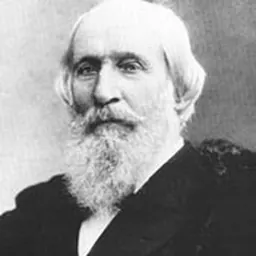
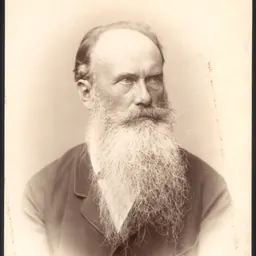


Contemporaries
People whose lives overlapped Maximo Inocencio's
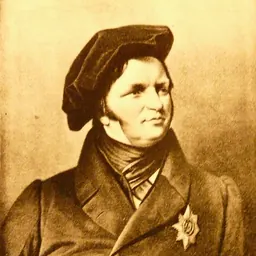
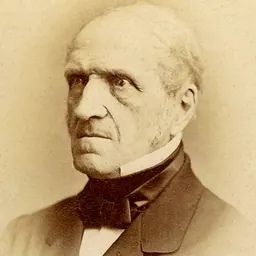



Frequently asked questions
Who was Maximo Inocencio?
Filipino architect and businessman
When was Maximo Inocencio born?
Maximo Inocencio was born on 18 November 1833 in Cavite City.
When did Maximo Inocencio die?
Maximo Inocencio died on 12 September 1896 in Cavite City.
What was Maximo Inocencio's occupation?
Maximo Inocencio was an architect.
What nationality was Maximo Inocencio?
Maximo Inocencio's recorded nationality: Spanish East Indies.
Sources & further reading
Cite this page
APA: Biography.guide. (2026). Maximo Inocencio. https://biography.guide/maximo-inocencio/
MLA: "Maximo Inocencio." Biography.guide, https://biography.guide/maximo-inocencio/.
Chicago: "Maximo Inocencio." Biography.guide. https://biography.guide/maximo-inocencio/.
Data last updated: 2026-09-20 · Spot an error? Report a correction.
Page generated 2026-09-27 05:23 UTC