
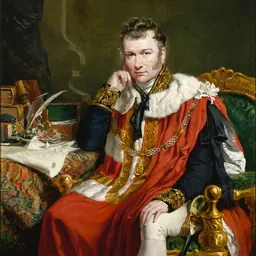
Maximilian, Count of Merveldt
Austrian diplomat and general
About Maximilian, Count of Merveldt
Lived 1764 – 1815 (aged 51). Maximilian, Count of Merveldt was a diplomat, military officer, ambassador, court of St. James's, second Congress of Rastatt and st. Petersburg.
Maximilian, Count von Merveldt (29 June 1764 – 5 July 1815; aka Maximilian Graf von Merveldt) He joined the military service in 1782, in a dragoon regiment, and was promoted to lieutenant and first lieutenant by 1787. In the wars between Austria and the Ottoman Empire, (1787–1791), he was a Rittmeister, or captain of cavalry and wing adjutant to Field Marshal Franz Moritz, Count von Lacy. In 1790, Merveldt commanded the Volunteers Grün-Loudon and later that year, after his promotion to major, he served on the staff of Field Marshal Ernst Gideon, Baron von Laudon in Moravia.
Military career
War of the First Coalition Following the defeat of the insurrection in the Austrian Netherlands, he received permission from Field Marshal Laudon, shortly before the latter's death, to take a one year novitiate in the Teutonic Order, at Bonn where he remained until April 1792. The outbreak of the War of the First Coalition against France required his military talents and Mervelt rejoined the Habsburg army at as adjutant to Josias, Prince of Saxe-Coburg-Saalfeld. He led two infantry battalions in the Habsburg victory at Neerwinden (18 March 1793), during which his battalions repulsed a strong French column. For his role at the head of his battalions of grenadiers, which his commander considered greater than duty required, in this victory, Merveldt received the honor of carrying the message to the Emperor Francis in Vienna. There, he was promoted to lieutenant colonel and awarded the Knight's Cross of the Military Order of Maria Theresa on 7 July 1794. Subsequently, he was appointed as an attaché to the staff of Frederick, Duke of York.
In the 1794 campaign, Merveldt fought at the Battle of Famars and again at the Battle of Villers-en-Cauchies, south of Landrecies on 22 April, during which he commanded the right wing. At the Battle of Willems, he guided the British cavalry into a flanking position based on his knowledge of the terrain. After the Battle of Tournai (22 May 1794), he was promoted on the field to Oberst (colonel). His failing health prevented him from continued field service and he took sick leave until early 1796. In 1796 he transferred to the 18th Chevau-légers Regiment Karaczay and fought at the Battle of Kircheib, in the Westerwald, where, despite the French superiority of numbers, the Habsburgs eked out a victory. At Kircheib, with two squadrons of Chevaux-legers, Merveldt saved the Austrian artillery from French capture, thus contributing to the Habsburg victory. The Tagebericht (daily dispatch) of the Army of the Rhine referred to his keen sense of duty, and his ability to seize the moment, which, in this case, proved a vital element in the extraordinary success of the small Habsburg force against the considerably larger French one.
Diplomatic and military career during the Napoleonic Wars
Napoleonic Wars In 1805 he was in Berlin when the hostilities between France and Austria resumed, and he returned to the Danube valley, where he fought a series of rearguard actions. He avoided being caught in the capitulation of Ulm and fell back toward Mikhail Kutuzov's Russian army. With 6,000 soldiers in six line and ten Grenz infantry battalions plus 14 squadrons of cavalry, Merveldt made for Styria, hoping to join the army of Archduke Charles. Napoleon detached Louis Davout's III Corps in pursuit. Slowed by heavy snow in the mountains, his "poorly-handled corps" was overtaken by the French. At Gross-Ramig, also called Mariazell, in the Austrian Steiermark, on 8 November 1805, his exhausted troops were routed by General of Brigade Etienne Heudelet de Bierre's advanced guard of Louis-Nicolas Davout's III Corps; half, about 2,000, were taken prisoner, and they lost four colors and 16 guns.
Promotions Major: 14 February 1790 Lt. Colonel: 03 April 1793 Colonel : 26 April 1794 Major General: 8 September 1796 (effective 10 September 1796) Lt. Field Marshal 4 September 1800 (effective 5 September 1800) General of Cavalry: 22 July 1813
After the War of the Third Coalition, he acted as ambassador to St. Petersburg for over two years, with the assignment of improving military relations between the armies of the respective countries. and was appointed Privy Councilor. During this time, he married Countess Maria Theresia von Dietrichstein, member of the powerful House of Dietrichstein, who was previously divorced from Count Philip Joseph, Count Kinsky von Wchinitz und Tettau (1741–1827).
In 1808 he was given command of a cavalry division in Lemberg. In early 1809, Merveldt became a prominent member of the group pushing for war against France, together with such notables as Archduke Ferdinand, Archduke John, Empress Maria Ludovika of Austria-Este, and Count Heinrich von Bellegarde. In the 1809 campaign, Merveldt's force was stationed in the Bukowina and part of Galicia, and from 1809 to mid-1813, he spent three years in Moravia.
On 22 July 1813 he was appointed governor of the fortress of Theresienstadt and shortly after that Commanding General in Moravia and Silesia. He then became commander of II Corps; the First Division held the village of Nollendorf, in the French defeat at the Battle of Kulm (now Chlumec) on 29–30 August 1813.
On 16 October, during the Battle of Leipzig, Merveldt's forces were arrayed on the right flank of the French center, commanded by Napoleon. On his own right stood Wittgenstein's Corps, and beyond that, Johann von Klenau's. His troops were interspersed among several wooded sections and surrounding several small villages: Dölitz, Mark-Kleeburg and Gautsch. Opposite him were the forces of Józef Antoni Poniatowski and Pierre Augereau. He rode out to view the battlefield and to direct the disposition of his force. Near Dölitz, which lay close to the French line, he wandered into a troop of Hungarians, or so he thought, but they were actually a mixed group of Saxons and Poles, whom he mistook for Hungarians, and was captured. Most of the action, on the first day, occurred to the north, where Blücher's Prussians repelled Michel Ney's cavalry, but when Napoleon heard that Ney and Marmont had been forced back, he sought a cease-fire from the Allied monarchs. He called for Merveldt, and, after a meeting, Merveldt carried Napoleon's proposal to the allied monarchs, which they refused.
Final diplomatic missions As a condition of his release at Leipzig, he agreed not to participate in combat against France. Subsequent to his release, Merveldt was appointed commanding general of Moravia, and lived in Brno, where he received in January 1814 the instructions to proceed to London as an envoy extraordinaire to the Court of St. James's, replacing Baron Wessembourg. He arrived in London in early March, and met the Prince Regent at Carlton House on 7 March 1814, where he ceremoniously presented his ambassadorial credentials. He was well-received in Britain, and became a notable personage, invited to many social events; he told good stories about the wars and the various people he had encountered, which made him popular in social circles. When he died in 1815, the British government proposed to bury him at Westminster Abbey. However, his widow took into account his last wishes and had the remains sent to Germany. He was buried in the crypt of the Michaelis Chapel in Lembeck Castle where his grave still exists.
Don’t just read it —
keep it.
Full-length biographies made to live with: read them, listen on the way to work, watch them tonight.
- E-book
- Audio
- Video
Instant download · yours to keep · every purchase keeps this site free
Important facts
People in Maximilian, Count of Merveldt's life
Named in this biography and alive at the same time


Related people
Same field, nearest in time


Contemporaries
People whose lives overlapped Maximilian, Count of Merveldt's



Frequently asked questions
Who was Maximilian, Count of Merveldt?
Austrian diplomat and general (1764-1815)
When was Maximilian, Count of Merveldt born?
Maximilian, Count of Merveldt was born on 29 June 1764 in Münster.
When did Maximilian, Count of Merveldt die?
Maximilian, Count of Merveldt died on 5 July 1815 in London.
What was Maximilian, Count of Merveldt's occupation?
Maximilian, Count of Merveldt was a diplomat, military officer, ambassador, court of St. James's, second Congress of Rastatt and st. Petersburg.
Sources & further reading
· Wikipedia: Maximilian, Count of Merveldt
· DBpedia: Maximilian, Count of Merveldt
Cite this page
APA: Biography.guide. (2026). Maximilian, Count of Merveldt. https://biography.guide/maximilian-count-of-merveldt/
MLA: "Maximilian, Count of Merveldt." Biography.guide, https://biography.guide/maximilian-count-of-merveldt/.
Chicago: "Maximilian, Count of Merveldt." Biography.guide. https://biography.guide/maximilian-count-of-merveldt/.
Data last updated: 2026-09-20 · Spot an error? Report a correction.
Page generated 2026-09-27 05:21 UTC