
About Mavis Gallant
Lived 1922 – 2014 (aged 91). Mavis Gallant was a Canadian novelist, journalist, writer, essayist, short story writer and playwright.
Mavis Leslie de Trafford Gallant, ( Young; 11 August 1922 – 18 February 2014), was a Canadian writer who spent much of her life and career in France. Best known as a short story writer, she also published novels, plays and essays. and his wife, Benedictine Wiseman. Young died in 1932 of kidney disease while Gallant was away at boarding school, but she was told her father had gone on a trip to England.
Gallant was educated at seventeen public, private, and convent schools in the United States and Canada.
She married John Gallant, a Winnipeg musician, in 1942.
Career In her 20s, Gallant briefly worked for the National Film Board before taking a job as a reporter for the Montreal Standard (1944–1950).
Gallant left journalism in 1950 to pursue fiction writing full-time. The magazine soon published other stories of hers, including "One Morning in June" and "The Picnic". She did not initially know these later stories had been accepted by the magazine, as her literary agent, Jacques Chambrun, pocketed her $1,535 in royalties and told her the magazine had declined her stories, while simultaneously lying about her residence to the magazine so they could not contact her directly; she discovered that she had been published only upon seeing her name in the magazine while reading it in a library, and thus established her longstanding relationship with the magazine by directly contacting and befriending New Yorker fiction editor William Maxwell.
She published 116 stories in The New Yorker throughout her career, putting her in the same league as John Cheever or John Updike. Alongside Alice Munro, Gallant is one of only a few Canadian authors whose works have regularly appeared in the magazine. Her "Linnet Muir" series of stories, which appeared in several of her books before being collected in their entirety in Home Truths, are her most explicitly semi-autobiographical works.
Throughout Gallant's early career, Canadian literary critics often wrote of her as being unfairly overlooked in Canada because of her expatriate status; prior to the 1970s, in fact, her books were not picked up by Canadian publishers at all, and were available only as rare and expensive American imports until Macmillan of Canada bought publication rights to From the Fifteenth District. According to journalist Robert Fulford, the neglect flowed in both directions, as Gallant did not actually undertake any serious effort to secure a Canadian publisher until Macmillan editor Douglas Gibson approached her in the late 1970s. In response, Gibson compiled Home Truths: Selected Canadian Stories, a collection of previously published stories selected to highlight the Canadian themes and settings present in her work. That volume won the Governor General's Award for English-language fiction in 1981. Gallant was honoured at Symphony Space in New York City on November 1, 2006, in an event for Selected Shorts—fellow authors Russell Banks, Jhumpa Lahiri and Michael Ondaatje honoured her and read excerpts from her work, and Gallant herself made a rare personal appearance, reading one of her short stories in its entirety.
Gallant's private journals were slated for publication by McClelland and Stewart and Knopf, with the first volume covering the period from 1952 to 1969, but as of 2023 have yet to appear.
Gallant was candid about her desire for autonomy and privacy. In an interview with Geoff Hancock in Canadian Fiction magazine in 1978, she discussed her "life project" and her deliberate move to France to write by saying, "I have arranged matters so that I would be free to write. It's what I like doing." In the preface to her collection Home Truths: Selected Canadian Stories (1981), she used the words of Boris Pasternak as her epigraph: "Only personal independence matters."
Death Gallant died, aged 91, on February 18, 2014.
Critical assessment Grazia Merler observes in her book, Mavis Gallant: Narrative Patterns and Devices, that "Psychological character development is not the heart of Mavis Gallant's stories, nor is plot. Specific situation development and reconstruction of the state of mind or of heart is, however, the main objective." Frequently, Gallant's stories focus on expatriate men and women who have come to feel lost or isolated; marriages that have grown flimsy or shabby; lives that have faltered and now hover in the shadowy area between illusion, self-delusion, and reality. Because of her heritage and understanding of Acadian history, she is often compared to Antonine Maillet, considered to be a spokesperson for Acadian culture in Canada.
In her critical book Reading Mavis Gallant, Janice Kulyk Keefer says: "Gallant is a writer who dazzles us with her command of the language, her innovative use of narrative forms, the acuity of her intelligence, and the incisiveness of her wit. Yet she also disconcerts us with her insistence on the constrictions and limitations that dominate human experience."
In a review of her work in Books in Canada in 1978, Geoff Hancock asserts that "Mavis Gallant's fiction is among the finest ever written by a Canadian. But, like buried treasure, both the author and her writing are to discover." In the Canadian Reader, Robert Fulford writes: "One begins comparing her best moments to those of major figures in literary history. Names like Henry James, Chekhov, and George Eliot dance across the mind."
Depiction of fascism Fascism is a recurring subject in Gallant's stories. She once described her 1973 collection The Pegnitz Junction as "a book about where fascism came from . . . not the historical causes of Fascism—just its small possibilities in people." The story, which is Gallant's most widely anthologized work and has been called "arguably her masterpiece," depicts an art dealer in 1970s France who seems to slowly embrace fascism. At the same time, there are details in the story that seem to undermine his association with fascist ideology.
According to critic Andy Lamey, the protagonist of "Speck's Idea" should indeed be viewed as a fascist, "but of a particular, non-ideological type." In the 1970s, France was undergoing a debate about the country's collaboration with its Nazi occupiers during World War II. Lamey offers historical material to suggest that Gallant's story is informed by this debate. He characterizes "Speck's Idea" as a "dramatization of how a segment of the French population, which its central character represents, could tolerate and condone fascism for reasons other than a deep attraction to fascist ideas. These reasons include indifference and self-interest. Gallant's protagonist ultimately illustrates how fascism drew not merely on ideological, but also on opportunistic, motivations."
Awards and honours In 1981, Gallant was named an Officer of the Order of Canada for her contribution to literature.
In popular culture In 2018, the Pakistani-American author Sadia Shepard was accused of having copied Gallant's short story "The Ice Wagon Going Down the Street" in her story "Foreign-Returned".
Director Wes Anderson based one of the stories in his 2021 film The French Dispatch on "The Events in May: A Paris Notebook", a two-part New Yorker story written by Gallant. A fictional reporter inspired by Gallant was portrayed in the film by actress Frances McDormand.
Don’t just read it —
keep it.
Full-length biographies made to live with: read them, listen on the way to work, watch them tonight.
- E-book
- Audio
- Video
Instant download · yours to keep · every purchase keeps this site free
Important facts
People in Mavis Gallant's life
Named in this biography and alive at the same time


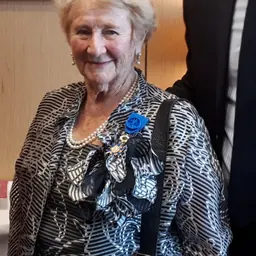





Related people
Same field, nearest in time




Contemporaries
People whose lives overlapped Mavis Gallant's
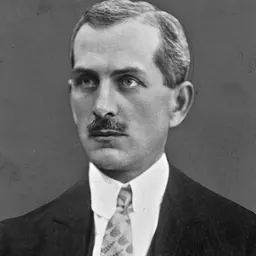
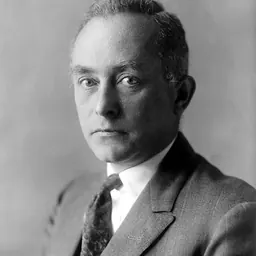


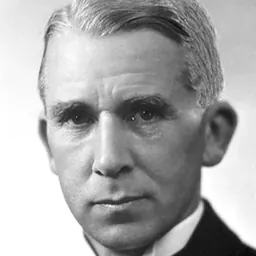
Frequently asked questions
Who was Mavis Gallant?
Canadian writer (1922–2014)
When was Mavis Gallant born?
Mavis Gallant was born on 11 August 1922 in Montreal.
When did Mavis Gallant die?
Mavis Gallant died on 18 February 2014 in 6th arrondissement of Paris.
What was Mavis Gallant's occupation?
Mavis Gallant was a novelist, journalist, writer, essayist, short story writer and playwright.
What nationality was Mavis Gallant?
Mavis Gallant was Canadian.
Sources & further reading
Cite this page
APA: Biography.guide. (2026). Mavis Gallant. https://biography.guide/mavis-gallant/
MLA: "Mavis Gallant." Biography.guide, https://biography.guide/mavis-gallant/.
Chicago: "Mavis Gallant." Biography.guide. https://biography.guide/mavis-gallant/.
Data last updated: 2026-09-20 · Spot an error? Report a correction.
Page generated 2026-09-27 05:24 UTC