
About Maurice Walsh
Lived 1879 – 1964 (aged 84). Maurice Walsh was an Irish writer.
A new musical based on his novel, Castle Gillian, was adapted by Victor Kazan (book and lyrics), Kevin Purcell (music). Castle Gillian: An Irish Tale had its world-premiere in Dublin at the Smock Alley Theatre, 25-26 April 2025 presented by Entr'acte produced in association with Quill & Quaver Associates.
Life Maurice Walsh was born on or about 21 April 1879, in the townland of Ballydonoghue, near Lisselton, County Kerry, Ireland. He was the third of ten children and the first son born to John Walsh, a local farmer, and his wife, Elizabeth Buckley, who lived in a three-roomed thatched farmhouse.
His father was politically involved in the National Land League but his main interests were books and horses and he employed others to work the farm. One of these farmhands was called Paddy Bawn Enright, whose name was later used in the short story "The Quiet Man", although it was changed for the movie version. John Walsh passed on to his son a love of books, as well as Irish legends and folk tales and the theory of place which features in much of his work.
Walsh produced some 20 novels, plus a large number of short stories, many set in Scotland or the West of Ireland and containing a mix of drama and romance. Much of his work invoked a rural Ireland that was fast disappearing in the 1930s and proved immensely popular, being translated into Italian, Danish, French, German and Flemish.
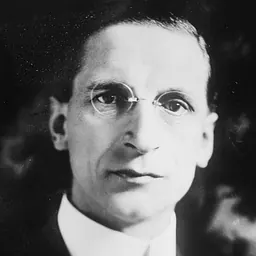
In 1908, he married Caroline Begg, always referred to by her nickname "Toshon", who came from Dufftown, Banffshire, in Scotland; they had three sons, Ian, Neil and Maurice, and two daughters, Molly and Elizabeth, both of whom died young. One of his grandsons is Irish painter Manus Walsh. Caroline predeceased him in January 1941; Walsh himself died on February 18, 1964, in Blackrock, Dublin, and was buried in the Esker cemetery at Lucan, Dublin. The then President of Ireland, Éamon de Valera, attended his funeral Mass.
Career Glenfiddich Distillery, Dufftown; while in the Excise Service, Walsh was based in the area to monitor compliance. Walsh went to school in nearby Lisselton, later attending St Michael's College in Listowel to prepare for the Civil Service examination. He entered the Customs and Excise Service in 1901 as an Assistant Revenue Officer and after an initial posting in Limerick, was sent to Scotland; with the exception of 1909-1913 when he was based in Ireland, he spent much of his British service in the Highlands, where his job involved monitoring whisky distilleries in Speyside. This was where he met Scots novelist Neil Gunn, who also worked in the Excise Service and became a close friend.
In 1908, Walsh sold two stories to the Irish Emerald, a Dublin magazine containing a mix of stories by Irish writers with articles on Irish history and language. In 1912, this combined with The Shamrock to form The Shamrock and Irish Emerald before folding in 1919. One of these stories was "Eudmon Blake; or, The sack of Athenree", which he later used as the basis for his 1932 novel Blackcock's Feather.
In 1922, Walsh transferred to the Excise service of the newly formed Irish Free State and moved to Dublin, where he joined Comhaltas Cana, the Irish customs officers association, and wrote for its journal Irisleabhar. Over the next decade, several short stories were printed in The Dublin Magazine, a journal founded in 1925 featuring Irish authors, including Samuel Beckett, and the poet Austin Clarke. another has been developed, based on his novel Castle Gillian.
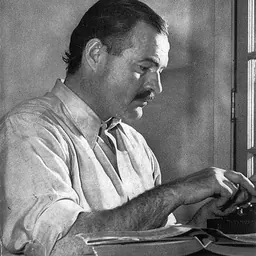
Assessment GPO in the 1916 Rising. 'A terrible beauty was born' (WB Yeats); the apogee of Irish Romantic nationalism (illustration by Walter Paget) Walsh is remembered today primarily for his short story "The Quiet Man", but in the 1930s and 1940s, he was one of Ireland's best selling authors. His admirers are said to have included Ernest Hemingway, while his historical novels were set in periods and perspectives less well-known today. The 1932 work Blackcock's Feather covers the 1594-1603 Nine Years War, while the 1937 novel And No Quarter follows the 1644-1645 campaigns of Montrose from the perspective of his Irish troops. Sons of the Swordmaker goes back to the first century BCE; it also features common links between Scotland and Ireland, while the second half is a re-working of the Irish saga The Destruction of Da Derga's Hall.
Much of his work was produced in the aftermath of the 1923-1924 Irish Civil War, fought with particular bitterness in his home county of Kerry. This included its most notorious atrocity at Ballyseedy; nine Anti-Treaty prisoners were tied to a landmine, which was then detonated, killing all but one who was miraculously blown clear.
Like other Irish writers of his era, such as W. B. Yeats, Walsh was influenced by Romantic nationalism and the ideas of Johann Gottfried von Herder (1744–1803), who argued nationality was the product of climate, geography and 'more particularly, languages, inclinations and characters.' This meant being Irish was not a function of race, politics or religion but a shared physical and cultural landscape, an idea with enormous appeal in the divided Ireland of the late 1920s and 1930s.
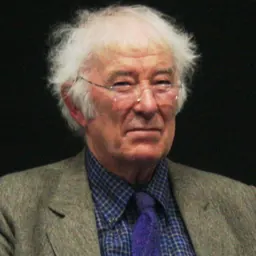
This is reflected in Walsh's style which the poet Seamus Heaney described as being "an atmosphere, a sense of bogs and woods". In his novels, he appeals to the idea of a united Gaeldom and a united Ireland, regardless of nationality or religion; And No Quarter is set within Montrose's combined Scottish-Irish army, while the hero Martin Somers is an Englishman and member of the Protestant Church of Ireland, which in 2016 still had over 126,400 members in Eire. The five stories in Green Rushes that include "The Quiet Man" share a common theme of IRA members coming to terms with their memories of the fighting.
However, it has been argued that after 1922, '...Romantic Nationalism, having served its purpose, became an irrelevance, even an encumbrance, in the troubled future course of Irish history.' Walsh's style and approach fell out of fashion in the 1950s.
He is listed in the 1948 publication Catholic Authors: Contemporary Biographical Sketches, 1930-1952, Volume 1 and is also included in the Macmillan Dictionary of Irish Literature.
Books The Key Above the Door (1926) While Rivers Run (1928) The Small Dark Man (1929) Blackcock's Feather (1932) The Road to Nowhere (1934); poaching and romance in the Scottish Highlands; Green Rushes, incorporating The Quiet Man and other related stories (1935) And No Quarter (1937) Sons of the Swordmaker (1938); The Hill Is Mine (1940) Son of Apple (1940), An old Irish Folk-Story retold from a translation by Catriona MacLeod Thomasheen James, Man-of-no-Work (1941) The Spanish Lady (1943) The Man in Brown (Nine Strings To Your Bow in the USA) (1945) Castle Gillian (1948); follows the fortunes of two couples running an Irish racing stable; Trouble in the Glen (movie adaptation) (1950) Son of a Tinker, a collection of short stories (1951) The Honest Fisherman, ditto (1953) A Strange Woman's Daughter (1954) Danger Under the Moon (1956) The Smart Fellow, a collection of short stories (1964)
Don’t just read it —
keep it.
Full-length biographies made to live with: read them, listen on the way to work, watch them tonight.
- E-book
- Audio
- Video
Instant download · yours to keep · every purchase keeps this site free
Important facts
People in Maurice Walsh's life
Named in this biography and alive at the same time



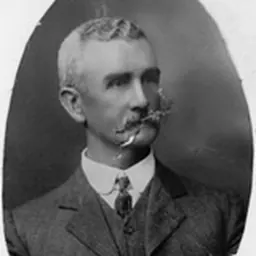
Related people
Same field, nearest in time
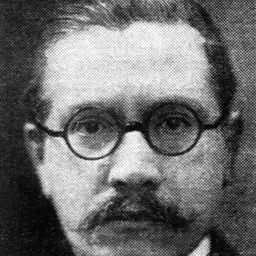

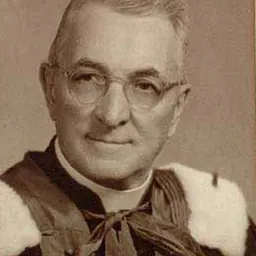

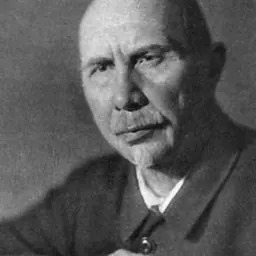
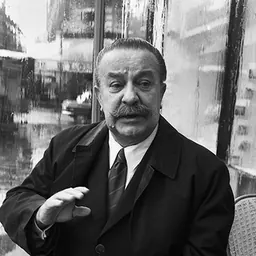
Contemporaries
People whose lives overlapped Maurice Walsh's


Frequently asked questions
Who was Maurice Walsh?
Irish writer (1879–1964)
When was Maurice Walsh born?
Maurice Walsh was born on 21 April 1879 in Listowel.
When did Maurice Walsh die?
Maurice Walsh died on 18 February 1964 in Blackrock.
What was Maurice Walsh's occupation?
Maurice Walsh was a writer.
What nationality was Maurice Walsh?
Maurice Walsh was Irish.
Sources & further reading
Cite this page
APA: Biography.guide. (2026). Maurice Walsh. https://biography.guide/maurice-walsh/
MLA: "Maurice Walsh." Biography.guide, https://biography.guide/maurice-walsh/.
Chicago: "Maurice Walsh." Biography.guide. https://biography.guide/maurice-walsh/.
Data last updated: 2026-09-20 · Spot an error? Report a correction.
Page generated 2026-09-27 05:29 UTC