
Maurice Margarot
British activist
About Maurice Margarot
Lived 1745 – 1815 (aged 69–70).
Maurice Margarot (1745–1815) is most notable for being one of the founding members of the London Corresponding Society, a radical society demanding parliamentary reform in the late eighteenth century.
Early life
Maurice Margarot was the son of a wine and general merchant, also named Maurice, and his wife Catherine. Born in 1745, he lived most of his childhood in London, but his father's work caused the family to travel widely: he was baptized in Portugal at the British Factory Chaplaincy, in Lisbon, on 27 August 1749; educated at the University of Geneva in Switzerland. He and his father were both involved in a campaign to free John Wilkes from prison in 1769.
Margarot followed his father in business and political interest. Living in France during the French Revolution in 1789, Margarot had acquaintances among the revolutionary leaders. He was inspired (as well as further radicalized) by the French people and the revolution, and returned to England in 1792, where he followed Thomas Hardy into the London Corresponding Society to further the cause of reform. In May 1792, the Society elected Margarot as its chairman. Margarot's signature, along with Hardy's, were present on all the early publications by the London Corresponding Society, and this continued for several years. The publications called for fiscal and electoral reform as well as shorter parliaments.
Trial and transportation
In December 1793, Margarot was arrested and charged with involvement in seditious practices. The trial overseen by Thomas Elder in his capacity as Chief Magistrate of Edinburgh in January 1794 was notable due to mob demonstrations in Margarot's favor. Margarot was not locked up, and in his Narrative of the Sufferings of T.F. Palmer and William Skirving (1794) Palmer claimed that Margarot was in league with Campbell. No hearings were held, however, when the Surprize reached New South Wales later in the year.
Later life and death Following his and his wife's return to England, Margarot served as a witness in Parliamentary hearings concerning mis-governance and corruption in New South Wales (such as that which led to the Rum Rebellion), and his own sentence that he claimed was unjust in length. He stood witness before the 1812 parliamentary committee on transportation, where he continued his pursuit against the officers from New South Wales.
He published two pamphlets upon his return to England that marked his return to an interest in British politics. The pamphlets are Thoughts on Revolution (Harlow, 1812) and Proposal for a Grand National Jubilee (Sheffield, nd). Both put forward old radical themes as well as how desirable it would be to base an economy on a local farmer and to restrict commerce to a minimum.
He died in December 1815 in extreme poverty, and under continued government suspicion as a pro-French radical. By that time, many domestic British radicals also held Margarot in suspicion, primarily because of Palmer's accusations concerning the mutiny.
He was buried in Old St. Pancras Churchyard in London. His name is listed on Burdett Coutts memorial there amongst the interments with no marker.
Reputation In the early years of the Chartist movement, Francis Place and others (including, earlier, Thomas Hardy) sought to rehabilitate Margarot's reputation, as plans went forwards for monuments to the martyrs in Edinburgh, and in London. The monuments stand today at the Old Calton Burial Ground, on Calton Hill, Edinburgh, and in Nunhead Cemetery, London. The commemoration of the sacrifices made by Scottish Martyrs became a key touchstone of Chartist publicity.
Don’t just read it —
keep it.
Full-length biographies made to live with: read them, listen on the way to work, watch them tonight.
- E-book
- Audio
- Video
Instant download · yours to keep · every purchase keeps this site free
Important facts
People in Maurice Margarot's life
Named in this biography and alive at the same time
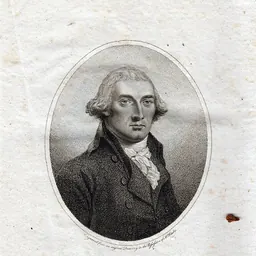
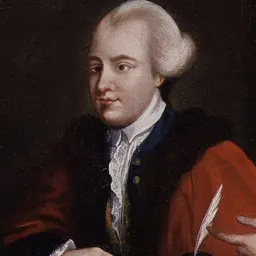
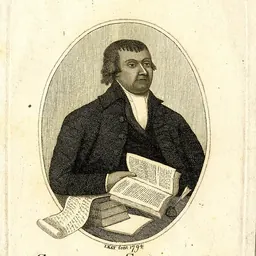
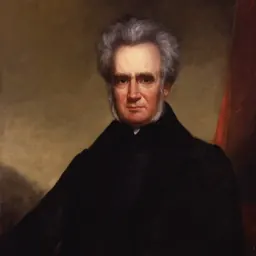

Contemporaries
People whose lives overlapped Maurice Margarot's






Frequently asked questions
Who was Maurice Margarot?
British activist
When was Maurice Margarot born?
Maurice Margarot was born in 1745 in Devon.
When did Maurice Margarot die?
Maurice Margarot died in 1815 in London.
What was Maurice Margarot known for?
Maurice Margarot was known for London Corresponding Society.
Sources & further reading
Cite this page
APA: Biography.guide. (2026). Maurice Margarot. https://biography.guide/maurice-margarot/
MLA: "Maurice Margarot." Biography.guide, https://biography.guide/maurice-margarot/.
Chicago: "Maurice Margarot." Biography.guide. https://biography.guide/maurice-margarot/.
Data last updated: 2026-09-22 · Spot an error? Report a correction.
Page generated 2026-09-27 05:22 UTC