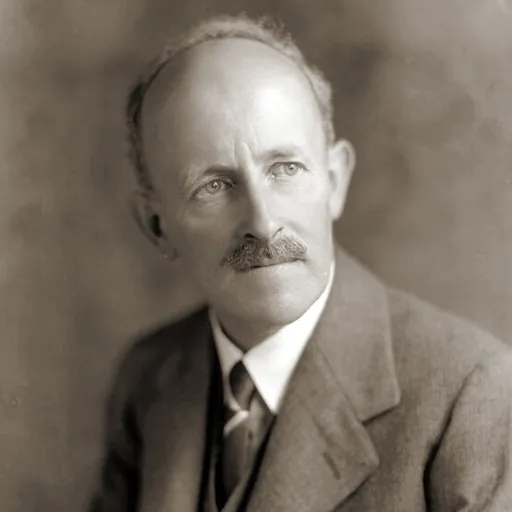
About Maurice Hankey, 1st Baron Hankey
Lived 1877 – 1963 (aged 85). Maurice Hankey, 1st Baron Hankey was a British politician and minister.
Early life The third son of R. A. Hankey, Maurice Hankey was born at Biarritz in 1877 and educated at Rugby School. He joined the Royal Marine Artillery, was promoted to captain and served in successive roles, including as coastal defence analyst in the War Division of the Naval Intelligence Department (1902–1906). His youngest brother, Donald Hankey, was a soldier best known for a series of essays that he wrote while he served on the Western Front in World War I. Donald died in action at Battle of the Somme.
Career in government In 1908, Hankey was appointed Naval Assistant Secretary to the Committee of Imperial Defence. He became Secretary to the Committee in 1912, a position that he would hold for 26 years. In November 1914, he took on the additional duty of Secretary of the War Council. In that function, he took notice of the ideas of Major Ernest Swinton to build a tracked armoured vehicle and brought them to the attention of Winston Churchill on 25 December 1914. This led to the eventual creation of the Landship Committee.
In December 1916, David Lloyd George became Prime Minister and greatly changed how the government was run. A small War Cabinet was instigated, and Hankey was appointed as its Secretary and served as Secretary of the Imperial War Cabinet, which also incorporated representatives of the Colonies and Dominion governments. He gained such a reputation for strong competence that when the full Cabinet was restored in 1919, the secretariat was retained, and Hankey then served as Secretary to the Cabinet for 19 years.
In 1923, he acquired the further position of Clerk of the Privy Council. During his long tenure (1923-1938), he would also often serve as British Secretary to many international conferences and Secretary-General of many Imperial Conferences. John Cairncross, one of the Cambridge Spies, briefly served as his secretary.
In August 1938, Hankey retired from government and became a British Government Director of the Suez Canal Company, a post that he would hold for only one year. Hankey remained a respected figure and was often consulted by ministers and civil servants for advice. In August 1939, he advised Neville Chamberlain about the formation of a new War Cabinet and, the following month, became another of Chamberlain's many non-party political appointments when he was made Minister without Portfolio and a member of the War Cabinet. Hankey was reluctant to take on the task but agreed to do so. He became Chancellor of the Duchy of Lancaster when Chamberlain was succeeded by Winston Churchill in May 1940 but was left out of Churchill's War Cabinet.
In July 1941, Lord Hankey was moved to the position of Paymaster General, but the following year, he was dropped from the government altogether. He continued to hold other positions in both the public and private sectors until his death.
Post-war writings After World War II, Hankey emerged as a leading critic of the war crimes trials, and in his 1950 book Politics, Trials and Errors, he argued that the Allies had no right to convict German and Japanese leaders of war crimes. Hankey kept handwritten diaries throughout most of his years as a civil servant, including during his time as Secretary to the War Council and Imperial War Cabinet of the First World War. The diaries are held at the Churchill Archives Centre in Cambridge, England, and can be read by the public.
Personal life and death Around Christmas 1902, Hankey met Adeline de Smidt. They married in September 1903. The couple had a strong and supportive relationship, with Adeline frequently accompanying him to social engagements with prominent figures, and to significant events such as the Paris Peace Conference and the Genoa Conference. They had four children: Robert (born 1905), Ursula (born 1909), Christopher (born 1911) and Henry (born 1914). A fifth child was stillborn in 1916. The Hankey family moved several times while their children were young, living in Malta for a year in 1907 before eventually settling in Highstead, near Limpsfield, Surrey.
Lord Hankey died in 1963, aged 85, and was succeeded in his barony by his eldest son, Robert.
Honours In the 1912 Birthday Honours, Hankey was appointed to the Order of the Bath as a Companion. He was then promoted within the same order as a Knight Commander in 1916 and as a Knight Grand Cross in 1919. In the 1929 Birthday Honours, Sir Maurice was appointed to the Order of St Michael and St George as a Knight Grand Cross. In the 1934 New Year Honours, Sir Maurice was appointed to the Royal Victorian Order as a Knight Grand Cross.
In the 1939 New Year Honours, he was raised to the peerage as Baron Hankey, of The Chart in the County of Surrey. The same year, he was also appointed to the Privy Council. In 1942, he was elected to the Royal Society as a Fellow under Statute 12 for those "who have rendered conspicuous service to the cause of science, or are such that election would be of signal benefit to the Society".
Don’t just read it —
keep it.
Full-length biographies made to live with: read them, listen on the way to work, watch them tonight.
- E-book
- Audio
- Video
Instant download · yours to keep · every purchase keeps this site free
Important facts
People in Maurice Hankey, 1st Baron Hankey's life
Named in this biography and alive at the same time



Related people
Same field, nearest in time





Contemporaries
People whose lives overlapped Maurice Hankey, 1st Baron Hankey's



Frequently asked questions
Who was Maurice Hankey, 1st Baron Hankey?
British civil servant (1877-1963)
When was Maurice Hankey, 1st Baron Hankey born?
Maurice Hankey, 1st Baron Hankey was born on 1 April 1877 in Biarritz.
When did Maurice Hankey, 1st Baron Hankey die?
Maurice Hankey, 1st Baron Hankey died on 26 January 1963 in London.
What was Maurice Hankey, 1st Baron Hankey's occupation?
Maurice Hankey, 1st Baron Hankey was a politician and minister.
What nationality was Maurice Hankey, 1st Baron Hankey?
Maurice Hankey, 1st Baron Hankey was British.
Sources & further reading
· Wikipedia: Maurice Hankey, 1st Baron Hankey
· DBpedia: Maurice Hankey, 1st Baron Hankey
Cite this page
APA: Biography.guide. (2026). Maurice Hankey, 1st Baron Hankey. https://biography.guide/maurice-hankey-1st-baron-hankey/
MLA: "Maurice Hankey, 1st Baron Hankey." Biography.guide, https://biography.guide/maurice-hankey-1st-baron-hankey/.
Chicago: "Maurice Hankey, 1st Baron Hankey." Biography.guide. https://biography.guide/maurice-hankey-1st-baron-hankey/.
Data last updated: 2026-09-21 · Spot an error? Report a correction.
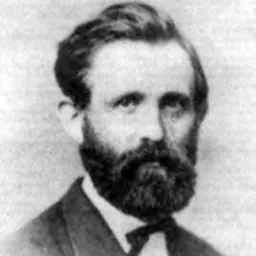
Portrait: Wikimedia Commons · author & licence
Page generated 2026-09-27 05:00 UTC