
About Maurice Delage
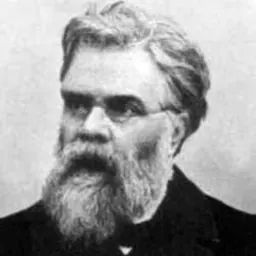
Lived 1879 – 1961 (aged 81). Maurice Delage was a French composer, pianist and music arranger.
Maurice Charles Delage (13 November 1879 – 19 or 21 September 1961) was a French composer and pianist.
Life and career Maurice Charles Delage was born and died in Paris. He first worked as a clerk for a maritime agency in Paris, and later as a fishmonger in Boulogne. He also served for a time in the French army, before embarking on a music career in his twenties. A student of Ravel, who proclaimed him one of the supreme French composers of his day, and member of Les Apaches, he was influenced by travels to India and Japan in 1912, when he accompanied his father on a business trip. Ravel's "La vallée des cloches" from Miroirs was dedicated to Delage.
Delage's best known piece is Quatre poèmes hindous (1912–1913). His Ragamalika (1912–1922), based on the classical music of India, is significant in that it calls for prepared piano; the score specifies that a piece of cardboard be placed under the strings of the B-flat in the second line of the bass clef to dampen the sound, imitating the sound of an Indian drum.
Selected works Poèmes symphoniques
Conté par la mer (1908) Les Bâtisseurs de ponts (1913) after Rudyard Kipling Overture to Ballet de l'avenir (1923) Contrerimes (1931), orchestration of pieces for piano Bateau ivre (1954) after the poem by Arthur Rimbaud Cinq danses symphoniques (1958)
Chamber music
String quartet (1949) Suite française for string quartet (1958)
Mélodies (voice and piano)
Trois mélodies (1909) Ragamalika, chant tamoul (1914) Trois poèmes (1922) Ronsard à sa muse (1924) Les Colombes (1924) La Chanson de ma mie (1924) Les Demoiselles d'Avignon (1924) Sobre las Olas (1924) on a poem by Jean Cocteau Toute allégresse (1925) on a poem by Paul-Jean Toulet
Mélodies (voice with instrumental ensemble)
Quatre poèmes hindous (1912) Sept haï-kaïs (1924) for soprano and chamber orchestra (to be sung without a break between songs)
Deux fables de La Fontaine (1931), Le Corbeau et le Renard, and La Cigale et la Fourmi Trois chants de la jungle (1934) after Kipling In morte di un samouraï (1950) on a collection of haïkaïses and tankas by Pierre Pascal Trois poèmes désenchantés (1955)
Music for solo piano
Schumann... (1918) Contrerimes (1927)
Don’t just read it —
keep it.
Full-length biographies made to live with: read them, listen on the way to work, watch them tonight.
- E-book
- Audio
- Video
Instant download · yours to keep · every purchase keeps this site free
Important facts
People in Maurice Delage's life
Named in this biography and alive at the same time

Related people
Same field, nearest in time





Contemporaries
People whose lives overlapped Maurice Delage's




Frequently asked questions
Who was Maurice Delage?
French composer (1879-1961)
When was Maurice Delage born?
Maurice Delage was born on 13 November 1879 in 6th arrondissement of Paris.
When did Maurice Delage die?
Maurice Delage died on 21 September 1961 in Paris.
What was Maurice Delage's occupation?
Maurice Delage was a composer, pianist and music arranger.
What nationality was Maurice Delage?
Maurice Delage was French.
Sources & further reading
Cite this page
APA: Biography.guide. (2026). Maurice Delage. https://biography.guide/maurice-delage/
MLA: "Maurice Delage." Biography.guide, https://biography.guide/maurice-delage/.
Chicago: "Maurice Delage." Biography.guide. https://biography.guide/maurice-delage/.
Data last updated: 2026-09-20 · Spot an error? Report a correction.
Page generated 2026-09-27 05:32 UTC