
About Matthias Stom
Lived 1600 – 1660. Matthias Stom was a Dutch painter.
Matthias Stom or Matthias Stomer ( – after 1652) was a Dutch, or possibly Flemish, painter who is only known for the works he produced during his residence in Italy. He was influenced by the work of non-Italian followers of Caravaggio in Italy, in particular his Dutch followers often referred to as the Utrecht Caravaggists, as well as by Jusepe de Ribera and Peter Paul Rubens. He did not share the other Northern Caravaggisti's preference for humorous, and sometimes scabrous, genre scenes and elaborate decorative allegories but favored stories from the Bible instead. He worked in various locations in Italy where he enjoyed the patronage of religious institutions as well as prominent members of the nobility.
Life Information about his life is sketchy. His birthplace is undocumented and cannot be determined with any certainty. The Dutch art historian G.J. Hoogewerff wrote in 1942 that the artist was born in Amersfoort, near the city of Utrecht. Hoogewerff, himself a native of Amersfoort, did not provide a source for his statement. The municipal archives of Amersfoort do not record any Stom. The family name Stom by which the artist was in fact known during his lifetime is a Flemish name common in the Southern Netherlands. Most people who bore the name in the Dutch Republic of that time would have been immigrants from the Southern Netherlands. It is therefore very well possible either that Stom was himself Flemish and spent most of his early life and even career in the Southern Netherlands or, alternatively, that he was an émigré (or the son of an émigré) to the Dutch Republic.
It was traditionally believed that he was a pupil of Gerard van Honthorst, particularly because of the closeness of their style. However, van Honthorst himself did not return from Italy to his native city Utrecht until 1620. It is unlikely that Stom would have embarked upon an apprenticeship with van Honthorst when he was already 20 years old. This still leaves open the possibility that Stom received supplemental training in the workshop of van Honthorst after initially training elsewhere. Alternatively, he could have trained with Hendrick ter Brugghen, another leading Utrecht Caravaggist, who had returned from Italy in 1614, or with other painters such as Joachim Wtewael, Paulus Moreelse or Abraham Bloemaert. No documentary evidence which can shed light on Stom's apprenticeship has been discovered.
The earliest documentary evidence of Stom dates to 1630, when a 'Mattheo Stom, fiamengo pittore, di anni 30.' (Matthias Stom, Flemish painter of 30 years old), was recorded living with the French painter Nicolas Provost in the Strada dell'Olmo, Rome. His then residence was the former apartment of the Dutch painter Paulus Bor from Amersfoort who had left Italy four years earlier. Stom was recorded living at this location until 1632. The aforementioned record makes it possible to put the birth of Stom around the year 1600.
Prior to 1635 Stom left Rome to settle in Naples, where he resided until at least 1640. In Naples he was exposed to the influence of the Spanish Caravaggist painter Jusepe de Ribera. His most important commissions from his Neapolitan period are for a series on the Passion of Christ made for the Capuchin Church of Sant’Efemo Nuovo. These works were lost after this church was turned into a prison in 1865.
From his social contacts with English and Dutch sailors it appears that he was more integrated with the expat community than with local society in Naples. He nevertheless had many local patrons as is demonstrated by contemporary Neapolitan inventories. The prosperous Antwerp merchant Gaspar Roomer who resided in Naples may have facilitated his commercial success, although there is no documentary evidence for this. It appears that his candlelight scenes with half figures with their characteristic combination of elements from the oeuvres of Gerrit van Honthorst and Rubens were particularly popular with the local clientele. Stom's documented paintings show no sign of interest in Neapolitan artists of his time. Stom likely left Naples after the novelty of his work had worn out, having been unable or unwilling to adapt to new artistic developments.
Several pictures by Stom were in Maltese collections, which points to Stom having patrons on Malta, though it is unknown if he painted these works on Malta. The last surviving written reference to Stom working in Sicily dates to 1649.
Work Stom spent most of his artistic life in Italy, where he produced a great number of works of which around 200 survive. His subject matter is mainly stories in the New and Old Testaments, paintings of saints, and to a lesser extent scenes from classical history, mythology and genre scenes.
Stom also relied in his works on a dramatic chiaroscuro, often created through a single light source such as a candle. The colours red and yellow dominate. The drama of his scenes is emphasized by the vivid gestures and expressions of the figures. His heads are extraordinarily lively and often have a personal, even portrait-like quality. The expressiveness is further strengthened through the wrinkled, furrowed features which are enveloped in strong chiaroscuro. The works convey a strong psychological intensity in the figures. The skin of the figures is painted so as to give it a clay-like appearance.
List of paintings by Matthias Stom
Gallery
Don’t just read it —
keep it.
Full-length biographies made to live with: read them, listen on the way to work, watch them tonight.
- E-book
- Audio
- Video
Instant download · yours to keep · every purchase keeps this site free
Important facts
more
Mathäus Stohom, Maître de la Mort de Caton, Matthias, I Stomma, Matteo Tomar Stom, I Stohom, Matteo Stoma, Matthias Stroma, Matteo Romar, Mathäus Stooms, Mathäus Stomer, I Stom, Matteo Tomar Stomma, Mathäus Stom, Matthias I Stohom, Matthias I Stomma, Mattheo Stom, Matthias I Stomer, Matteo Stroma, Matthias I Stom, Mathäus Stoom, Matthias Stooms, Matteo Tomar Stohom, Matteo Fiamengo, Matthias SPeople in Matthias Stom's life
Named in this biography and alive at the same time


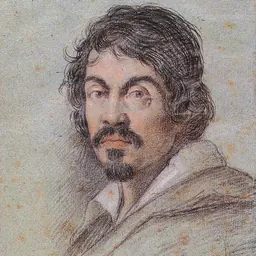
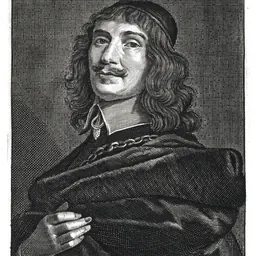
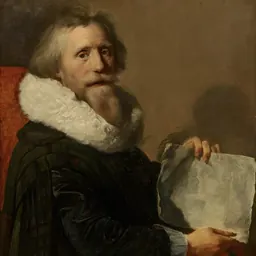


Related people
Same field, nearest in time
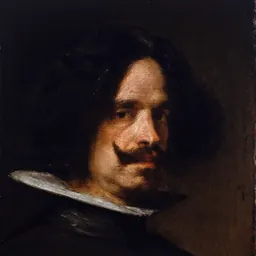
Contemporaries
People whose lives overlapped Matthias Stom's






Frequently asked questions
Who was Matthias Stom?
Dutch or Flemish painter
When was Matthias Stom born?
Matthias Stom was born in 1600 in Amersfoort, Habsburg Netherlands.
When did Matthias Stom die?
Matthias Stom died in 1660 in Sicily.
What was Matthias Stom's occupation?
Matthias Stom was a painter.
What nationality was Matthias Stom?
Matthias Stom was Dutch.
Sources & further reading
Cite this page
APA: Biography.guide. (2026). Matthias Stom. https://biography.guide/matthias-stom/
MLA: "Matthias Stom." Biography.guide, https://biography.guide/matthias-stom/.
Chicago: "Matthias Stom." Biography.guide. https://biography.guide/matthias-stom/.
Data last updated: 2026-09-25 · Spot an error? Report a correction.
Page generated 2026-09-27 05:10 UTC