
About Matthew Stirling
Lived 1896 – 1975 (aged 78). Matthew Stirling was an American anthropologist and archaeologist.
Matthew Stirling posing with the primary figure from Altar 5, La Venta. This is a still from the Smithsonian Institution's Exploring Hidden Mexico. Matthew Williams Stirling (August 28, 1896 – January 23, 1975) was an American ethnologist, archaeologist and later an administrator at several scientific institutions in the field. He is best known for his discoveries relating to the Olmec civilization. Much of his work was done with his "wife and constant collaborator" of 42 years Marion Stirling (nee Illig, later Pugh).
Stirling began his career with extensive ethnological work in the United States, New Guinea and Ecuador, before directing his attention to the Olmec civilization and its possible primacy among the pre-Columbian societies of Mesoamerica. His discovery of, and excavations at, various sites attributed to Olmec culture in the Mexican Gulf Coast region significantly contributed towards a better understanding of the Olmecs and their culture. He then began investigating links between the different civilizations in the region. Apart from his extensive field work and publications, later in his career Stirling proved to be an able administrator of academic and research bodies, who served on directorship boards of a number of scientific organizations.
Early life and work
Matthew was born in Salinas, California, where his father managed the Southern Pacific Milling Company. Most of his childhood days were spent on his grandfather's ranch where he first developed an interest in antiquity, collecting arrowheads and researching artefacts.
Stirling majored in anthropology under Alfred L. Kroeber, graduating from the University of California in 1920. His interest in the Olmecs began in about 1918, when he saw a picture of a "crying-baby" blue jade masquette, published by Thomas Wilson of the Smithsonian Institution in 1898. When he traveled to Europe with his family after graduation, he found the masquette itself in the Berlin Museum, and intrigued by the Olmec culture, took time to look at other specimens in the Maximilian Collection in Vienna, and later, in Madrid.
Stirling was a teaching fellow at the University of California during 1920–21. He then joined the Smithsonian Institution, as a museum aide and assistant curator in its Division of Ethnology at the National Museum. He worked there until 1925. He located several more Olmec pieces in the museum. During this period, he also obtained his master's degree in Anthropology from the George Washington University. He was later, in 1943, to receive a Doctorate in Science from Tampa University.
He excavated on Weedon Island for the Bureau of American Ethnology (BAE) in 1923–24, and at Arikara villages in Mobridge, South Dakota, during the summer of 1924. Stirling resigned from the Smithsonian to lead a 400-member, Smithsonian Institution-Dutch Colonial Government, expedition to New Guinea in 1925. He conducted ethnological and physical anthropological studies among the indigenous peoples there, and collected a number of natural history specimens, which now form one of the most valuable collections in the National Museum.
He returned to take over as chief of the Smithsonian's Bureau of American Ethnology in 1928. He retained the position until 1957, his title changing to director in 1947. He went to Ecuador in 1931–32, conducting ethnological studies of the Jívaro, as part of Donald C. Beatty's expedition. He also worked along the Gulf Coast, directing archaeological digs in Florida and Georgia.
In 1931, he met Marion Illig (1911–2001), who took a job as his secretary. Matthew Stirling wrote that Marion was his "co-explorer, co-author and general co-ordinator."
Stirling was intrigued by Marshall Saville's two 1929 reports, Votive Axes from Ancient Mexico. Subsequent discussions with Saville launched Stirling into a phase of his career which would be focused on what was then beginning to be called Olmec culture.
The Olmec
The Olmec were an ancient Pre-Columbian people living in south-central Mexico, in the modern-day states of Veracruz and Tabasco, from about 1200 BCE to 400 BCE. They are claimed by many to be the mother culture of every primary element common to later Mesoamerican civilizations.
The name "Olmec" means "rubber people" in Nahuatl, the language of the Aztecs. It was the Aztec name for the people who lived in this area at the time of Aztec dominance, referring to them as those who supplied the rubber balls used for games. Early modern explorers applied the name "Olmec" to ruins and art from this area before it was understood that these had been already abandoned more than a thousand years before the time of the people the Aztecs knew as the "Olmec".
Stirling and history of the Olmecs By 1929, Stirling had begun suspecting that the artifacts emerging out of Mexico belonged to a time much earlier than attributed to the Olmecs. From the BAE, he directed excavations in fringes of the area thought to be Maya. Matthew and Marion Stirling first visited Tres Zapotes in 1938.
Other positions held Stirling was president of the Anthropological Society of Washington in 1934–1935 and vice president of the American Anthropological Association in 1935–36. He received the National Geographic Society's Franklyn L. Burr Award for meritorious service in 1939, 1941 (shared with his wife Marion) and 1958. He was also on the Ethnographic Board, which was the Smithsonian's effort to make its scientific research available to the military agencies during World War II.
After his retirement, Stirling was a Smithsonian research associate, a National Park Service collaborator, and member of the National Geographic Committee on Research and Exploration.
Stirling died in 1975, aged 78, after a period of illness associated with cancer.
Book collection Marion Stirling donated around 5000 volumes from the Stirlings' library to the Boundary End Archaeology Research Center (earlier the Center for Maya Research). They include a collection of scholarly pamphlets and reprints from the mid-19th century on, complete runs of the American Anthropologist (1881– ); American Antiquity (1935– ), Bulletins 1–200 and Annual Reports 1–48 of the Bureau of American Ethnology, and all the Anthropological Papers of the American Museum of Natural History.
Phoebe A. Hearst Museum of Anthropology The museum, in the University of California, Berkeley, displays 165 Dyak and Papuan objects, including steel axes, basketry, arrows and wooden boxes, from Borneo, donated by Stirling.
Films by Stirling Preserved at the Human Studies Film Archive, Suitland, Maryland: Exploring Hidden Mexico – Documents excavations at La Venta and Cerro de las Mesas. Hunting Prehistory on Panama’s Unknown North Coast – Documents the 1952 excavations of sites in Northern Panama. Aboriginal Darien : Past and Present – Documents the flora, fauna and ethnography of parts of Panama through a journey in 1954. On the Trail of Prehistoric America – Documents an Ecuador expedition in 1957, along with brief ethnographic footage of the Colorado Indians. Mexico in Fiesta Masks Uncovering an Ancient Mexican Temple Exploring Panama’s Prehistoric Past Uncovering Mexico’s Forgotten Treasures
Don’t just read it —
keep it.
Full-length biographies made to live with: read them, listen on the way to work, watch them tonight.
- E-book
- Audio
- Video
Instant download · yours to keep · every purchase keeps this site free
Important facts
People in Matthew Stirling's life
Named in this biography and alive at the same time



Related people
Same field, nearest in time

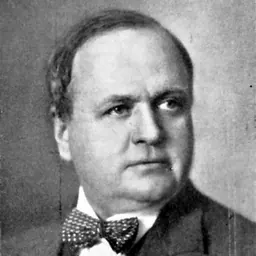

Contemporaries
People whose lives overlapped Matthew Stirling's


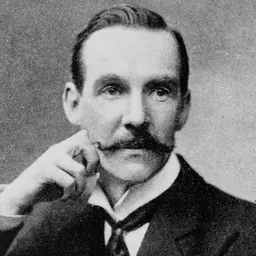
Frequently asked questions
Who was Matthew Stirling?
American Mesoamericanist (1896–1975)
When was Matthew Stirling born?
Matthew Stirling was born on 28 August 1896 in Salinas.
When did Matthew Stirling die?
Matthew Stirling died on 23 January 1975 in Washington, D.C..
What was Matthew Stirling's occupation?
Matthew Stirling was an anthropologist and archaeologist.
What nationality was Matthew Stirling?
Matthew Stirling was American.
Sources & further reading
Cite this page
APA: Biography.guide. (2026). Matthew Stirling. https://biography.guide/matthew-stirling-anthropologist/
MLA: "Matthew Stirling." Biography.guide, https://biography.guide/matthew-stirling-anthropologist/.
Chicago: "Matthew Stirling." Biography.guide. https://biography.guide/matthew-stirling-anthropologist/.
Data last updated: 2026-09-20 · Spot an error? Report a correction.
Page generated 2026-09-27 05:33 UTC