
About Matthew Habershon
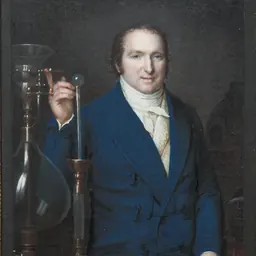
Lived 1789 – 1852 (aged 62–63). Matthew Habershon was an architect.
Matthew Habershon (1789–1852) was an English architect.
Biography Habershon, born in 1789, came from a Yorkshire family. In 1806 he was articled to the architect William Atkinson, with whom he remained for some years as assistant. He was an occasional exhibitor at the Royal Academy between 1807 and 1827. He designed churches at Belper (1824), Minster, Bishop Ryders (all in Derbyshire), and at Kimberworth, Yorkshire. At Derby he erected the town hall, which later burnt down, the county courts, and the market. Among the many private houses designed by him were Hadsor House, near Droitwich, Worcestershire, for J. Howard Galton (1827).
On his way home from Jerusalem in 1843, Habershon met with King Frederick William IV of Prussia, who was involved in the establishment of the Anglican-German Bishopric in Jerusalem. The following year the king conferred on him the great gold medal for science and literature in appreciation of Habershon's work on The Ancient half-timbered Houses of England (1836).
Habershon died in London in 1852, and was buried in Abney Park Cemetery. Two of his sons, William Gillbee and Edward, were architects.
Writings A Dissertation on the Prophetic Scriptures, chiefly those of a chronological character, showing their aspect on the present times, and on the destinies of the Jewish Nation (1834). A Guide to the Study of Chronological Prophecy, selected and abridged from … a Dissertation on the Prophetic Scriptures The Ancient half-timbered Houses of England (1836). Premillennial Hymns (1836). 'An Epitome of Prophetic Truth, containing a brief Outline of … Prominent Subjects of Prophecy (1841). An Historical Exposition of the Prophecies of the Revelation of St. John, showing their connection with those of Daniel, and of the Old Testament in general, particularly in their aspect on the present times. Two remarkable Signs of the Times, viewed in connexion with Prophecy. First, Reasons for believing the Death of the Duke of Orleans to be the first Thunder; second, An Account of the West London Synagogue of British Jews.… Forming an Appendix to the third edition of "A Dissertation on the Prophetic Scriptures (1842). The Shadows of the Evening; or the Signs of the Lord's speedy Return (1845).
He also wrote a memoir of Charles Daubuz, prefixed to the latter's Symbolical Dictionary (1842).
Don’t just read it —
keep it.
Full-length biographies made to live with: read them, listen on the way to work, watch them tonight.
- E-book
- Audio
- Video
Instant download · yours to keep · every purchase keeps this site free
Important facts
People in Matthew Habershon's life
Named in this biography and alive at the same time

Related people
Same field, nearest in time


Contemporaries
People whose lives overlapped Matthew Habershon's




Frequently asked questions
Who was Matthew Habershon?
British architect
When was Matthew Habershon born?
Matthew Habershon was born in 1789.
When did Matthew Habershon die?
Matthew Habershon died in 1852.
What was Matthew Habershon's occupation?
Matthew Habershon was an architect.
Sources & further reading
· Wikipedia: Matthew Habershon
Cite this page
APA: Biography.guide. (2026). Matthew Habershon. https://biography.guide/matthew-habershon/
MLA: "Matthew Habershon." Biography.guide, https://biography.guide/matthew-habershon/.
Chicago: "Matthew Habershon." Biography.guide. https://biography.guide/matthew-habershon/.
Data last updated: 2026-09-20 · Spot an error? Report a correction.
Page generated 2026-09-27 05:25 UTC