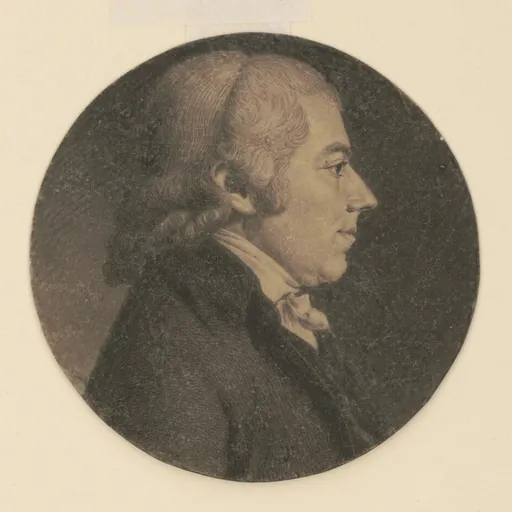
About Matthew Clay
Lived 1754 – 1815 (aged 61). Matthew Clay was an American politician.
Matthew Clay (March 25, 1754 – May 27, 1815) was a Virginia lawyer, planter, Continental Army officer and politician who served in the United States House of Representatives and the Virginia House of Delegates representing Pittsylvania County.
Early life Born to the former Martha Green and her planter husband, Charles Clay, who was the son of Henry Clay of Chesterfield County. His uncle (father's brother) was the grandfather of Henry Clay, who became famous after moving to Kentucky (i.e. Henry Clay was a first cousin). One historian believes Matthew Clay was born in the part of then vast Goochland County that became Cumberland County in 1749 and that in 1777 became Powhatan County. Nothing is known about his schooling, other than that his brothers Rev. Charles Clay (1745–1820) and General Green Clay (1757–1828), who were born in that area were well educated. His father had also patented (claimed) much land in what became eastern Pittsylvania County, which Matthew Clay would ultimately inherit from a sibling (but which at the time of Matthew's birth was in Halifax County).
Military service
During the American Revolutionary War Clay joined the Ninth Virginia Regiment on October 1, 1776, as an ensign and probably fought in the New Jersey and Pennsylvania campaigns (but was on detached duty so not present at the disastrous Battle of Germantown). Matthew's daughter Mary was a victim of the Richmond Theatre fire of 1811. Clay remarried, to Ann Saunders of Buckingham County, who bore one daughter before dying on July 10, 1806. In 1790, in addition to service on the Committee of Propositions and Grievances, Clay became a member of a commission to improve the upper Roanoke River to permit commercial navigation. The next year, Clay headed a commission to determine whether to remove dams on the Bannister River to permit upstream fish migration (the harvest of shad, a large herring being important both as subsistence and for sale in the era). Also as a member of the Committee on Religion in 1791, Clay voted for a compromise (that failed to pass) which would have allowed the Episcopal Church to retain glebe lands (for the support of the minister and poor people of the parish, his brother Charles Green having been rector of St. Anne's Parish in Albemarle County before abandoning the ministry to farm in Bedford County). Clay also supported expanding suffrage to all white men who either owned property or could be forced to bear arms for the community, basing his argument on fairness. Clay had a combative debating style, and in one legislative argument in the 1791 session, accused Pittsylvania's other delegate of improprieties (but later apologized formally to the House for his conduct).
Clay lost his reelection campaign in a primary in 1813 (to fellow Republican John Kerr, who had raised an unsuccessful challenge in 1811), so Clay did not attend the Thirteenth Congress. His refusal to vote in favor of the Declaration of War against Great Britain in June 1812 (Clay abstained on the vote, one of only two Virginia Republicans who declined to vote for the Declaration) proved unpopular with his constituents and contributed to his defeat, as did local factionalism and personal differences. Clay won back his seat in the April 1815 (but was never sworn into the Fourteenth Congress), but died suddenly at Halifax Court House, while returning home from Richmond.
Matthew Clay was one of the original trustees (in 1793) of the then unincorporated town of Danville. The others were Thomas Tunstall, William Harrison, John Wilson, Thomas Fearne, George Adams, and Thomas Smith.
Death and legacy
Clay died at Halifax Court House on May 27, 1815, while returning home from Richmond. Interment was probably in his family's burial vault (with his first wife and at least one child) in Pittsylvania County. When he died, Clay owned more than 3,000 acres in Kentucky, more than 1800 acres and at least thirteen slaves in Pittsylvania County. His will also directed his two sons (as his executors) to give a fourteen-year-old boy named William Penn a horse, bridle, saddle, clothes and $1000 when he reached 21 years old. Also to emancipate three mixed-race girls then about eight years old when they reached 18 years old and to give each clothes, $500 and transportation out of Virginia.
Elections
1797; Clay was elected to the U.S. House of Representatives unopposed. 1799; Clay was re-elected defeating Federalist Isaac Coles. 1801; Clay was re-elected unopposed.
Don’t just read it —
keep it.
Full-length biographies made to live with: read them, listen on the way to work, watch them tonight.
- E-book
- Audio
- Video
Instant download · yours to keep · every purchase keeps this site free
Important facts
People in Matthew Clay's life
Named in this biography and alive at the same time

Related people
Same field, nearest in time



Contemporaries
People whose lives overlapped Matthew Clay's





Frequently asked questions
Who was Matthew Clay?
American politician (1754-1815)
When was Matthew Clay born?
Matthew Clay was born on 25 March 1754 in Danville.
When did Matthew Clay die?
Matthew Clay died on 27 May 1815 in Halifax.
What was Matthew Clay's occupation?
Matthew Clay was a politician.
What nationality was Matthew Clay?
Matthew Clay was American.
Sources & further reading
Cite this page
APA: Biography.guide. (2026). Matthew Clay. https://biography.guide/matthew-clay/
MLA: "Matthew Clay." Biography.guide, https://biography.guide/matthew-clay/.
Chicago: "Matthew Clay." Biography.guide. https://biography.guide/matthew-clay/.
Data last updated: 2026-09-21 · Spot an error? Report a correction.
Portrait: Wikimedia Commons · author & licence
Page generated 2026-09-27 05:00 UTC