
About Matthew Baillie
Lived 1761 – 1823 (aged 61). Matthew Baillie was a British physician, pathologist and anatomist.
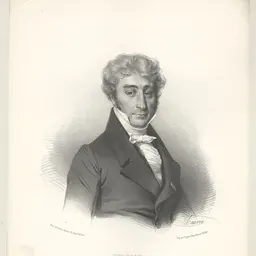
Matthew Baillie FRS (27 October 1761 – 23 September 1823) was a British physician and pathologist, credited with first identifying transposition of the great vessels (TGV) and situs inversus.
Early life and education Matthew Baillie was born in the manse at Shotts in Lanarkshire, the son of Rev Prof James Baillie DD (1723-1778) and his wife, Dorothea Hunter (sister of Dr John Hunter and Dr William Hunter. His father was Professor of Divinity at Glasgow University. His sisters were centenarian Agnes Baillie (1760-1861) and poet/author Joanna Baillie. He was a pupil of his uncle, the anatomist John Hunter and his father-in-law, Dr. Thomas Denman, a pre-eminent obstetrician in London at the turn of the nineteenth century, whose textbook on childbirth had been first published in 1788. Baillie was educated at the Old Grammar School of Hamilton (renamed the Hamilton Academy in 1848), the University of Glasgow, and obtained his MD from Balliol College, Oxford in 1789, having been named Snell Exhibitioner in 1779.
Career
He was bequeathed £5000n on the death of his uncle William Hunter in 1783, also inheriting his uncle's house in Great Windmill Street in London, plus the adjacent medical school and museum. Baillie taught at the school from 1783 to 1803. He was also the second President of the Medical and Chirurgical Society of London 1808–1810.
It was said of him,
Death
Baillie died of tuberculosis on 23 September 1823 in Duntisbourne, Gloucestershire, England at the age of 61 and was buried in Duntisbourne Abbots, Gloucestershire. There is also a memorial to him within Westminster Abbey. The memorial (with bust) is by James Heffernan working in the studio of Francis Chantrey.
Family
Baillie was married to Sophia Denman, the sister of Thomas Denman, 1st Baron Denman.
Works His 1793 book, The Morbid Anatomy of Some of the Most Important Parts of the Human Body, is considered the first systematic study of pathology, and the first publication in English on pathology as a separate subject. He is credited with first identifying transposition of the great vessels (TGV) and situs inversus. The 1793 book went into multiple editions and was translated into numerous languages, and five editions were released in Britain before his death.
The Morbid Anatomy of Some of the Most Important Parts of the Human Body (1793) Anatomy of the Gravid Uterus, by William Hunter published by Baillie (1794) A Series of Engravings, tending to illustrate the Morbid Anatomy of some of the most Important Parts of the Human Body (1799, 1802, 1812) Lectures and Observations on Medicine by the late Matthew Baillie (1825) An Account of a Particular Change of Structure in the Human Ovarium (Philosophical Transactions, London, 1789, Vol.79, pp. 71–78)
Don’t just read it —
keep it.
Full-length biographies made to live with: read them, listen on the way to work, watch them tonight.
- E-book
- Audio
- Video
Instant download · yours to keep · every purchase keeps this site free
Important facts
People in Matthew Baillie's life
Named in this biography and alive at the same time
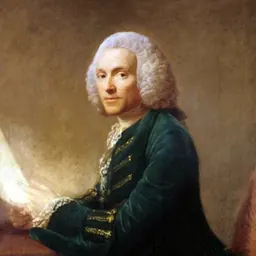
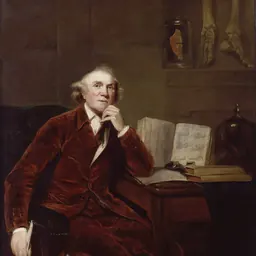
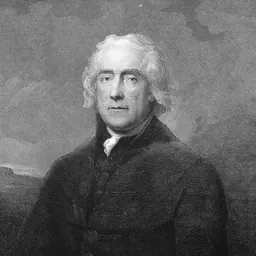

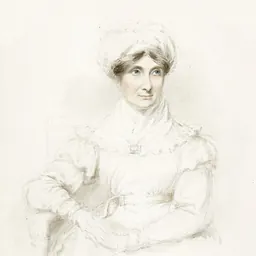

Related people
Same field, nearest in time




Contemporaries
People whose lives overlapped Matthew Baillie's





Frequently asked questions
Who was Matthew Baillie?
Scottish anatomist, (1761-1823)
When was Matthew Baillie born?
Matthew Baillie was born on 27 October 1761 in Shotts.
When did Matthew Baillie die?
Matthew Baillie died on 23 September 1823 in Gloucestershire.
What was Matthew Baillie's occupation?
Matthew Baillie was a physician, pathologist and anatomist.
What nationality was Matthew Baillie?
Matthew Baillie was British.
Sources & further reading
Cite this page
APA: Biography.guide. (2026). Matthew Baillie. https://biography.guide/matthew-baillie/
MLA: "Matthew Baillie." Biography.guide, https://biography.guide/matthew-baillie/.
Chicago: "Matthew Baillie." Biography.guide. https://biography.guide/matthew-baillie/.
Data last updated: 2026-09-20 · Spot an error? Report a correction.
Page generated 2026-09-27 05:22 UTC