
About Matthäus Prätorius
Lived 1635 – 1704 (aged 68–69). Matthäus Prätorius was a Polish historian, parson, catholic priest, lutheran pastor, convert and theologian.
Matthäus Prätorius (, ; ) was a Protestant pastor in the Duchy of Prussia and later a Roman Catholic priest in the Polish–Lithuanian Commonwealth. He is best known as the author of Deliciae Prussicae, oder Preussische Schaubühne (Prussian Delights, or Prussian Theater), a historical and ethnographic work about Old Prussia. By focusing on cultural history, this large two-volume work provides an independent and original outlook on Prussian culture and history. The work includes examples of the customs and folklore of the locals which modern researchers particularly value. Deliciae Prussicae has not been published. In 1998, the Lithuanian Institute of History began publishing the full work in original German and Lithuanian translation.
Biography Early life and education The date of birth of Prätorius is unknown but is estimated to be . It is believed that he was born in Memel (Klaipėda) as his father was a deacon in Memel and later in life he signed some of his works as Memelensis Borussus (Prussian from Memel). Praetorius (from Latin praetor) was commonly adopted as a surname by educated Germans. According to , Prätorius' father was from Schwedt in Brandenburg while Prätorius claimed to be a descendant of Jonas Bretkūnas (their exact relationship is unknown, but likely Bretkūnas was maternal great-grandfather). He probably grew up speaking both German and Lithuanian, which helped him when preaching to the ethnic Lithuanians in Ducal Prussia.
With two older brothers, Prätorius enrolled at the University of Königsberg in 1650 but was likely too young as he re-enrolled in April 1654. In 1657, he transferred to the University of Rostock where he received a master's in free arts and philosophy in June 1660. He defended his master's in philosophy at the University of Königsberg in 1661.
Lutheran pastor After his studies, Prätorius returned to Memel. For about three years he worked as an assistant to pastor Johann Lehman and served the Lithuanian-speaking population of villages on the Curonian Spit and near the Curonian Lagoon. In 1663 or 1664, Prätorius moved to where he was a Lutheran pastor for twenty years. It was a mid-sized parish and the majority of the population was Lithuanian speaking (Prätorius referred to them as Nadruvians).
Prätorius' relationship with his ecclesiastical superiors was tense. Already in 1670–1671, there were unknown complaints against Prätorius investigated by a committee of local officials and clergy. In 1673, there were financial complaints and the consistory of Sambia fined Prätorius and threatened to defrock him. However, Prätorius appealed and the case dragged on until 1682. This case, as well as criticism of his historical work by Christoph Hartknoch, meant that Prätorius could not get a job in Königsberg (where he could use libraries and archives for his research) or find a patron to finance his research.
There is evidence that by the early 1680s, Prätorius questioned the truth of Protestantism. In 1683, he started writing a work on a union between Protestant and Catholic churches. In May 1684, Prätorius left his wife and debts in Niebudszen and moved to the Catholic Oliwa Abbey near Danzig. He later obtained official divorce. Catalyst for this move might have been a personal tragedy. A 19th-century priest who worked in Niebudszen recorded a local rumour that Prätorius' daughter killed herself because she was pregnant out of wedlock.
Catholic priest In Oliwa, Prätorius became a royal historiographer of John III Sobieski, King of Poland and Grand Duke of Lithuania. He wrote several panegyrics, the first of which was Scutum Regium (Royal Shield) about the Sobieski's victory in the Battle of Vienna in 1683. However, his writing career was not profitable and did not last long and by 1687 he returned to preaching. He briefly worked as a Catholic priest in Brodnica, Wejherowo, Starogard Gdański, Góra. He settled more permanently in Wejherowo which the king owned. In 1701, Prätorius wrote a letter protesting the use of torture to extract a confession from a woman accused of witchcraft.
Prätorius' date of death is not known. 19th-century historiography provided 1707 as the date of death. In his 1907 work Geschichte der Kreise Neustadt und Putzig, Franz Schultz, who had access to now-lost city archives of Wejherowo, wrote that Prätorius was priest until 6 October 1704. However, it is unclear whether that is his date of death or simply a date he moved to a new position.
Works Deliciae Prussicae Publication history
In 1680 or 1681, Prätorius travelled to Danzig in an unsuccessful attempt to find a publisher. He did manage to publish a summary (Syllabus materiarum) of the planned work in 1681. It was critically received by Christoph Hartknoch who worked on his own history of Prussia. Hartknoch evaluated the summary as providing no new information and copying the badly translated Latin dissertation of one of his students; this criticism effectively derailed Prätorius' efforts.
Despite the best efforts, Prätorius managed to publish only two sections of Deliciae Prussicae: Orbis Gothicus (World of Goths; 1688–1689) and Mars Gothicus (Mars of Goths; 1691). These two works concerned with the peoples that he believed originated from Goths and their culture, military, and politics. The full manuscript was finished around 1690, but some additions and corrections were made as late as 1701. In 1703, Prätorius gave his manuscript to , resident of the Margraviate of Brandenburg in Danzig, who tried to get royal funding for the publication.
Excerpts from Deliciae Prussicae were published in 1725 in Erleutertes Preußen by (on Prussian money) and in 1731 in by Michael Lilienthal (on Prussian language). More excerpts were published by in 1871 and Wilhelm Mannhardt in 1936. A complete edition with original German text and Lithuanian translation, is under preparation by the Lithuanian Institute of History. The first volume was published in 1999; the fifth volume (up to 9th book) was published in 2019.
Known manuscripts There are five known manuscripts of Deliciae Prussicae: 412-page clean manuscript of 1st–7th books with 17 illustrations (this is the manuscript that Prätorius gave to Rubach for publication; the second volume was lost during World War II; kept at Vilnius University) 1667-page copy of the full clean manuscript made in 1780 (found in and kept at the Wroblewski Library of the Lithuanian Academy of Sciences) 555-page draft manuscript of 10th–17th books (kept at the ) Copy of the 13th book (kept at the Berlin State Library) Copy of the 18th book (kept at the )
Don’t just read it —
keep it.
Full-length biographies made to live with: read them, listen on the way to work, watch them tonight.
- E-book
- Audio
- Video
Instant download · yours to keep · every purchase keeps this site free
Important facts
People in Matthäus Prätorius's life
Named in this biography and alive at the same time
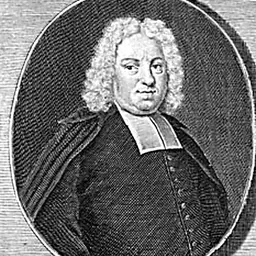
Related people
Same field, nearest in time
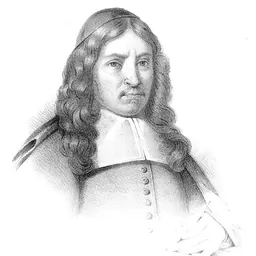
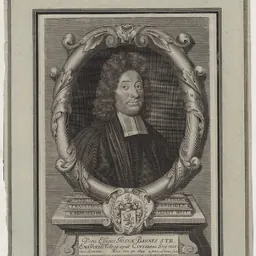



Contemporaries
People whose lives overlapped Matthäus Prätorius's






Frequently asked questions
Who was Matthäus Prätorius?
German historian
When was Matthäus Prätorius born?
Matthäus Prätorius was born in 1635 in Klaipėda.
When did Matthäus Prätorius die?
Matthäus Prätorius died in 1704 in Wejherowo.
What was Matthäus Prätorius's occupation?
Matthäus Prätorius was a historian, parson, catholic priest, lutheran pastor, convert and theologian.
What nationality was Matthäus Prätorius?
Matthäus Prätorius was Polish.
Sources & further reading
· Wikipedia: Matthäus Prätorius
Cite this page
APA: Biography.guide. (2026). Matthäus Prätorius. https://biography.guide/matthaus-pratorius/
MLA: "Matthäus Prätorius." Biography.guide, https://biography.guide/matthaus-pratorius/.
Chicago: "Matthäus Prätorius." Biography.guide. https://biography.guide/matthaus-pratorius/.
Data last updated: 2026-09-20 · Spot an error? Report a correction.
Page generated 2026-09-27 05:28 UTC