
About Matteo Pertsch
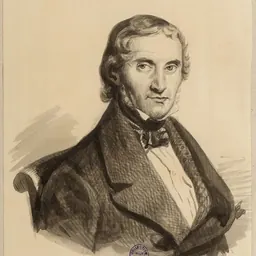
Lived 1769 – 1834 (aged 64–65). Matteo Pertsch was an Austrian architect.
Matteo Pertsch (1769–1834) was an Austrian architect who was prominent in the Austro-Hungarian Empire, particularly in Trieste. He was known for his embrace of Neoclassicism, favoring straightforward, classical-antique forms, and domed, temple-like buildings. With Pietro Nobile and Antonio Mollari, Pertsch created and led Trieste's early 19th-century development, and their plans and influence, and many of their structures, remain. both brothers were well-educated and had learned the art of drawing, as well as the history of the arts, geometry and mechanics.
In 1790, Pertsch moved to Milan to attend the Brera Academy. There he studied under two prominent architects: the Swiss Pietro Taglioretti, and the master of Italian Neoclassicism Giuseppe Piermarini, architect of La Scala and other grand buildings. In 1781, Pertsch designed a lighthouse and won the Second Architecture Prize in Parma's Accademia Ducale di Belle Arti competition. In 1794, his design for a Royal Mint won the First Architecture Prize in the same competition. With the French occupation of Milan in 1796, Pertsch left Milan and moved to Bergamo, a territory of Venice which was also under French occupation.
Career At that time, the Imperial Free City of Trieste was a possession of the Habsburg monarchy. and was Austria's main port and shipbuilding centre. It too had been occupied, briefly, and it was seeing tremendous political upheaval. But it was also a literary and artistic hub of central Europe, with a large merchant class and a booming economy.
One particularly wealthy businessman was the Greek textile merchant Demetrio Carciotti. who wanted to build a home for himself, from which he could also run his business. He wanted what he described as "a grandiose, painstakingly constructed building on the seafront alongside the Grand Canal, which will serve to embellish and adorn this city." Carciotti had already obtained the license to collect the stone for the project; to find the right architect, he sent a representative to Milan to find "a man of ability and taste". Someone evidently pointed this person in the direction of Matteo Pertsch, whose Normalschule application was used as a source of information, and there were positive reports of his morality and professionalism.
Meanwhile, another wealthy merchant, Giovanni Matteo Tommasini, wanted a new theatre for Trieste and awarded the commission to the architect Gian Antonio Selva. Selva designed a horseshoe-shaped auditorium, following the style of Venice's La Fenice. When it was completed, Tommasini felt that the façade of the building was too plain. Likely upon the recommendation of, or connection to, Piermarini, and because he could see what Pertsch was doing for Carciotti, Tommasini hired Pertsch to change the building's façade. Pertsch used elements of Piermarini's La Scala design, creating a theatre that was Viennese on the inside and Milanese on the outside. The theatre opened in 1801 and remains one of the Europe's most-visited opera houses.
In 1804, due to his skill as a builder, the governor of Trieste gave Pertsch the title of City Building Appraiser, indicating that he was doing much more than erecting buildings. This likely led to his 1808 move to the garrison city of Graz which, by this time, had been occupied by the French three times, in 1797, 1805 and in 1809. Its fortress had been demolished, and it was in the midst of rebuilding and transformation. Under Emperor Francis, Graz was established as the center of Styria to serve as a crucial cultural, residential and industrial hub. Rather than being on record as the architect of any buildings in Graz, Pertsch is on record as being an "advisor",
Pertsch mentored several students in his studio, notably Antonio Buttazzoni (1800–1848) who, upon Pertsch's recommendation, attended the Brera Academy before making his mark on the development of the city of Ljubljana.
Righetti noted that, toward the end of his life, due to ill health, Pertsch became caustic and irritable. But he wrote that Pertsch was "honest, loyal, prudent, beneficial, affable and mannerous without ostentation. He listened and profited from the opinions and advice of others, knew how to distinguish abilities and protect them, find the virtuous and become friends with them."
Pertsch died in 1834 and was buried in Sant'Anna Cemetery, a cemetery of his own construction, which is now an open-air museum.
Known works Teatro Nuovo, Trieste, 1801 Rotonda Pancera, Trieste, 1803 Palazzo Carciotti, Trieste, 1805 Grand Hotel Rogaška, Rogaška Slatina, Slovenia, 1813 Rogaška Slatina Spa Residences, Slovenia, 1818 Lighthouse at Savudrija, Croatia, 1818 Greek Orthodox Church of San Nicolò dei Greci, Trieste, 1820 Building at Corso Italia 29, Trieste, 1822 (with Domenico Corti) Building at Via Diaz 17, Trieste, 1823 Casa Steiner, Trieste, 1824 Ljubljanska Cukrarna, Sugar Refinery, Ljubljana, Slovenia, 1828 Ex Faro La Lanterna, Trieste, 1830 Casa Recher, Trieste, 1833 Faro del Promontore (Promontor Lighthouse), Scoglio Porer, Istria (with Pietro Nobile) Lighthouse: Il Molo Fratelli Bandiera, Trieste, 1833
Note Giuseppe Righetti: Cenni storici, biografici e critici degli artisti ed ingegneri di Trieste ovvero del progresso fatto nelle arti edilizie e mestieri dalla metà del secolo XVIII fino ad oggi, L. Herrmanstorfer tipografo-editore, Trieste, 1865
Don’t just read it —
keep it.
Full-length biographies made to live with: read them, listen on the way to work, watch them tonight.
- E-book
- Audio
- Video
Instant download · yours to keep · every purchase keeps this site free
Important facts
People in Matteo Pertsch's life
Named in this biography and alive at the same time


Related people
Same field, nearest in time

Contemporaries
People whose lives overlapped Matteo Pertsch's





Frequently asked questions
Who was Matteo Pertsch?
Austrian architect
When was Matteo Pertsch born?
Matteo Pertsch was born in 1769 in Buchhorn.
When did Matteo Pertsch die?
Matteo Pertsch died on 11 April 1834 in Trieste.
What was Matteo Pertsch's occupation?
Matteo Pertsch was an architect.
What nationality was Matteo Pertsch?
Matteo Pertsch was Austrian.
Sources & further reading
Cite this page
APA: Biography.guide. (2026). Matteo Pertsch. https://biography.guide/matteo-pertsch/
MLA: "Matteo Pertsch." Biography.guide, https://biography.guide/matteo-pertsch/.
Chicago: "Matteo Pertsch." Biography.guide. https://biography.guide/matteo-pertsch/.
Data last updated: 2026-09-20 · Spot an error? Report a correction.
Page generated 2026-09-27 05:23 UTC