
About Matija Jama
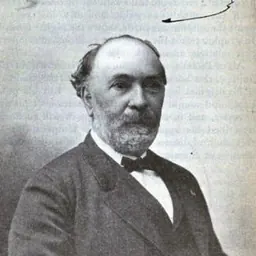
Lived 1872 – 1947 (aged 75). Matija Jama was a Yugoslav painter.
Matija Jama (4 January 1872 – 6 April 1947) was a Slovene painter. Together with Rihard Jakopič, Ivan Grohar and Matej Sternen, he is considered among the best representatives of Impressionism in the Slovene Lands.
Life Jama was born in Ljubljana, where he attended primary school and lower grammar school. He then moved with his family to Zagreb, where he began to show an interest in painting when in higher grammar school. After finishing grammar school, he enrolled in the law faculty, but in 1890 he quit his studies and left for Munich, where he enrolled in a private art school. Two years later, he returned to Ljubljana, where he made a living with his drawings. During this time, he drew illustrations for the journal Dom in svet.
With the support of the Carniolan Provincial Diet, he returned to Munich in 1897, where he enrolled in Anton Ažbe's art school. The following year, he enrolled at the Munich artistic academy, but he did not finish his studies there. In 1902, he married the Dutch painter Louise van Raders. Jama lived and worked in different places throughout Europe: Austria, Croatia, Germany and the Netherlands. Later, he returned to the Slovene Lands, where he lived for a while in Bled and in Volčji Potok. Finally, he settled in Rašica and then in Ljubljana.
Besides oil paintings, Jama also drew designs for posters and illustrations. Among others, he illustrated the first editions of several books by the famous modernist writer Ivan Cankar. His idols in his later life, when he had "grown out" of his Secessionist period, were Italian and French Impressionists, amongst whom the most influential was Claude Monet. In his prime, Jama was essentially a landscape painter. Even the illustrations and commissioned portraits that he produced at the start of his artistic career feature vedute.
In his later period, Jama worked together with other Slovene impressionists, in particular with Rihard Jakopič, with whom he worked in Donji Čemehovec and Kraljevec na Sutli. It was at this time that Jama began to study light and became a true impressionist. In this last period of Slovene impressionism, he painted first and foremost with watercolour, but he gave this up around 1900 and devoted himself to painting using oil on canvas. He produced the majority of his best-known works with this technique, which he used until the end of his life.
Selected paintings Among some 450 paintings made by Jama the most notable include:
At meal ("Pri obedu") Garden ("Vrt") Bridge on Dobra ("Most na Dobri") By the river in spring/ spring-landscape with city at Blejsko jezero Willow Trees ("Vrbe") Ljubljana in Snow ("Ljubljana v snegu") Saint Michlaus ("Šenklavž") Croatian Farmer ("Hrvaški kmet") Wheel dance ("Kolo") Village in Winter ("Vas v zimi") Blossoming Apple Tree ("Cvetoča jablana") Red Parasol ("Rdeči parazol") On the Divan ("Na divanu")
Don’t just read it —
keep it.
Full-length biographies made to live with: read them, listen on the way to work, watch them tonight.
- E-book
- Audio
- Video
Instant download · yours to keep · every purchase keeps this site free
Important facts
People in Matija Jama's life
Named in this biography and alive at the same time




Related people
Same field, nearest in time


Contemporaries
People whose lives overlapped Matija Jama's



Frequently asked questions
Who was Matija Jama?
Slovenian painter (1872–1947)
When was Matija Jama born?
Matija Jama was born on 4 January 1872 in Ljubljana.
When did Matija Jama die?
Matija Jama died on 6 April 1947 in Ljubljana.
What was Matija Jama's occupation?
Matija Jama was a painter.
What nationality was Matija Jama?
Matija Jama was Yugoslav.
Sources & further reading
Cite this page
APA: Biography.guide. (2026). Matija Jama. https://biography.guide/matija-jama/
MLA: "Matija Jama." Biography.guide, https://biography.guide/matija-jama/.
Chicago: "Matija Jama." Biography.guide. https://biography.guide/matija-jama/.
Data last updated: 2026-09-26 · Spot an error? Report a correction.
Page generated 2026-09-27 05:14 UTC