
About Matías Ramón Mella
Lived 1816 – 1864 (aged 48). Matías Ramón Mella was a Dominican politician and partisan.
Matías Ramón Mella Castillo (25 February, 1816 – 4 June, 1864), known as Ramón Mella, was a Dominican revolutionary, politician, and military general during the Dominican War of Independence. He is known for being one of the three principal leaders of the independence movement, together with Juan Pablo Duarte and Francisco del Rosario Sánchez, and is one of the founding figures of the Dominican Republic.
Mella was a member of La Trinitaria, a secret society founded in 1838 to organize resistance to Haitian rule in the eastern part of Hispaniola. On February 27th, 1844, he fired a blunderbuss at the Puerta de la Misericordia in Santo Domingo, an act traditionally associated with starting the uprising that led to the proclamation of the First Dominican Republic.
Following independence, Mella held a number of political and military posts in the new Dominican state. During the Dominican Restoration War (1863–1865), which sought to end the Spanish annexation of the country, he supported the restorationist movement and is credited with preparing a manual on guerrilla warfare used in organizing Dominican forces. Mella died in Santiago de los Caballeros on the 4th of June, 1864 during the course of the restoration conflict, a year before Dominican independence was re-established in 1865. His paternal grandmother, Juana Álvarez Pereyra, was a native of San Carlos but had origins in the Canary Islands.
At 11 days old, Mella was baptized into the Catholic faith at Santo Domingo Cathedral on March 6th, 1816.
During his youth, Mella witnessed the Dominican independence leader, José Núñez de Cáceres, successfully overthrow Spanish rule. This resulted in the declaration of independence for the Republic of Spanish Haiti on December 1st, 1821.
Little is documented about Mella's education, but due to the scarcity of public schools during his childhood and his family's economic position, it is likely that his parents sourced his education privately from respected Dominican educators. Mella is said to have displayed skill with a sword and sabre from a very young age. He engaged in military service, and was reportedly involved in the dispersal of groups of armed Haitians attempting to disrupt local gatherings.
Mella had two siblings—Ildefonso and Manuela. Ildefonso also played a key role in Dominican independence, known as one of the first to protest the annexation to Spain. Before his exile to Cuba, Ildefonso rode through Puerto Plata with a Dominican flag, reportedly declaring, "Long live the Dominican flag, regardless of which it may be".
Confusion about his name Unpublished document, written in Mella's handwriting, signed as Ramón Mella. Mella's true name has been a major debate among historians. Most official documents from the time of the restoration government (his baptism and marriage certificate, will, appointment to the role of Minister of War) state his name as Ramón Mella Castillo, aside from a few documents that he signed as M. Mella and M. Ramón Mella. There is little evidence that his name was Matías Ramón Mella.
For example, Mella's baptismal certificate, signed by the parish priest Agustín Tavares, reads as follows:"I, the undersigned Lieutenant Priest of this Holy Church of the Cathedral, solemnly baptized I put oil and chrisma on Ramón, eleven days old, the legitimate son of Antonio de Mella and Francisca Castillo."On August 30, 1836, he was married and the marriage documentation referred to him as “Ramón Mella, a native of this city, of older age.”
Historian Alcides García Lluberes maintains that Mella was born around midnight between February 24 and 25, 1816, because his middle name, Matías, corresponds to the Saint of the day, February 24. Before independence, however, there are documents in Mella signed as MR Mella, as recorded in the Manifestation of January 16, 1844, and in a communication of February 28 that the Central Government Board addressed to the French Consul Saint Denys. However, his friends and co-religionists of the Trinitarios did not call him Matías. In a letter dated November 15, 1843, written in correspondence between his peers, it was written: “Ramón Mella is preparing to go there”. Over the following five years, the Trinitarios promoted independence through public-facing front organizations, La Filantrópica and La Dramática, to avoid detection by Haitian authorities. During this period, Mella became a prominent figure within the movement and a close collaborator of Duarte.
Duarte, along with his companions, worked to convince many Dominicans that independence was achievable. In the early 1830s, a liberal opposition emerged in the Haitian Chamber of Deputies against Boyer. Almost all the delegates from the Department of the South were part of this opposition, which had as its social base a segment of the same ruling mulatto sector. Boyer proceeded to dismiss some of the elected liberals, mainly Hérard Dumesle and David Saint Preux, who claimed his government adopted a dictatorial style of leadership. The liberal leaders resorted to conspiracy to overthrow Boyer. Aware of the plans of the Haitian liberals and strategizing about what the process of preparing the conditions for Dominican independence should be, Duarte decided to establish an alliance with them. Duarte calculated that the fall of the Boyer regime would lead to a worsening of the conflicts within Haiti and weaken their power.
Duarte saw Mella suited for leadership roles. After Juan Nepomuceno Ravelo's unsuccessful mission to establish an alliance with Haitian liberals, Duarte tasked Mella with traveling to the Haitian village of Les Cayes in January 1843. Mella's mission was to seek support for a reform movement to challenge Boyer's regime. There, Mella stayed at the house of Jérôme-Maximilien Borgella, a Haitian general and politician, who was also a former governor of Santo Domingo. Meanwhile, Boyer's popularity continued to wane because of the excessive rise of taxes, the benefits of which did not revert to the population, but to France, who demanded compensation from Boyer given the loss of property property, including Haitian slaves, that the country incurred over the course of the Haitian Revolution.
Groups opposed to the Boyer regime arose in Haiti itself; the island had become increasingly frustrated with his repressive dictatorship, combined with his negligent response following a sudden earthquake that had struck Haiti a year prior, a situation which Duarte believed he could use to the advantage of the independence movement.
Subsequently, Mella came into contact with the Haitian opposition leader Charles Rivière-Hérard, who in turn led the reform movement, which came to be known as the Reform Revolution, in March 1843. It took Mella several days to reach an agreement with the revolutionaries that would place the Trinitarios at an advantageous position. In addition, Hérard was unaware that the Dominicans' true purpose was to prepare for the definitive separation of the Haitian government. On March 24, Mella, along with Perez and Pedro Alejandro Pina met at Plaza del Carmen to proclaim the Dominican adherence to the Reform movement.
In Santo Domingo, the Trinitarios and Haitian liberals waited for news of Boyer's resignation before launching an uprising in favor of La Reforma; other groups, by contrast, had already taken to the streets when news of events in Port-au-Prince broke. The Trinitarios nonetheless placed themselves at the forefront of the demonstrations. Mella, along with Duarte, was among the members of the Popular Board of Santo Domingo, a local authority in which Trinitarios and Haitian liberals coexisted. Relations between the two factions quickly deteriorated. The Trinitarios began campaigning for independence and won the local elections in Santo Domingo on June 15. The break between Haitian liberals (reformists) and Dominican liberals (Trinitarios) was now complete.
Manifesto of January 16, 1844
As Civil unrest continued to erupt in Haiti, Mella used the opportunity to return to Santo Domingo to proceed to the next phase of independence. But by now, Duarte was not present due to his voluntary exile
Dominican Declaration of Independence Puerta del Conde, the location of the legendary "blunderbuss" shot of Matías Ramón Mella. Sources vary on how the events of the "blunderbuss" shot transpired. It is said that on the night of February 27, 1844, when the revolutionaries met at the designated meeting spot, they realized that the turnout was much smaller than expected due to the Haitian authorities being alerted, who, responding to the conspiracy, deployed a military operation in key parts of the city. Faced with this situation, one of those present suggested postponing these plans until further favorable circumstances. Mella, however, objected to the proposal and declared the impossibility of turning back. He then fired his blunderbuss shot into the air to end the hesitation. A testimony, written by Eustache Juchereau de Saint Denys, a member of the French consul in Santo Domingo, who had heard the famous blunderbuss, writes:
He used that time to enlist José María Imbert, from Moca, as second in command of the newly constituted National Army, which would later become the Liberation Army. Mella would also assume the position of governor of Santiago and delegate of the Central Government Board, acting as chief political and general for the army.
When leaving Santiago in the direction of La Sierra, Mella did not calculate the enemy's maneuverability. The governor of the Department of Northern Haiti, General Jean-Louis Pierrot, at the head of 10,000 men, was approaching Santiago by forced marches. Mella decided to return to Santo Domingo to warn his comrades, but not before giving instructions to Imbert, who was now the lieutenant, to combat the upcoming attack. The forecasts made by Mella and the competent leadership of Imbert resulted in a crushing defeat of the Haitians in the Battle of Santiago. The confusion for the Haitians was so great that Pierrot accepted a truce and decided to return to Cap-Haïtien when he was shown a flyer containing the false news that President Hérard had died in Azua. This withdrawal guaranteed the safety of the Cibao.
Over the next two months, Mella dedicated himself to consolidating the defense of the region and ordered the advance of Dominican troops to the border. As a representative of the liberal Trinitarios, Mella faced opposition from conservative sectors of the region, who obeyed the guidance of the majority of the Government Board. Despite this, Mella obtained broad support, which was a sign that liberal positions found greater acceptance in Cibao than in Santo Domingo. (The capital was the focus of the conservative group, as the residence of the leading sectors of the country. On the other hand, in the southern region, there were social relations that largely had their origin in colonial times, especially extensive livestock farming. On the other hand, in the surroundings of Santiago, tobacco production had been developing, allowing the emergence of a peasantry linked to the market and a more modern and dynamic urban middle class than that existing in Santo Domingo).
On one hand, in the South Band, there were social relations that largely had their origin in colonial times, especially extensive livestock farming. On the other hand, in the surroundings of Santiago, tobacco production had been developing, allowing the emergence of a peasantry linked to the market and a more modern and dynamic urban middle class than that existing in Santo Domingo.
Military coup of June 9, 1844
Events took a different turn following the victory in the Battle of Azua. With Duarte's return to the country, Mella voted to elect him as president of the Central Government Board with the purpose of preventing another annexation by any foreign power. He would address this in a letter to Sánchez:
But by now, Sánchez was no longer in power. The board was under the presidency of Bobadilla, officialized through a letter on March 8, 1844, addressed to Auguste Levasseur, the French diplomat, a French protectorate, which evidently implied a return to the Levasseur Plan. Supposedly, Bobadilla, Sánchez, José María Caminero, and various other politicians had signed this letter. But Mella's signature does not appear on it: on that date, he was still active trip on his way to the Cibao.
After learning of Bobadilla's annexationist plans, Duarte decided to stage a military uprising to stop it. On June 9, 1844, representatives of the "protectionist" sector were toppled, and Sánchez was reinstated. Mella then concentrated his efforts on promoting a movement aimed at bringing Duarte to the Presidency of the Republic. The Trinitarios, who were now in control of the government, decided to send Duarte to the Cibao, in order to reinforce Mella's authority. In Santiago, troops gathered to celebrate Duarte as president of the Dominican Republic. Even though Mella may have promoted the pronouncement, Duarte was and still is largely considered the father of the country, and acted as an interpreter of popular sentiment.
Despite its economic and demographic weight, the Cibao region lacked power mechanisms, especially in the military aspect, as there were no command systems that could compete with those of Santo Domingo. A considerable part of its leaders, although they were not supporters of Santana and the conservatives. came to the conclusion that it was impossible to oppose them because it introduced the risk of a civil war, in which they would probably be defeated and open the doors upon the return of the Haitians. The fear of the Cibaeño leaders of civil war, which led them to lean towards an agreement with the authority established in Santo Domingo, meant the defeat of the region against the centralism of Santo Domingo, which would be reiterated on subsequent occasions. When Baez became president in September 1849, Mella was appointed Secretary of State for Commerce and the Treasury. He also briefly served as Minister of Finance of the Dominican Republic from 1849 to 1850. After serving his term, Mella once again retired to his home in Puerto Plata. For unknown reasons, Mella did not reconcile with Báez, instead choosing to align himself with Santana. Thus, upon Santana's return to power, Mella denounced Báez and advocated for his banishment.
This mission he was on lasted for six months. He arrived in early February 1854 and, during the following months, he held negotiations with Spanish officials. At that time, Spain had no interest in a protectorate over the Dominican Republic and refused to recognize independence, because officials considered that it did not bring it any advantages. Secretly, Mella, still holding onto the morals of the Trinitarios, had anticipated Spain to agree to recognize Dominican independence. However, in one of the documents that he presented to the Spanish government, he stated that Spain was the legitimate owner of the territory of the Dominican Republic and that the protectorate over the latter meant for the old Metropolis one more guarantee, over those it may have today to be preserved indefinitely in the Caribbean.
By 1856, there was another threat to Dominican sovereignty. The Spanish consul, Antonio María Segovia, conspiring with Báez, carried out a plan to destabilize Santana's administration. This was due to the fact that Mella's mission in Madrid had failed, causing Santana to turn his attention to the United States for a protectorate. Alarmed, Spain agreed to the recognition of Dominican independence through the Dominican–Spanish Treaty (1855), to cease detrimental effects on its control of Cuba, an island that the United States aspired to annex. This resulted in a political scandal known as Segovia Registration Scandal. Báez's supporters registered at the consulate and took advantage of their status as Spaniards to deploy an active opposition. At one point Mella proposed to exercise dictatorship in order to counteract the Spanish consul, but he did not accept, and advocated for Segovia to be expelled from the nation. During a meeting at the Dominican National Palace, Mella exclaimed with the following: "The Constitutional Government has enough force of law to be respected and save the Nation. I, the Government, take Segovia, I wrap him in his flag, and expel him from the country." Santana, however, did not share his views.
Cibaeño Revolution and aftermath
When the revolution against Buenaventura Baez began in Santiago on July 7, 1857, who with his economic mistakes had led the country to the threshold of a financial catastrophe, Mella was one of the first to join that movement of liberal and neo-Duartist orientation. In this famous civil war, Mella consolidated his immense military prestige with the audacious seizure of Plaza de Samaná, which he personally directed at the beginning of May 1858. Because of this action, he received one of the most brilliant and jubilant receptions that the people of Santiago gave him, of which the government was headed by José Desiderio Valverde. Although they did not coincide in frontal combat, the revolution put Mella and his old friend, Francisco del Rosario Sánchez, on opposing sides. Mella remained related to Santana after he took the presidency of the Dominican Republic for the last time in August 1858, after Báez's flight. Despite the consideration that President Valverde had shown him, Mella supported Santana's coup d'état, who again appointed him commander of arms of Puerto Plata.
After the revolution, Mella retired to the countryside, while still remaining active in the national affairs of the country. It was around those days that Jean-François-Maxime Raybaud, Consul General of France in Port-au-Prince, and already known as a sympathizer of the Dominicans, (like his predecessor Levasseur), appeared in the country to propose to President Santana to accept Emperor Soulouque's demands to merge the country with Haiti. Santana, outraged, not only rejected the proposal, but even sent Raybaud his passport so that he could immediately leave the Dominican Republic. The military authorities throughout the country adhered to Santana's attitude, and Mella, in Puerto Plata, led such a demonstration.
Final struggle for independence Return of Spanish rule Following President Pedro Santana's decision to seek protection from Spain, the Dominican Republic was annexed on 20 March 1861. Matías Ramón Mella refused allegiance and was imprisoned in Ozama Fortress before being deported to Saint Thomas, where he lived in poverty.
General, the time has come to remind you by means of this letter that I am not a subject of her Catholic Majesty […] I will fulfill my duty always as a son and citizen of the Dominican Republic. —Mella to Santana, 3 June 1861
Mella later returned clandestinely and attempted to reclaim command but fell ill. He learned that Francisco del Rosario Sánchez had been executed on 4 July 1861 for resisting annexation.
In January 1864, Mella issued a military manual advocating guerrilla tactics adapted to local terrain, arguing that small-unit, irregular warfare would offset the Spanish army's superiority in numbers and firepower. He also collaborated with Pedro Florentino and Gregorio Luperón to recruit and organise restoration troops across the south.
Despite his declining health, Mella attempted a southward mission via Jarabacoa and Constanza in February 1864 to bolster resistance in San Juan de la Maguana. The journey worsened his illness, and he returned to Santiago shortly before his death on 4 June 1864. Five days later, Duarte brought Mella to Santiago, where he spent his final days in a modest house beneath the San Luis Fortress.
He visited the illustrious Mella on 27 March, a soldier of two great eras, who was prostrated on his deathbed in a small improvised house near Fort San Luis. Duarte embraced him there, after twenty years of separation, not without expressing indignation at the extreme poverty in which that hero of February 27, 1844, lived. Mella told Duarte that, unable to live to see his homeland free, he wished to be buried wrapped in the national flag. This request moved Duarte to tears as he gave his final embrace.
Mella died on 4 June 1864 at age 48, having requested burial in the national flag. In 1894, President Ulises Heureaux officially recognized Duarte, Mella, and Francisco del Rosario Sánchez as the Dominican Republic’s Founding Fathers. On 27 February 1944, Rafael Trujillo ordered their transfer to the Altar of the Homeland at Puerta del Conde, where their ashes remain beneath the triumphal arch.
Luperón made his colleagues observe that since the former General Ramón Mella was in Jamao, it was of utmost importance to request an interview between the young restaurateur and the patriot of Independence... The nobleman veteran was not insensitive to this late call: hero of February 27, 1844, it was satisfactory for him to share the hardships of those of August 16, 1863.
Mella, one of those sympathetic figures of independence throughout the continent who, in addition to the internal qualities that great actions demand, had the personal attractions that seduce the crowds and the social merits that attract the most cultured portion of a society.
Mella, in addition to being a patriot, was a beautiful, educated nobleman [...] Mella was not much happier than the master of patriotism, Duarte, and his companion in noble actions, Sánchez.
His remains were exhumed in 1890 and reinterred in Santo Domingo on 25 February 1891, the 75th anniversary of his birth, with a state funeral on 27 February. In 1894, Ulises Heureaux formally designated Duarte, Mella, and Sánchez as the Republic’s official Founding Fathers. On 27 February 1944, Rafael Trujillo ordered their transfer to the Altar of the Homeland (Puerta del Conde), where their ashes rest beneath the triumphal arch.
Mella's legacy is honoured by monuments and place names: Altar de la Patria mausoleum at Puerta del Conde, alongside Duarte and Sánchez. The city of Mella in Independencia Province. Villa Mella district of Santo Domingo, recognized by UNESCO in 2001 for its African heritage. Puente Matías Ramón Mella over the Ozama River, inaugurated in 1972. His portrait on the 10-peso note and coin, and displayed with Duarte and Sánchez on the 100-peso note.
Ancestry
Don’t just read it —
keep it.
Full-length biographies made to live with: read them, listen on the way to work, watch them tonight.
- E-book
- Audio
- Video
Instant download · yours to keep · every purchase keeps this site free
Important facts
People in Matías Ramón Mella's life
Named in this biography and alive at the same time


Related people
Same field, nearest in time


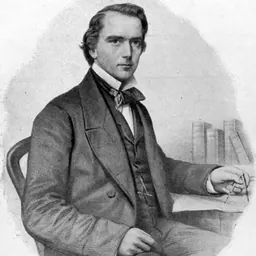

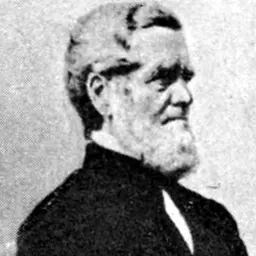
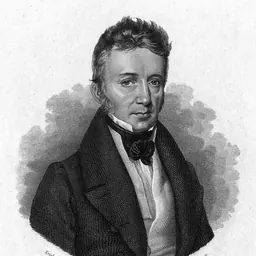
Contemporaries
People whose lives overlapped Matías Ramón Mella's




Frequently asked questions
Who was Matías Ramón Mella?
Dominican Republic politician (1816-1864)
When was Matías Ramón Mella born?
Matías Ramón Mella was born on 25 February 1816 in Santo Domingo.
When did Matías Ramón Mella die?
Matías Ramón Mella died on 4 June 1864 in Santiago de los Caballeros.
What was Matías Ramón Mella's occupation?
Matías Ramón Mella was a politician and partisan.
What nationality was Matías Ramón Mella?
Matías Ramón Mella was Dominican.
Sources & further reading
· Wikipedia: Matías Ramón Mella
Cite this page
APA: Biography.guide. (2026). Matías Ramón Mella. https://biography.guide/matias-ramon-mella/
MLA: "Matías Ramón Mella." Biography.guide, https://biography.guide/matias-ramon-mella/.
Chicago: "Matías Ramón Mella." Biography.guide. https://biography.guide/matias-ramon-mella/.
Data last updated: 2026-09-20 · Spot an error? Report a correction.
Page generated 2026-09-27 05:17 UTC