
Maslamah ibn Aḥmad Majrīṭī
Muslim Arab astronomer, alchemist, mathematician, economist and Scholar in al-Andalus
About Maslamah ibn Aḥmad Majrīṭī
Lived 950 – 1007 (aged 56–57). Maslamah ibn Aḥmad Majrīṭī was an astronomer, mathematician, astrologer, chemist, philosopher and economist.
Abu al-Qasim Maslama ibn Ahmad al-Majriti (: c. 950–1007), known in European Latin-language sources as , was a Muslim Arab astronomer, alchemist, mathematician, economist and scholar in al-Andalus, active during the reign of Al-Hakam II. His full name is Abu 'l-Qāsim Maslama ibn Aḥmad al-Faraḍī al-Ḥāsib al-Maj̲rīṭī al-Qurṭubī al-Andalusī.
Achievements Al-Majrīṭī took part in the translation of Ptolemy's Planisphaerium, improved existing translations of the Almagest, introduced and improved the astronomical tables of Muhammad ibn Musa al-Khwarizmi, aided historians by working out tables to convert Persian dates to Hijri years, and introduced the techniques of surveying and triangulation.
Al-Majrīṭī was one of the earliest alchemists to record the usage and experimentation of mercury(II) oxide.
According to Said al-Andalusi, he was the best mathematician and astronomer of his time in al-Andalus.
Al-Majrīṭī also predicted a futuristic process of scientific interchange and the advent of networks for scientific communication. He built a school of Astronomy and Mathematics and marked the beginning of organized scientific research in al-Andalus. Among his students were Ibn al-Saffar, Abu al-Salt, and at-Turtushi.
The two works are the "Sage's Step/The Rank of the Wise" (Rutbat al-hakim?1009) and the Picatrix. Both were translated into Latin, in a version somewhat bowdlerised by Christian dogma, in 1252 on the orders of King Alfonso X of Castile; the original Arabic text dates probably from the middle of the eleventh century.
The Rutbat includes alchemical formulae and instructions for purification of precious metals, and was also the first to note the principle of conservation of mass, which he did in the course of his pathbreaking experiment on mercury(II) oxide:
The Picatrix is more concerned with advanced esotericism, principally astrology and talismanic magic, although he also goes into prophecy. The author considers this the advanced level of work, occasionally referring to the Rutbat as the foundation text.
Supposed daughter
Several modern sources state that al-Majriti had a daughter, Fátima de Madrid, who was also an astronomer. However, the earliest known mention of her is a short biographical article on her in the Enciclopedia universal ilustrada europeo-americana, published in the 1920s.
Don’t just read it —
keep it.
Full-length biographies made to live with: read them, listen on the way to work, watch them tonight.
- E-book
- Audio
- Video
Instant download · yours to keep · every purchase keeps this site free
Important facts
Related people
Same field, nearest in time



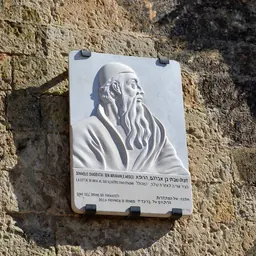
Contemporaries
People whose lives overlapped Maslamah ibn Aḥmad Majrīṭī's



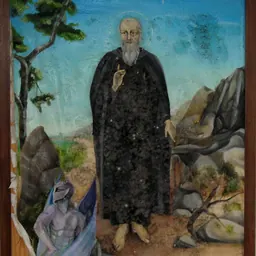
Frequently asked questions
Who was Maslamah ibn Aḥmad Majrīṭī?
Muslim Arab astronomer, alchemist, mathematician, economist and Scholar in al-Andalus
When was Maslamah ibn Aḥmad Majrīṭī born?
Maslamah ibn Aḥmad Majrīṭī was born in 950 in Maŷrīṭ.
When did Maslamah ibn Aḥmad Majrīṭī die?
Maslamah ibn Aḥmad Majrīṭī died in 1007 in Qurṭubah.
What was Maslamah ibn Aḥmad Majrīṭī's occupation?
Maslamah ibn Aḥmad Majrīṭī was an astronomer, mathematician, astrologer, chemist, philosopher and economist.
What nationality was Maslamah ibn Aḥmad Majrīṭī?
Maslamah ibn Aḥmad Majrīṭī's recorded nationality: Caliphate of Córdoba.
Sources & further reading
· Wikipedia: Maslamah ibn Aḥmad Majrīṭī
Cite this page
APA: Biography.guide. (2026). Maslamah ibn Aḥmad Majrīṭī. https://biography.guide/maslamah-ibn-ahmad-majriti/
MLA: "Maslamah ibn Aḥmad Majrīṭī." Biography.guide, https://biography.guide/maslamah-ibn-ahmad-majriti/.
Chicago: "Maslamah ibn Aḥmad Majrīṭī." Biography.guide. https://biography.guide/maslamah-ibn-ahmad-majriti/.
Data last updated: 2026-09-20 · Spot an error? Report a correction.
Page generated 2026-09-27 05:01 UTC