
Maskepetoon
Cree leader, warrior and guide for the Palliser expedition
About Maskepetoon
Lived 1807 – 1869 (aged 61–62). Maskepetoon was a traditional leader or chief.
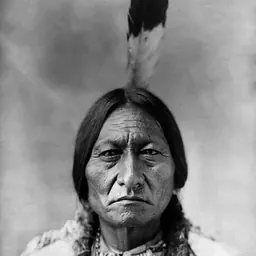
Maskepetoon (c. 1807 – 1869) was a Cree leader and warrior. He was a highly respected peace-maker, due to his negotiation of truces between the Cree and other First Nations. Grant MacEwan described him as the "Gandhi of the Plains."
Early life It has been said by historian Hugh Dempsey that even during Maskepetoon's youth, he was an intelligent child and showed leadership. After leaving the care of his mother, Maskepetoon began to study the necessary skills of hunting and trapping.
In the early to mid 1820s, his tribe struggled with starvation as well as ongoing conflict. This meant that Maskepetoon would have had to take up the role of a soldier, being put in positions of guarding the camp and scouting for any potential threats. Dempsey has also noted that Maskepetoon eventually chose peace over war following a visit to a holy man. He said to have been spoken to by his father on the issue, his father telling him that he did not have to choose war. Despite being spoken to several times, Maskepetoon rejected his talk of peace. However, the talks with his father began to bother him, so he visited a holy man who laid out two paths for Maskepetoon, war or peace. Following these words with the holy man, Maskepetoon had finally found peace to be the favorable choice. Throughout his life, Maskepetoon married an estimated four times.
Hugh Dempsey states, "The people remembered that even as a child, Maskepetoon showed leadership." Similar to this was another game called itachikan. While mostly a peaceful tribe, the Cree that Dempsey discusses, did have instances during which it became necessary to use violence. Along with this, the younger Cree were also not shy of getting involved due to the recognition they would receive from aiding and assisting their tribe.
After developing these skills during his childhood, Maskepetoon continued to learn and grow even more as he grew older. Hugh Dempsey says, "As he grew up, Maskepetoon learned to walk silently in the woods..." and continues by adding, "He could sense a change in the weather, particularly in winter. He had to, for his life depended on it." This shows that even as a teenager, Maskepetoon was already well trained in the skills he would need for later life during potential conflicts that may occur. Dempsey believes that Maskepetoon went on his first proper outing in 1821, when he was just 14 years old. His youngest brother, Samson said of his brothers, "My brother [Maskepetoon] was killed by the Blackfeet, another by the Stonies, and another by the Cree; thus you will see we were not only at war with other tribes, but fought among ourselves." Dempsey also notes that there are few testimonies written regarding Maskepetoon's fighting ability, however, some were kept in oral history. A Missionary who knew Maskepetoon, George McDougall, tells a story of the Cree Chief's combat skills by saying, "Once attacked by three Blackfeet...he rushed upon them with his knife and despatched the whole." It of course remains to be questioned whether or not this is fact or fiction but if true, it proves the immense skill that Maskepetoon held as a warrior.
Later in life he, of course, turned from war to peace-making. This is said by John McDougall to have been influenced by his father's words. His father said while Maskepetoon was revelling in the glory of his accomplishments in battle, The glory you are now seeking will be short-lived. Delighting in war, taking pleasure in the spilling of man's blood, is all wrong. If you want to be a great man, if you want to be remembered long, turn about and work for peace. This is the only thing that will give you true fame. While Dempsey says that his father spoke to him six times regarding the notion of seeking peace rather than bloodshed, it was not until Maskepetoon turned to a holy man for guidance that he truly realised the importance of peace over war. However, Dempsey later goes on to say that this is likely more fiction than reality as it was told by Methodist Missionaries during their travels in eastern Canada. This is due to the depiction that seems to tell of Maskepetoon as "an ideal Christian." but during this time, a majority of the Cree were away from the camps trapping. The Cree outside of the camp, including Maskepetoon, were told of deaths occurring amongst the Rocky Mountain Cree and on the plains but stayed safe by continuing to live in the woods and working. Due to the relocation that the Blackfoot exercised, this gave more freedom to the Rocky Mountain Cree in the way of exploration of the plains. This period of time also saw opportunity arise for Maskepetoon to exemplify himself as a worthy and wise leader, with an aim of helping those with no leader who could potentially guide them, as well as provide protection. In his role as leader of the Cree band, his duties included; areas to hunt, destinations to travel to, as well as informing the Cree how the camp was to be protected.
Makepetoon assisted the Palliser expedition. "In 1857 he was engaged by John Palliser’s expedition to act as guide from the Qu’Appelle lakes (near Fort Qu’Appelle) to the elbow of the South Saskatchewan River (near Elbow); from the expedition’s members he acquired the name Nichiwa, the Cree term for “friend.”"
Death Following a series of altercations between the Cree and Siksika, which had resulted in deaths for each, it was widely reported that the Siksika were seeking peace. Despite this, a Cree historian – David Ahenakew Many Swans was known for being a vicious and unsympathetic leader. This made it very unlikely that Maskepetoon's peace efforts would stand a chance of working. Regardless of Many Swans' feelings towards traders and his lack of mercy, his people still willingly followed him confidently. Maskepetoon, the respected warrior and peace-maker, was 62 at the time of his death.
After the news of Maskepetoon's death, it was strikingly clear how greatly this had impacted his followers, as well as the Methodists he had come into contact with. Upon learning of his death, John McDougall wrote a piece that expressed his sense of loss as well as the nations loss. The death of our old Chief is regarded by both Whites and Indians as a national loss. He was a staunch Protestant, a friend of the white man, and exerted more influence than any other Chief east of the Mountains. In two weeks from this date I had arranged to meet him and his people at camp-meeting. Many of our people from White Fish Lake, Woodville and Victoria, have already started for the appointed place; but he who would have sat as Chief in our Council is gone. I cannot tell you how deeply my own mind is afflicted. The poor Crees are paralysed. May the blessed God overrule this great calamity for His own glory and the good of a suffering people. In addition to this, Thomas Woolsey – a former mentor of Maskepetoon – was given the news of his fate he also expressed a deep sense of loss. I can assure you that the mournful intelligence we have received regarding my old friend, the Cree Chief (Maskepetoon) and his family, has been pursued with feeling of unutterable grief. I had the honor of being most intimately acquainted with the aged chieftain during my lengthened sojourn in the Saskatchewan Valley. These accounts concerning Maskepetoon describe his impact on both the Cree and other groups. The passing of Maskepetoon was viewed as a loss, and the descriptions written about him reflect the respect he received.
Don’t just read it —
keep it.
Full-length biographies made to live with: read them, listen on the way to work, watch them tonight.
- E-book
- Audio
- Video
Instant download · yours to keep · every purchase keeps this site free
Important facts
People in Maskepetoon's life
Named in this biography and alive at the same time


Related people
Same field, nearest in time


Contemporaries
People whose lives overlapped Maskepetoon's






Frequently asked questions
Who was Maskepetoon?
Cree leader, warrior and guide for the Palliser expedition (c. 1807 – 1869)
When was Maskepetoon born?
Maskepetoon was born in 1807.
When did Maskepetoon die?
Maskepetoon died in 1869.
What was Maskepetoon's occupation?
Maskepetoon was a traditional leader or chief.
What nationality was Maskepetoon?
Maskepetoon's recorded nationality: Cree.
Sources & further reading
Cite this page
APA: Biography.guide. (2026). Maskepetoon. https://biography.guide/maskepetoon/
MLA: "Maskepetoon." Biography.guide, https://biography.guide/maskepetoon/.
Chicago: "Maskepetoon." Biography.guide. https://biography.guide/maskepetoon/.
Data last updated: 2026-09-22 · Spot an error? Report a correction.
Page generated 2026-09-27 04:57 UTC