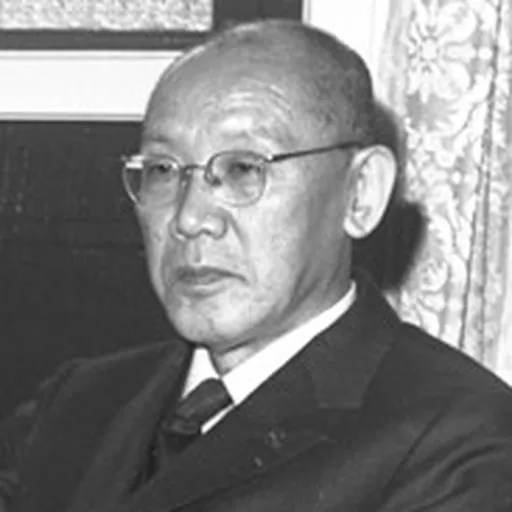
About Masahiro Yasuoka
Lived 1898 – 1983 (aged 85). Masahiro Yasuoka was a Japanese philosopher, known for Heisei and Yangmingism.
was a Japanese scholar of yangmingism who, through his philosophy, reportedly exerted considerable influence on many Japanese politicians, including postwar prime ministers of Japan. He has been considered a backroom power broker or eminence grise.
Early life He was born in Osaka city on February 13, 1898. When he was a child his parents taught him to read the Chinese classics, the Four Books (The Great Learning, Doctrine of the Mean, The Analects of Confucius, and Mencius).
He studied at Tokyo Imperial University and his graduation paper A study of Wang Yangming caught the attention of many intellectuals and politicians of the era. After graduating in 1922, he worked for six months at the Ministry of Education.
He established an institute of Asian studies and insisted on the traditional nationalism of Japan when Taishō democracy was in vogue (1912–1926). While working as an instructor at the Department of Asian Thought, Takushoku University, he wrote books such as Studies on the Japanese Spirit and Studies on Emperors and Government Officials, attracting the attention of some noblemen and military officers. In 1927, he established a private school, Kinkei Gakuen, in the house of Sakai Tadamasa who was a member of the House of Peers (Japan). In 1931, with the help of zaibatsu, Japanese conglomerates, he established a private school in Saitama Prefecture, Nihon Nōshi Gakkō, (or, Japan Farmers' School) to teach Asian thought and his philosophy. In 1932, he founded a right-wing group called Kokuikai. Fumimaro Konoe, Kōki Hirota and other influential figures joined, but the group came to be perceived as an eminence grise, leading to its end after two years.
He was a brilliant student; however, he skipped classes when he was at Tokyo Imperial University in favor of reading books at the library. In the second edition of his study on Wang Yangming in 1960, he wrote of reading many important Western works, but also of returning to Chinese and Japanese works. He said, "I felt that my backbone was strengthened when I read through Records of the Grand Historian and Zizhi Tongjian."
Influence Yasuoka's philosophy influenced many people. Mitsugi Nishida and Ikki Kita who were associated with the February 26 Incident were reputedly influenced by him, although exactly how is not known. Among others influenced by him, some through his books and others personally, were Isoroku Yamamoto, Masaharu Homma, Yukio Mishima, Yashiro Rokuro, Chiang Kai-shek, sumo grand champion Futabayama, and Eiji Yoshikawa. In 1944, he became an adviser to the Ministry of Greater East Asia.
After the war The GHQ ordered the dissolution of his previous groups and schools, and Yasuoka himself was purged on the ground of his involvement in the Ministry of Greater East Asia. In 1949 he organized the Shiyukai (Friends of Teacher); this group has continued to this day (2012) and includes a Hokkaido Shiyukai, Kansai Shiyukyokai and Himeji Shiyukai. After the war, he was asked to write the policy speeches of many prime ministers. He also became a spiritual guide and teacher to many prime ministers, including Shigeru Yoshida (who called Yasuoka old teacher in spite of Yoshida's being 20 years senior), Hayato Ikeda, Eisaku Satō, Takeo Fukuda and Masayoshi Ohira. He was reluctant, however, to speak of this.
Yasuoka is known to have edited the Imperial Surrender Rescript in some points. On August 12, 1945, Hisatsune Sakomizu, the chief Secretary of the Cabinet, visited Yasuoka at his house and asked him to audit the Surrender Rescript. Yasuoka made many changes, but on the next day found one of the three points he insisted on remained unchanged. Yasuoka met Hirohito three times after the war, at garden parties. Hirohito thanked Yasuoka for the trouble at the end of the war, and asked Yasuoka if he was studying as before, to which Yasuoka replied "Yes" with delight. After Yasuoka's death Hirohito once attended a round-table discussion at which one of the attendants noted, "Yasuoka had once said that once the emperor said something, nothing could be told in addition." To this, Hirohito nodded.
Due to his knowledge of the history of China, Yasuoka was asked to name various societies: Kōchikai ("Broad Pond Society") is one of them. Also thanks to his Chinese scholarship, he gave the new era its name, Heisei, although he did not outlive the Shōwa era. Heisei was conceived by Yasuoka in 1979, which was communicated to the government. Tatsuro Yamamoto, professor emeritus of Tokyo University, again told the government, as reported in 1995.
Books In English The Japanese Ethos: A Study of National Character
In Japanese Lectures on the Thoughts in China and Persons, Gen-osha, 1921 A study of Wang Yangming , Gen-osha, 1922. This book surprised many people. A study of Japanese spirit Gen-osha, 1924 Shigaku-Ronko Japan Navy Academy, 1924 Generals of Asian Ethics Gen-osha, 1929 Phylosophy of Asian Politics Gen-osha, 1932 Doshin Zanhitsu Zenkoku Shiyukyokai, 1936 Japanese Spirits Nihon Seinenkan, 1936 Chinese Poems Nihon Hyoronsha, 1936 A Revised Version of Japanese Spirit Gen-osha, 1937 Keisei Sagen Tooe Shoin, 1940 World Travel Daiichi Shobo, 1942 Keisei Sagen Zen Obunsha, 1944 The Philosophy of Lao-tze and Zhuangzi (book) Fukumura Shuppan, 1946 Politicians and Pragmatism Fukumura Shuppan, 1948 To Japanese Parents Fukumura Shuppan, 1952 Shinpen Hyakuchoushuu Fukumura Shuppan, 1952 At critical time, New version of Keisei Sagen Fukumura Shuppan, 1953 Japan's destiny Meitoku Shuppansha 1955 The academic source of Kawai Soryukutsu, Gosonsha, 1936, Hyakuchoushuu, Fukumura Shuppan, 1946 Fukurongo, Myotoku Shuppansha, 1956 Laozi and BodhidharmaMyotoku Shuppansha, 1956 Heroes and Learning Myotoku Shuppansha, 1956 Morning Analects Myotoku Shuppansha, 1962 Youngsters are like that Zenkoku Shiyu Kyokai, 1964 Katsugaku Kansai Shiyukyokai, 1965 Lushi Chunqiu Kansai Shiyukyokai, 1967 Ups and Downs of Japan Zenkoku Shiyukyokai, 1968 Great Dialogue- Persons, Enterprizes and Management Kinki Nippon Tetsudo, 1969 Youngsters becoming Complete Zenkoku Shiyukyokai, 1971 Asking the Way Aichiken Shiyukyokai, 1971 Katsugaku No.2 Kansai Shiyukyokai, 1972 The Present Time and Science Kinki Nihon Tetsudo, 1976 Selected Poems Myotoku Shuppansha, 1955 Present-day Purposes Myotoku Shuppansha, 1956 Secret Stories of Ups and Downs Myotoku Shuppansha, 1958 Asian Thoughts and Phylosophers Myotoku Shuppansha, 1959 An Introduction to I Ching Myotoku Shuppansha, 1960 Yamato - Nature and Persons Nihon Tsuun, 1961 Yuurakushi Myotoku Shuppansha, 1961 Asian Science Reimei Shobo, 1961 Seisuiki Myootku Shuppansha, 1963 Toyoteki Gakufu Zenkoku Shiyukyokai, 1970 Yuraku Hicho Zenkoku Shiyukyokai, 1973 Denshuroku Myotoku Shuppansha, 1973 10 Lectures of Asian Thoughts Zenkoku Shiyukyokai, 1977 Destiny and Spiritual Peace and Enlightenment - A Study of Intouroku Kansai Shiyukyokai, 1978 I Ching and life phylosophy Kansai Shiyukyokai, 1979 Records of Three Kingdoms and Human Science Zenkoku Shiyukyokai, 1979 Katsugaku part 3 Kansai Shiyukyokai, 1982
Published posthumously Opened eyes - Katsugaku PHP Institute, 1985 Creating a destiny President sha, 1985 Nurturing a personality Chichi Publishing Company, 1986 Opening a destiny President sha, 1986 Shoshin Goroku Kansai Shiyukyokai, 1987 Recommendation of Human Science Fukumura Shuppan, 1987 Practice of Analects President sha, 1987 Lectures of phylosophys Chichi Publishing Company, 1988 Polishing human Nisshin Hodo, 1988 Tenchi Ujo Reimei Shobo, 1988 Creating human President sha, 1988 A Study of Premiers in Asia Fukumura Shuppan, 1988 The Heart of Lao-tze and Zhuangzi (book) Fukumura Shuppan, 1988 A New Version of Chinese CharactersFukumura Shuppan, 1989 Reading Shigingo Chichi Publishing Company, 1989 Reading Classics Myotoku Shuppansha, 1989 Active Use of Sexagenary cycle President sha, 1989 Knowing a life span and spiritual peace and enlightenment President sha, 1991 Lectures at Gouken Gougaku Kenshusho, 1991 Human Science of Asia Chichi Publishing Company, 1993 How to live a human life Reimei Shobou, 1993
Footnotes
Don’t just read it —
keep it.
Full-length biographies made to live with: read them, listen on the way to work, watch them tonight.
- E-book
- Audio
- Video
Instant download · yours to keep · every purchase keeps this site free
Important facts
People in Masahiro Yasuoka's life
Named in this biography and alive at the same time



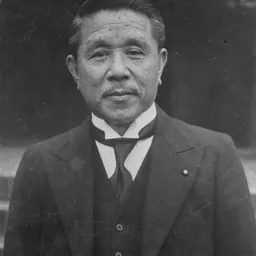
Related people
Same field, nearest in time
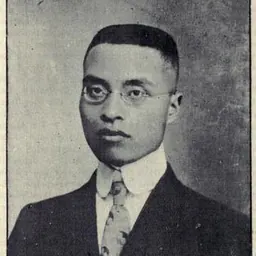

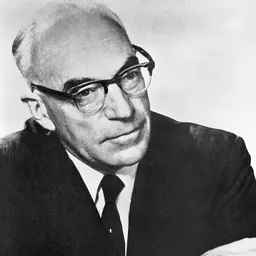

Contemporaries
People whose lives overlapped Masahiro Yasuoka's


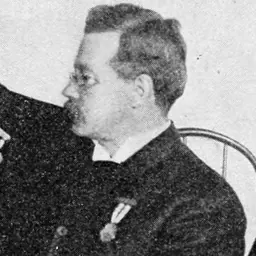

Frequently asked questions
Who was Masahiro Yasuoka?
Japanese scholar and educator
When was Masahiro Yasuoka born?
Masahiro Yasuoka was born on 13 February 1898 in Osaka.
When did Masahiro Yasuoka die?
Masahiro Yasuoka died on 13 December 1983.
What was Masahiro Yasuoka's occupation?
Masahiro Yasuoka was a philosopher.
What was Masahiro Yasuoka known for?
Masahiro Yasuoka was known for Heisei and Yangmingism.
What nationality was Masahiro Yasuoka?
Masahiro Yasuoka was Japanese.
Sources & further reading
Cite this page
APA: Biography.guide. (2026). Masahiro Yasuoka. https://biography.guide/masahiro-yasuoka/
MLA: "Masahiro Yasuoka." Biography.guide, https://biography.guide/masahiro-yasuoka/.
Chicago: "Masahiro Yasuoka." Biography.guide. https://biography.guide/masahiro-yasuoka/.
Data last updated: 2026-09-22 · Spot an error? Report a correction.
Portrait: Wikimedia Commons · author & licence
Page generated 2026-09-27 04:58 UTC