
Mary Two-Axe Earley
Kanien’kehá:ka elder, Indigenous Canadian women's rights activist, human rights activist
About Mary Two-Axe Earley
Lived 1911 – 1996 (aged 84). Mary Two-Axe Earley was a Canadian activist, women's rights activist and indigenous rights activist, known for Indian Act.
Mary Two-Axe Earley (born Mary Two-Axe; October 4, 1911 – August 21, 1996) was a Canadian Mohawk and Oneida women's rights activist from the reserve of Kahnawake in Quebec. After losing her legal Indian status due to marrying a non-status man, Two-Axe Earley advocated for changes to the Indian Act, which had promoted gender discrimination and stripped First Nations women of the right to participate in the political and cultural life of their home reserves.
In 1967, Two-Axe Earley helped establish the Equal Rights for Indian Women organization and led the submission of a brief to the Royal Commission on the Status of Women. In 1974, she co-founded the Québec Native Women's Association, and the following year she received national and international attention at the International Women's Year conference in Mexico when she publicly fought back against her band council's attempts to formally evict her from Kahnawake.
On June 28, 1985, the Canadian Parliament passed Bill C-31 to amend the Indian Act, eliminating the Act's original gender discrimination and creating a new process of reinstatement for affected First Nations women to have their Indian status restored. Two-Axe Earley became the first woman to have her status restored, and thousands of other First Nations women and their descendants were granted the same opportunity to regain their lost legal and cultural identity under Canadian law. The NFB released the film on her fight for equality, Mary Two-Axe Earley: I Am Indian Again, in 2021.
Early life
Mary Two-Axe was born on October 4, 1911, on the Mohawk reserve of Kahnawake (then known as Caughnawaga). Her father, Dominic Onenhariio Two-Axe, was a Mohawk, while her mother, Juliet Smith, was an Oneida nurse and teacher. When Mary Two-Axe was 10 years old, her mother died of Spanish influenza while treating young flu patients in North Dakota, and Two-Axe spent the rest of her childhood with her grandparents at Kahnawake. and they had two children: Edward and Rosemary. Over time, however, she saw the emotional impacts of the discriminatory law on her female friends. In 1966, one friend – a fellow Mohawk – died of a heart attack in Two-Axe Earley's arms. she founded the provincial Equal Rights for Indian Women Association (later Indian Rights for Indian Women), which grew to become a national organization. she attended the International Women's Year Conference in Mexico as a member of the Canadian delegation.
At a first ministers conference in 1982, Two-Axe Earley sought a formal timeslot to speak about her cause but was denied permission. When he heard, Quebec Premier René Lévesque provided his support by offering her his seat instead.
On June 28, 1985, the Canadian Parliament passed Bill C-31 to amend the Indian Act. The Bill removed the legal gender discrimination that had impacted Indigenous women in their choice of husband, and allowed women who had been stripped of their Indian status to regain it through a process of reinstatement.
Aftermath The changed legislation made it possible for 16,000 other First Nations women and 46,000 descendants to regain their lost Indian status.
Some reserves simply continued refusing to allow women to return, despite their restored legal status. In 1993, several First Nations groups brought their opposition to court, arguing that the Federal government did not have the right to influence who was eligible for band membership. In 1981, she was awarded an Honorary Doctorate of Law from York University. Her co-recipients that year were fellow First Nations activists Jeanette Lavell and Sandra Lovelace.
On September 9, 2025, the Société de transport de Montréal and the Mayor of Montreal, Valérie Plante, announced that one of the new stations on the Blue Line extension of the Montreal Metro would bear her name. The name of Mary Two-Axe Earley had first been added in 2016 to Montreal's Toponym'Elles database by linguist Gabriel Martin, who compiled a list of 375 women to include in the city's toponymy, and was later selected by a toponymy committee in 2019 for a future Metro station.
In 2025, Two-Axe Earley was designated a National Historic Person under Canada's Historic Sites and Monuments Act.
Death Two-Axe Earley continued living at Kahnawake for the rest of her life. On August 21, 1996, she died from respiratory failure, aged 84. She was buried in the Catholic cemetery of the Kahnawake reserve – a personal wish made possible by the legal changes she had enabled.
Don’t just read it —
keep it.
Full-length biographies made to live with: read them, listen on the way to work, watch them tonight.
- E-book
- Audio
- Video
Instant download · yours to keep · every purchase keeps this site free
Important facts
People in Mary Two-Axe Earley's life
Named in this biography and alive at the same time
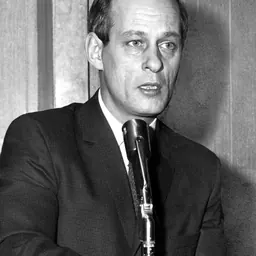

Related people
Same field, nearest in time

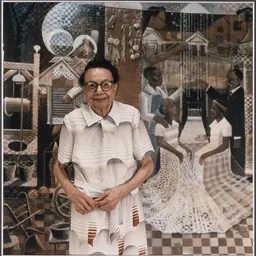


Contemporaries
People whose lives overlapped Mary Two-Axe Earley's






Frequently asked questions
Who was Mary Two-Axe Earley?
Kanien’kehá:ka elder, Indigenous Canadian women's rights activist, human rights activist (1911-1996)
When was Mary Two-Axe Earley born?
Mary Two-Axe Earley was born on 4 October 1911 in Kahnawake.
When did Mary Two-Axe Earley die?
Mary Two-Axe Earley died on 21 August 1996 in Kahnawake.
What was Mary Two-Axe Earley's occupation?
Mary Two-Axe Earley was an activist, women's rights activist and indigenous rights activist.
What was Mary Two-Axe Earley known for?
Mary Two-Axe Earley was known for Indian Act.
What nationality was Mary Two-Axe Earley?
Mary Two-Axe Earley was Canadian.
Sources & further reading
· Wikipedia: Mary Two-Axe Earley
· DBpedia: Mary Two-Axe Earley
Cite this page
APA: Biography.guide. (2026). Mary Two-Axe Earley. https://biography.guide/mary-two-axe-earley/
MLA: "Mary Two-Axe Earley." Biography.guide, https://biography.guide/mary-two-axe-earley/.
Chicago: "Mary Two-Axe Earley." Biography.guide. https://biography.guide/mary-two-axe-earley/.
Data last updated: 2026-09-22 · Spot an error? Report a correction.
Page generated 2026-09-27 05:26 UTC