
About Mary Nichols
Lived 1810 – 1884 (aged 73). Mary Nichols was an American medic, activist, writer, lecturer and vegetarianism.
Mary Sargeant Gove Nichols (; August 10, 1810 – May 30, 1884), also known by her pen name Mary Orme, was an American women's rights and health reform advocate, hydrotherapist, vegetarian socialist, and writer. Her later conversion to Catholicism caused her to abandon the free love movement and a fascination with séances, but she remained a health advocate and social progressive.
Biography
Early life Nichols was born in Goffstown, New Hampshire. Nichols and her first husband, Hiram Gove, moved to Lynn, Massachusetts, where Mary ran a girls' school, and this was where she began her health reform career.
After being abused, both sexually and emotionally, by her husband, Nichols made it her life's work to inform women of their bodies and their opportunities.
Career Nichols studied the writings of Sylvester Graham and became a vegetarian around 1837. a writer who also had an interest in health reform and progressive views on women's rights. Together they planned to open a School of Health, School of Progress and School of Life in a three-story building they leased.
In 1851, Nichols and her husband founded a "water-cure" clinic, the American Hydropathic Institute in New York City. It offered a fee of $50, for people to become qualified "water cure" doctors. The institute's use of hydrotherapy is cited as a historical example of quackery. Nichols and her husband were advocates of bathing in cold water, fasting and occasional wet-sheet packing. Nichols contributed to the Water-Cure Journal, and published with her husband Nichols’ Journal of Health, Water-Cure, and Human Progress (1853–1858).
Nichols and her husband advocated free love and the belief that marriage was evil. She was the leading female advocate and the woman most looked up to in the free love movement, and her autobiography (Mary Lyndon: Or, Revelations of a Life: An Autobiography, 1860) became the first argument against marriage written from a woman's point of view. These beliefs alienated Nichols and her husband from others in the hydropathic community. In 1855, they moved to Cincinnati and opened the Memnonia Institute, a "school of life" at Yellow Springs, Ohio, in 1856. It had few members, lasting only one year.
Nichols also wrote novels and stories under the pseudonym Mary Orme. She and her husband were also socialists, being followers of Charles Fourier.
Conversion to Catholicism Nichols and her husband both attended séances, at one point daily, believing themselves to be in communication with spirits. On one occasion in 1856, a séance resulted in Nichols and her husband experiencing visions of long-deceased Jesuit priests, including the Spanish saints Ignatius of Loyola and Francis Xavier. As a result, Nichols and her husband ceased their involvement in séances and the free love movement and converted to Catholicism, receiving instruction from the Jesuits of St. Xavier College and baptism at St. Francis Xavier Church in Cincinnati in 1857. Their conversion was seen as controversial among the Church hierarchy and the wider public. he eventually agreed to a divorce in 1847 or 1848. Nichols' surviving daughter, Elma Gove, became a painter.
In July 1848, Nichols remarried to T. L. Nichols.
Selected publications
Experience in Water-Cure (1849) Marriage: Its History, Character, and Results [with Thomas Low Nicholas, 1854] Mary Lyndon: Or, Revelations of a Life: An Autobiography (1860) A Woman's Work in Water Cure and Sanitary Education (1874)
Don’t just read it —
keep it.
Full-length biographies made to live with: read them, listen on the way to work, watch them tonight.
- E-book
- Audio
- Video
Instant download · yours to keep · every purchase keeps this site free
Important facts
more
Mary Orme, Mary Sargeant NealFamily & relationships
People in Mary Nichols's life
Named in this biography and alive at the same time
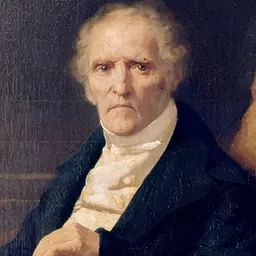
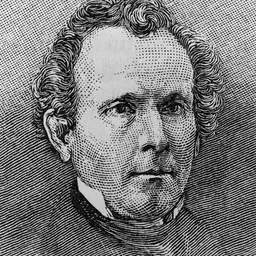
Related people
Same field, nearest in time
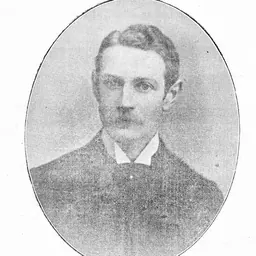


Contemporaries
People whose lives overlapped Mary Nichols's





Frequently asked questions
Who was Mary Nichols?
American campaigner for medical innovation, marriage reform, and women's rights (1810-1884)
When was Mary Nichols born?
Mary Nichols was born on 10 August 1810 in Goffstown.
When did Mary Nichols die?
Mary Nichols died on 30 May 1884 in London.
What was Mary Nichols's occupation?
Mary Nichols was a medic, activist, writer, lecturer and vegetarianism.
What nationality was Mary Nichols?
Mary Nichols was American.
Sources & further reading
Cite this page
APA: Biography.guide. (2026). Mary Nichols. https://biography.guide/mary-nichols-medic/
MLA: "Mary Nichols." Biography.guide, https://biography.guide/mary-nichols-medic/.
Chicago: "Mary Nichols." Biography.guide. https://biography.guide/mary-nichols-medic/.
Data last updated: 2026-09-26 · Spot an error? Report a correction.
Page generated 2026-09-27 05:14 UTC