
About Mary Jobe Akeley
Lived 1878 – 1966 (aged 88). Mary Jobe Akeley was an American explorer, writer, photographer, environmentalist, mountaineer and naturalist.
Mary Jobe Akeley (January 29, 1878 – January 19, 1966) was an American explorer, author, mountaineer, and photographer. She undertook expeditions in the Canadian Rockies and in the Belgian Congo. She worked at the American Museum of Natural History creating exhibits featuring taxidermy animals in realistic natural settings. Akeley worked on behalf of conservation efforts, including advocating for the creation of game preserves.
Biography
Early life Akeley was born Mary Lenore Jobe on January 29, 1878, in Tappan, Harrison County, Ohio; the town was submerged below Tappan Lake in 1938. (Although several printed sources, including her death certificate, give Akeley's birth year as 1888, the 1880 census and records at the Bryn Mawr College Archives confirm the 1878 date. ) Both of her parents were of English descent; her father was a veteran of the American Civil War. She earned a master's degree in History and English from Columbia University in 1909.
During her time at Bryn Mawr, Jobe had her first opportunity to join a scientific expedition, joining a botanical expedition to the Selkirk Mountains in British Columbia. It was the first of many expeditions to the mountains of British Columbia. Joining Jobe and Philips on the expedition were Margaret Springate and Philips's assistant (and brother-in-law), Bert Wilkins. Jobe reported on the expedition in both scholarly and popular publications after her return home. In 1915, she took a commission from the Canadian government to explore and map the Fraser River in British Columbia and the Mount Sir Alexander glaciers.
Camp Mystic In 1914, Jobe purchased near Mystic, Connecticut, and in 1916 she founded there the Mystic Camp for girls aged eight to eighteen. Campers typically numbered "over 80 or more" at any one time, and were mainly from wealthy and influential families. Campers included Hawai'ian princesses Abigail Kapiolani Kawānanakoa and Lydia Liliuokalani Kawānanakoa, as well as the daughters of artist Howard Chandler Christy, radio sportscaster Grantland Rice, cookbook author Ida Bailey Allen, and publisher Bernarr Macfadden. A 1916 advertisement in Scribner's Magazine promised campers experience with backcountry camping, boating, swimming, horseback riding, dancing, music, drama, and field athletics. She remained the camp's director throughout its existence. He was deeply involved with a project to collect specimens for a new Africa exhibit at the American Museum of Natural History, and she wrote later that he expected Mary to abandon her own work and devote her time to his African project. Although she described this as "startling," she largely complied. She completed the expedition, mapping parts of the Belgian Congo as well as Kenya and Tanzania, and collecting plant specimens, taking hundreds of photographs.
Akeley was the author of seven books, some of them posthumously co-authored with her husband by making use of materials he had written before his death. The first book, Carl Akeley's Africa (1929), was Mary's account of the expedition that cost Carl Akeley his life, documenting the animals and native peoples encountered on the expedition to the Congo. The following year, she published Adventures in the African Jungle (1930), with Carl listed as a co-author, in keeping a plan they had made while both were still alive. Chapters are signed either by Mary or Carl; Mary assembled Carl's chapters from his field notes and from stories related by his friends. Her chapters include her accounts of experiences from their journey to the Congo, both before and after his death on the expedition. Lions, Gorillas, and their Neighbors (1932) also lists Carl as a co-author and also covers their expedition, using the story to convey a message of conservation, noting the decline in large animal populations over the previous 30 years. A review in the Times of London of the book tells a thrilling tale of the hunt, but emphasizes that their purpose was scientific, not thrill-seeking. The reviewer writes, "they show how greater and more lasting pleasure [can] be had by restrained and intelligent hunt than by indiscriminate killing... the big game of Africa is presented as something of real value to the human race."
In The Wilderness Lives Again, Akeley recounts her late husband's work as a taxidermist, including his expeditions in Africa. A review in The New York Times calls particular attention to the story of development of the gorilla exhibit for the American Museum of Natural History, describing both the taxidermy process and the moving effect of the life-like exhibit.
Congo Eden (1950) was published following Akeley's final trip to Africa in 1947, and relates the story of that journey. Historian Jeannette Eileen Jones identifies the "Eden" of the book's title as part of Carl and Mary Akeley's campaign to challenge the public perception of Africa as "hellish" or "dark."
Death Akeley's health declined toward the end of her life, with Akeley suffering from hip problems and arthritis. She was in and out of hospitals and nursing homes from 1959 to 1966.
Akeley left an extensive record of her work. Her papers are held in the Mary L. Jobe Akeley Collection at the Mystic River Historical Society, and at Connecticut College. Adventures in the African Jungle (1930) Lions, Gorillas, and their Neighbors (1932) The Swan Song of Old Africa (1932) The Restless Jungle (1936) The Wilderness Lives Again (1940) Rumble of a Distant Drum: a True Story of the African Hinterland (1946) Congo Eden (1950)
Awards and honors
Knight of the Order of the Crown by King Albert of Belgium for work in the Congo Mount Jobe in the Canadian Rockies named in her honor by the Canadian government Inducted into the Ohio Women's Hall of Fame in 1979 Inducted into the Connecticut Women's Hall of Fame, 1994
Memberships
Royal Geographic Society, Fellow, 1915 American Alpine Club Alpine Club of Canada French Alpine Club Society of Women Explorers
Don’t just read it —
keep it.
Full-length biographies made to live with: read them, listen on the way to work, watch them tonight.
- E-book
- Audio
- Video
Instant download · yours to keep · every purchase keeps this site free
Important facts
Family & relationships
People in Mary Jobe Akeley's life
Named in this biography and alive at the same time
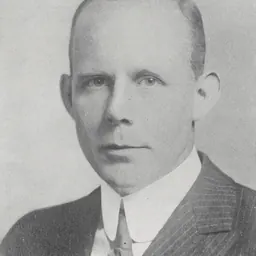
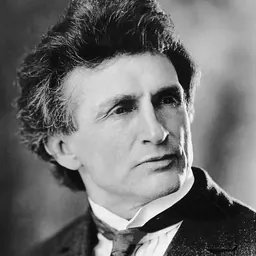
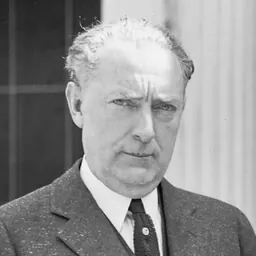
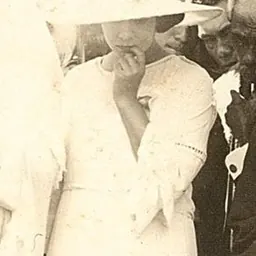
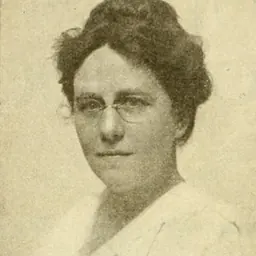

Related people
Same field, nearest in time


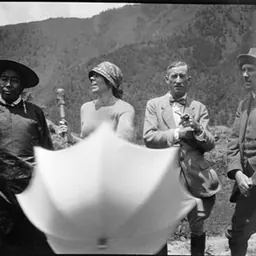


Contemporaries
People whose lives overlapped Mary Jobe Akeley's

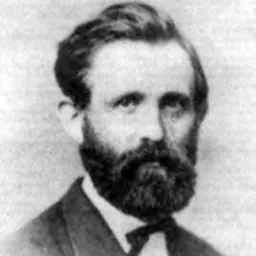


Frequently asked questions
Who was Mary Jobe Akeley?
American explorer and naturalist (1878–1966)
When was Mary Jobe Akeley born?
Mary Jobe Akeley was born on 29 January 1878 in Ohio, Tappan.
When did Mary Jobe Akeley die?
Mary Jobe Akeley died on 19 July 1966 in Stonington.
What was Mary Jobe Akeley's occupation?
Mary Jobe Akeley was an explorer, writer, photographer, environmentalist, mountaineer and naturalist.
What nationality was Mary Jobe Akeley?
Mary Jobe Akeley was American.
Sources & further reading
Cite this page
APA: Biography.guide. (2026). Mary Jobe Akeley. https://biography.guide/mary-jobe-akeley/
MLA: "Mary Jobe Akeley." Biography.guide, https://biography.guide/mary-jobe-akeley/.
Chicago: "Mary Jobe Akeley." Biography.guide. https://biography.guide/mary-jobe-akeley/.
Data last updated: 2026-09-20 · Spot an error? Report a correction.
Page generated 2026-09-27 05:32 UTC