
About Mary Hume Rothery
Lived 1824 – 1885 (aged 60). Mary Hume Rothery was a British writer and activist.
Mary Hume Rothery or Mary Catherine Hume-Rothery (14 December 1824 – 14 February 1885) was a British writer and campaigner for medical reform. She campaigned against the Contagious Diseases Act and founded the National Anti Compulsory Vaccination League.
Early life Rothery was born in London in 1824. Her parents were Mary Burnley, daughter of Hardin Burnley (1741–1823), and Joseph Hume the radical politician: she was their youngest daughter and Allan Octavian Hume was her brother. She travelled on the continent of Europe with her father, and wrote poetry and biblical exposition.
Married life Mary married the Rev. William Rothery on 9 July 1864, in two London ceremonies: firstly by John Frederick Blake at St Mary, Bryanston Square; and then at the New Church, Argyll Square, by Jonathan Bayley. William's father John Rothery lived at Great Clifton. He had studied at St Bees Theological College, from 1846, and was ordained deacon in 1848, and a priest of the Church of England in 1849, by James Prince Lee, Bishop of Manchester. William and Mary had a shared interest in poetry.
After a number of curacies and incumbencies, William Rothery's last preferment in the Church of England was as curate of Hexham, 1862–4. At the end of 1864 he became pastor of the Middleton Society of the New Church, at Middleton near Manchester.
In 1865 William published a pamphlet Wheat and Tares. She was a leading figure in the Ladies National Association for the Repeal of the Contagious Diseases Acts (LNA) set up in 1869. She was one of the prominent leaders in the LNA's campaign against the Contagious Diseases Acts of 1864, with Josephine Butler, Harriet Martineau and Sarah Richardson. She was a prominent invited speaker for the LNA.
Mary published in 1870 A Letter Addressed to the Right Hon. W. E. Gladstone. This open letter questioned the line drawn between conventional marriage and prostitution. In December William Hume-Rothery wrote, from 3 Richmond Terrace, Middleton, an extended letter in support of the Anti-Vaccination Society to the editor of the Cosmopolitan, referring to coverage in The Globe and an earlier letter of his from 1869.
In 1871 Mary Hume-Rothery published Women and Doctors; Or, Medical Despotism in England. Its message was to resist government control that discriminated against medicine that was not from trained doctors. Her mentor, Tulk, was an enthusiast for phrenology and mesmerism. She attributed her own conversion to anti-vaccination to seeing her own child vaccinated, around 1867.
In 1874 Mary and William founded the National Anti Compulsory Vaccination League (NACVL). William led the anti-vaccination organisation and Mary was the secretary. For some years Cheltenham became the centre of the national movement opposing vaccination, and Mary edited its magazine. In Keighley, Poor Law Guardians were imprisoned, following resistance tactics against vaccination advocated by William. A short notice in the British Medical Journal in 1876 mentioned "the efficacy and value of vaccination" and the need for evidence to counterbalance "such irrational and dangerous agitators as Stevens and Hume Rothery."
Last years In 1876 William gave up his religious orders. The Hume-Rotherys had an advocate in the Member of Parliament Peter Alfred Taylor. In 1881 the British Medical Journal complained that a letter on vaccination by Taylor to William Benjamin Carpenter was offensive, and a pamphlet of his "might have been written by Messrs. Hume-Rothery, Baker, Wheeler or Gibbs." The NACVL was eclipsed by the London Society for the Abolition of Compulsory Vaccination in the 1880s.
Other works by Mary reflect her Swedenborgian views. Before her marriage there were:
The Bridesmaid, Count Stephen, and Other Poems (1853) The Wedding Guests, Or, The Happiness of Life (1857), novel. Normiton: A Dramatic Poem in Two Parts (1857) The Golden Rule: And Other Stories for Children (1860) Twelve Obscure Texts of Scripture Illustrated according to the Spiritual Sense (1861). The phrase from Emanuel Swedenborg, "love itself and wisdom itself", occurs on p. 57 of this work, as it does on p. 1 of William's Wheat and Tares. Sappho: a Poem (1862) It has been considered a feminist analysis of prostitution.
Bessie Rayner Parkes, daughter of Joseph Parkes the Radical Member of Parliament, tried in 1853 to have Marian Evans (George Eliot) notice Mary's poems for the Westminster Review. But she declined, saying "she had not courage to proceed" from a first sample.
The Divine Unity, Trinity, and At-one-ment: A Monograph (1878) was a joint work by William and Mary Hume-Rothery. It was again considered by a reviewer to represent the approach of Tulk. A second edition of Mary's work on Tulk was published in 1890 as A Brief Sketch of the Life, Character, and Religious Opinions of Charles Augustus Tulk by Charles Pooley (1817–1890), a surgeon living in Cheltenham, who added "a short introductory chapter or historical outline of the author's life". He had in 1889 published The Science of Correspondency and Other Spiritual Doctrines of Holy Scripture by Tulk, as editor.
Family William and Mary's son Joseph Hume Hume-Rothery was born in 1866, and was the father of William Hume-Rothery.
Don’t just read it —
keep it.
Full-length biographies made to live with: read them, listen on the way to work, watch them tonight.
- E-book
- Audio
- Video
Instant download · yours to keep · every purchase keeps this site free
Important facts
People in Mary Hume Rothery's life
Named in this biography and alive at the same time



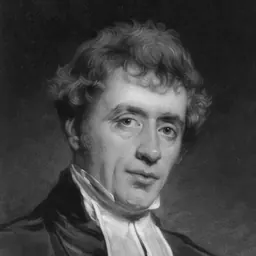
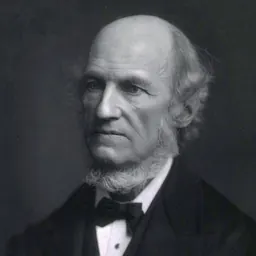



Related people
Same field, nearest in time
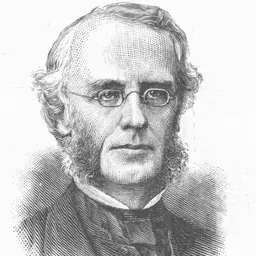

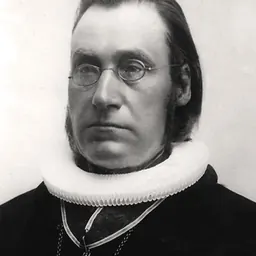
Contemporaries
People whose lives overlapped Mary Hume Rothery's




Frequently asked questions
Who was Mary Hume Rothery?
British writer and campaigner for medical reform
When was Mary Hume Rothery born?
Mary Hume Rothery was born on 14 December 1824 in London.
When did Mary Hume Rothery die?
Mary Hume Rothery died on 14 February 1885 in Cheltenham.
What was Mary Hume Rothery's occupation?
Mary Hume Rothery was a writer and activist.
What nationality was Mary Hume Rothery?
Mary Hume Rothery was British.
Sources & further reading
· Wikipedia: Mary Hume Rothery
Cite this page
APA: Biography.guide. (2026). Mary Hume Rothery. https://biography.guide/mary-hume-rothery/
MLA: "Mary Hume Rothery." Biography.guide, https://biography.guide/mary-hume-rothery/.
Chicago: "Mary Hume Rothery." Biography.guide. https://biography.guide/mary-hume-rothery/.
Data last updated: 2026-09-20 · Spot an error? Report a correction.
Page generated 2026-09-27 05:07 UTC