
Mary Fildes
British reformer
About Mary Fildes
Lived 1789 – 1876 (aged 86–87).
Mary Fildes (c. 1789–1876) was a British social reformer and political activist. She was president of the Manchester Female Reform Society in 1819, and played a leading role at the mass rally at Manchester in that year which ended in the Peterloo massacre. She was also the grandmother of the artist Luke Fildes through her son James.
Family Born Mary Pritchard in Cork, Ireland, between 1789 and 1792, she came from a family of Manchester grocers. Her known family connections were Welsh rather than Irish, so her parents may simply have been visiting Ireland. She married William Fildes, a reed maker, on 18 March 1808 in Stockport, England. They had eight children: James (b. 1808; father of Luke Fildes), Samuel (b. 1809), George (b. 1810), Robert (b. 1815), Sarah (b. 1816), Thomas Paine (b. 1818), Henry Hunt (b. 1819), and John Cartwright (b. 1821).
Mary named her younger children after some of the notable political figures of the day: John Cartwright, Thomas Paine and Henry Hunt.
Peterloo Massacre In 1819 on 16 August, a vast orderly concourse of working men and women assembled on St. Peter's field, then on the outskirts Manchester. A group of Manchester female reformers processed in with the carriage of the speaker, Henry Hunt, Mary riding at the front of the carriage waving a flag. She mounted the platform and stood at the front with her flag, along with other female activists. Elizabeth Gaunt and Sarah Hargreaves sat in Hunt's carriage nearby. The London radical journalist Richard Carlile, who was present at the rally, described her as a heroic figure and gave her a prominent place in his print of the event, "To Henry Hunt Esquire."
The magistrates, fearing unrest, decided to arrest Hunt on the platform and sent for military support. The Manchester and Salford Yeomanry arrived first, and once Hunt had been arrested they attacked the platform and those around it, seizing and destroying flags and banners and causing panic. The regular troops arriving soon afterwards charged to clear the field, causing further casualties; the eventual toll was eighteen killed and nearly seven hundred seriously injured. (The two-year-old William Fildes who was killed on the outskirts of the meeting was no relation; Fildes was a common local name). Other female reformers including Hargreaves and Gaunt, apparently mistaken for Fildes, were beaten up, arrested, and detained for many days without charge. Fildes herself was knocked to the ground by the truncheon of a special constable who seized her flag, and narrowly escaped a swipe with a sabre. She escaped and lay low for a fortnight, possibly sheltered by her loyalist family in the northern quarter. Much later she got to know the Manchester novelist Isabella Banks, who included a further detail in her 1876 novel The Manchester Man: "Mrs. Fildes hanging suspended by a nail on the platform of the carriage had caught her white dress. She was slashed across her exposed body by an officer of the cavalry".
Fildes gave her own story in a petition to the House of Commons in May 1821.
She remained a reformer, speaking at a meeting in Heywood, Lancashire, in 1833 to launch a branch of the Female Political Union, and giving lectures on 'War' at Chorlton near Manchester in 1843, both advertised in the radical press.
Later years, and Luke Fildes
Mary Fildes' later years were relatively comfortable. By 1846, she was a widow living in Glasgow, possibly with relatives of her husband. In 1849, she inherited from her mother four houses in Chester, a county town on the Welsh borders, where she moved. There is no evidence that she became a pub landlady, but her house was at one time listed as a spirit vault, most likely indicating that the cellar was rented out to a distiller.
In 1854, she travelled to Liverpool, home of her indigent son James and his Irish wife, and brought her eleven-year-old grandson Luke Fildes to live with her in Chester. She was able to pay for him to attend classes at Warrington School of Art, setting him up to be one of Victorian England's most famous painters. She died of bronchitis in Manchester on 3 April 1876.
Don’t just read it —
keep it.
Full-length biographies made to live with: read them, listen on the way to work, watch them tonight.
- E-book
- Audio
- Video
Instant download · yours to keep · every purchase keeps this site free
Important facts
People in Mary Fildes's life
Named in this biography and alive at the same time
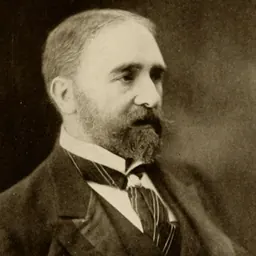


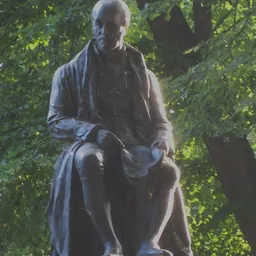

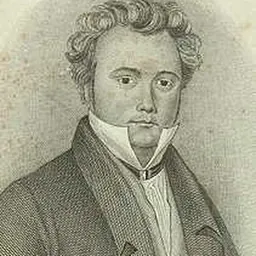
Contemporaries
People whose lives overlapped Mary Fildes's


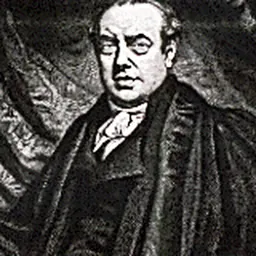


Frequently asked questions
Who was Mary Fildes?
British reformer
When was Mary Fildes born?
Mary Fildes was born in 1789 in Cork.
When did Mary Fildes die?
Mary Fildes died in 1876 in United Kingdom of Great Britain and Ireland.
What was Mary Fildes known for?
Mary Fildes was known for Manchester Female Reform Society.
Sources & further reading
Cite this page
APA: Biography.guide. (2026). Mary Fildes. https://biography.guide/mary-fildes/
MLA: "Mary Fildes." Biography.guide, https://biography.guide/mary-fildes/.
Chicago: "Mary Fildes." Biography.guide. https://biography.guide/mary-fildes/.
Data last updated: 2026-09-22 · Spot an error? Report a correction.
Page generated 2026-09-27 05:28 UTC