
About Richard Carlile
Lived 1790 – 1843 (aged 52). Richard Carlile was a publisher and publishing.
Richard Carlile (8 December 1790 – 10 February 1843) was an English radical publisher and writer. He was an important agitator for the establishment of universal suffrage and freedom of the press in the United Kingdom.
Early life and career Richard Carlile was born on 8 December 1790. He was the second of three children of William Carlile and Elizabeth (née Brookings). His father, from a Devon family, worked variously as a shoemaker, exciseman, teacher, and soldier. William Carlile published a book on mathematics but later became a drunkard, deserted the family a few years after his son's birth, and died shortly thereafter. His mother ran a shop in Lawrence Lane, Ashburton, and was a devout Anglican, providing her children with a strict Christian upbringing.
Carlile received an elementary education at two local free schools until age 12 but did not attend the prestigious local grammar school. After leaving school, he worked at Edward Lee's chemist shop in Exeter but soon returned to his mother's shop. In 1803, through his father's family connections, he became a tinplate worker. For the next 15 years, he worked as an itinerant tinworker, making domestic items. The trade's decline forced him to move frequently in southern England, living in constant anxiety about future employment. As a way of making a living he sold radical publications, such as Cobbett's Political Register and Thomas Wooler's The Black Dwarf, on the streets of London, often walking "thirty miles for a profit of eighteen pence".
In April 1817 he formed a publishing business with the printer William Sherwin and rented a shop in Fleet Street. They produced a radical journal, Sherwin's Weekly Political Register, which Sherwin edited and Carlile published. He also published pamphlets, including unauthorised copies of William Hone's parody of parts of the Book of Common Prayer, for which Hone had already been arrested. For this, Carlile was imprisoned awaiting trial for seditious libel and blasphemy. He remained there for four months until he was released, following Hone's acquittal. He also began to reprint the political essays of Thomas Paine, including Common Sense and The Rights of Man. In order to reach as wide an audience as possible, these first appeared in the Weekly Political Register, then as two-penny pamphlets, and finally as bound volumes.
Upon his release, Carlile threw himself into publicising radical causes. He published the trades union newspaper, Gorgon, edited by John Wade, Francis Place and John Gast, and assisted Henry Hunt's unsuccessful campaign to be elected to Parliament. He continued his project to republish all of Paine's works. This enhanced his reputation in working-class circles,
Peterloo and The Republican
Carlile was one of the scheduled main speakers at the reform meeting on 16 August 1819 at St. Peter's Fields in Manchester. Just as Henry Hunt was about to speak, the crowd was attacked by the yeomanry in what became known as the Peterloo massacre. Carlile escaped and was hidden by radical friends before he caught the mail coach to London and published his eyewitness account, giving the first full report of what had happened, in Sherwin's Weekly Political Register of 18 August 1819. His placards proclaimed "Horrid Massacres at Manchester".
The government responded by closing Sherwin's Political Register, confiscating the stock of newspapers and pamphlets. Carlile changed the name to The Republican and in its issue of 27 August 1819 demanded that "The massacre... should be the daily theme of the Press until the murderers are brought to justice.... Every man in Manchester who avows his opinions on the necessity of reform, should never go unarmed – retaliation has become a duty, and revenge an act of justice."
Carlile was prosecuted for blasphemy, blasphemous libel and sedition for publishing material that might encourage people to hate the government in his newspaper, and for publishing Tom Paine's Common Sense, The Rights of Man and the Age of Reason (which criticised the Church of England).
In October 1819, he was found guilty of blasphemy and seditious libel and sentenced to three years in Dorchester Gaol with a fine of £1,500. When he refused to pay the fine, his premises in Fleet Street were raided and his stock was confiscated. While he was in jail he continued to write articles for The Republican which was now published by Carlile's wife, Jane, and thanks to the publicity it now outsold pro-government newspapers such as The Times.
To curb newspapers the government had raised the ½d tax on newspapers, first imposed in 1712, to 3½d in 1797, then 4d in 1815. From December 1819 it set a minimum price of 7d, with further restrictions. At a time when workers earned less than 10 shillings (120d.) a week this made it hard for them to afford radical newspapers, and publishers tried various strategies to evade the tax. Groups would pool their resources in reading societies and subscription societies to purchase a book or journal in common, and frequently read it aloud to one another as was the case with James Wilson.
By 1821, Carlile was a declared atheist (having previously been a Deist) and published his Address to Men of Science, in favour of materialism and education. In the same year Jane Carlile was in turn sentenced to two years imprisonment for seditious libel, and her place as publisher was taken by Richard Carlile's sister, Mary. Within six months she was imprisoned for the same offence. The process was repeated with eight of his shop workers, including Susannah Wright, and over 150 men and women were sent to prison for selling The Republican.
Carlile's sentence ended in 1823 but he was immediately arrested and returned to prison for not paying his £1,500 fine, so the process continued until he was eventually released on 25 November 1825. In the next edition of The Republican he expressed the hope that his long confinement would result in the freedom to publish radical political ideas. An example of the support he received from around the country is the £1.5.1 sent to him in Dorchester jail by forty working men in the West Yorkshire village of Hunslet, accompanied by a noble letter on behalf of those "few Friends to Truth and Justice".
He then published further journals, The Lion which campaigned against child labour and The Promptor. He argued that "equality between the sexes" should be the objective of all reformers, and in 1826 published Every Woman's Book advocating birth control and the sexual emancipation of women. Cobbett denounced this book as "so filthy, so disgusting, so beastly, as to shock even the lewdest men and women".
Carlile was an advocate of the Christ myth theory. He did not believe that Jesus existed. He debated Unitarian minister John Relly Beard in The Republican, 1826.
The Devil's Chaplain
He joined up with the radical and sceptical clergyman Robert Taylor and set out on an "infidel home missionary tour" which reached Cambridge on Thursday 21 May 1829 and caused a considerable upset to the University of Cambridge where a young Charles Darwin was a second-year student.
At their meeting in Bolton, Lancashire, Carlile met Eliza Sharples, who was to become his long term mistress. With her, he had two further children.
Jailed again In 1831, he was jailed, under the charge of seditious libel, given two and a half years for writing an article in support of agricultural labourers campaigning against wage cuts and advising the strikers to regard themselves as being at war with the government.
He left prison deeply in debt, and government fines had taken from him the finances needed to publish newspapers.
After living for some years in extreme poverty in Enfield, Carlile returned to Fleet Street in 1842, dying there the following year. He donated his body for medical research. Large numbers of people attended his funeral in Kensal Green Cemetery on Sunday 26 February 1843, where his sons protested at the Christian burial rite being administered in the common grave he was being buried in – citing that their father had "passed his life in opposition to all priestcraft".
Writings The Deist; or, Moral Philosopher: Being an Impartial Inquiry After Moral and Theological Truths (1819) A Letter to the Society for the Suppression of Vice: On Their Malignant Efforts to Prevent a Free Enquiry After Truth and Reason (1819) An Address to Men of Science: Calling Upon Them to Stand Forward and Vindicate the Truth from the Foul Grasp and Persecution of Superstition (1821) Life of Thomas Paine: Written Purposely to Bind With His Writings (1822) The Character of the Jew Books: Being a Defence of the Natural Innocence of Man, against Kings and Priests, or Tyrants and Impostors (1822) Every Woman's Book or What is Love? (1826)
Don’t just read it —
keep it.
Full-length biographies made to live with: read them, listen on the way to work, watch them tonight.
- E-book
- Audio
- Video
Instant download · yours to keep · every purchase keeps this site free
Important facts
People in Richard Carlile's life
Named in this biography and alive at the same time


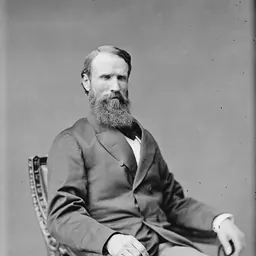

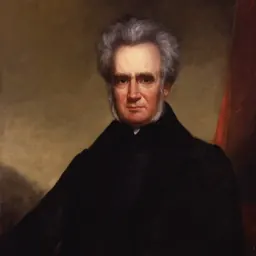
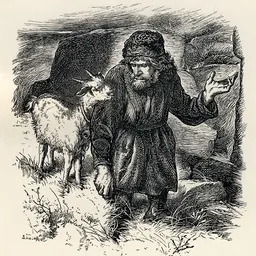


Related people
Same field, nearest in time




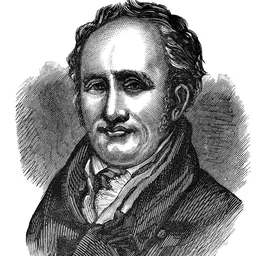
Contemporaries
People whose lives overlapped Richard Carlile's


Frequently asked questions
Who was Richard Carlile?
British publisher and social reformer
When was Richard Carlile born?
Richard Carlile was born on 9 December 1790 in Ashburton.
When did Richard Carlile die?
Richard Carlile died on 10 February 1843 in London.
What was Richard Carlile's occupation?
Richard Carlile was a publisher and publishing.
Sources & further reading
Cite this page
APA: Biography.guide. (2026). Richard Carlile. https://biography.guide/richard-carlile/
MLA: "Richard Carlile." Biography.guide, https://biography.guide/richard-carlile/.
Chicago: "Richard Carlile." Biography.guide. https://biography.guide/richard-carlile/.
Data last updated: 2026-09-25 · Spot an error? Report a correction.
Page generated 2026-09-27 05:10 UTC