
About Mary Coombs
Lived 1929 – 2022 (aged 93). Mary Coombs was a British programmer.
Mary Clare Coombs ( Blood, 4 February 1929 – 28 February 2022) was a British computer programmer and schoolteacher. Employed in 1952 as the first female programmer to work on the LEO computers, she is recognised as the first female commercial programmer. The National Museum of Computing documents her contribution.
Early life and education Mary Clare Blood was born in Muswell Hill, London as the eldest daughter of Ruth (née Petri) and William Blood. She attended Putney High School and St Paul's Girls' School and earned a BA Honours degree in French, with History, from Queen Mary University of London. Her parents had met whilst working at the London Hospital, her mother in the appeals team, her father undertaking his medical training. Her father believed in women's education and her sister worked in microbiology and bacteriology. Unlike her sister, and unlike others in computing, she did not have a background in mathematics or science. After graduating, she moved to Surrey when her father became a medical officer for the catering company, J. Lyons and Co. having had to give up his GP practice due to ill health as a result of an injury sustained during World War I. Coombs' mathematical skills soon allowed her to transfer from the Ice Cream Sales department to the Statistical Office, where she heard that the division working on LEO computers had been looking to hire additional programmers.
Once Coombs began officially working with LEO in 1952, she was taught how to program by John Grover, one of the first LEO programmers. Initially, she was the only woman on the team and worked alongside Leo Fantl, John Grover, and Derek Hemy, using LEO to automatically calculate payroll for employees at J. Lyons and Co. The team later did payroll work for the Ford Motor Company using LEO. Coombs also worked on programs for early LEO customers such as the Met Office, the British Army and the Inland Revenue. Coombs is recognised as the first woman to work on a commercial computer. She was also in charge of rewriting programs from LEO II to work with LEO III, since LEO III used a different programming language.
After J. Lyons and Co. Coombs was transferred to English Electric Leo Computers in 1963, a company jointly created by the merger of J. Lyons and Co. and English Electric. In 1968, she was transferred to International Computers Limited (ICL) when they bought out English Electric Leo Computers. In 1964, because of family commitments, she moved from working full-time to part-time. She continued to work in the computing field, mainly editing manuals. She briefly taught a computer programming course at Princess Marina Centre at Seer Green for disabled residents. John Coombs predeceased her in 2012.
Coombs died from heart failure and COVID-19 at Stoke Mandeville Hospital in Aylesbury, Buckinghamshire, on 28 February 2022, at the age of 93. She was survived by her three children, three grandchildren, and her sister, Ruth.
Don’t just read it —
keep it.
Full-length biographies made to live with: read them, listen on the way to work, watch them tonight.
- E-book
- Audio
- Video
Instant download · yours to keep · every purchase keeps this site free
Important facts
People in Mary Coombs's life
Named in this biography and alive at the same time




Related people
Same field, nearest in time

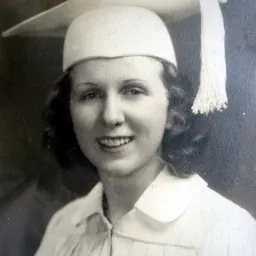



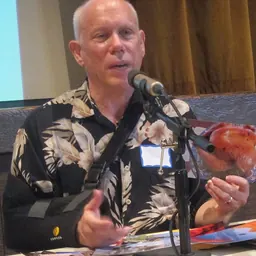
Contemporaries
People whose lives overlapped Mary Coombs's



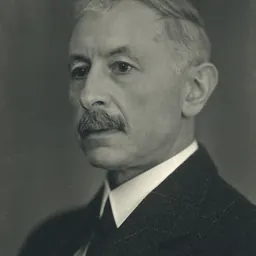

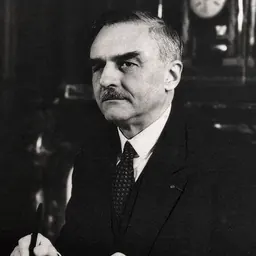
Frequently asked questions
Who was Mary Coombs?
British computer programmer, first female commercial programmer
When was Mary Coombs born?
Mary Coombs was born on 4 February 1929 in Muswell Hill.
When did Mary Coombs die?
Mary Coombs died on 28 February 2022.
What was Mary Coombs's occupation?
Mary Coombs was a programmer.
What nationality was Mary Coombs?
Mary Coombs was British.
Sources & further reading
Cite this page
APA: Biography.guide. (2026). Mary Coombs. https://biography.guide/mary-coombs/
MLA: "Mary Coombs." Biography.guide, https://biography.guide/mary-coombs/.
Chicago: "Mary Coombs." Biography.guide. https://biography.guide/mary-coombs/.
Data last updated: 2026-09-20 · Spot an error? Report a correction.
Page generated 2026-09-27 05:11 UTC