
About Mary Collier
Lived 1688 – 1762 (aged 74). Mary Collier was a poet and writer.
Mary Collier (1688–1762) was an English poet, perhaps best known for The Woman's Labour, a poem described by one commentator as a "plebeian female georgic that is also a protofeminist polemic."
Life Little is known of Collier's early life other than what she wrote in the "remarks on the author's life drawn by herself" which prefaced her Poems on Several Occasions (1762). She was from Midhurst or Lodsworth, West Sussex, born to poor parents, and educated at home. She worked as a washer-woman, brewer, and at other various jobs. In the 1720s she moved to Hampshire in search of employment. Collier initially wrote poems for her own amusement with no intent to publish; she would recite the poems to entertain her listeners, and thus brought attention to her talents. Apparently a family that employed her encouraged her to publish. She had no known dependants and supported herself through her work, so she was able to adopt what one commentator called a "feisty tone."
Poetry As she recounts in the preface to her 1762 collection, she was outraged when she read Stephen Duck's The Thresher's Labour (1730) and in response to his apparent disdain for labouring-class women, wrote the 246-line "powerful modern georgic" The Three Sentences is a paraphrase of the tale of the Darius contest told in 1 Esdras. Landry (1990) asserts that Collier "tends to couple moral reformism with a certain amiable accommodationism, or compliance with the will of fathers." Keegan claims this poem "suggests yet denies feminist and democratizing class politics. . . . and indeed the poem as a whole ends with a pious expression of the poet's submission to divine will."
Collier is an important figure in the self-taught, labouring-class tradition in eighteenth-century poetry, a tradition which also includes Duck, as well as Ann Yearsley, Mary Leapor, and others. Collier, Duck, and other working-class poets from rural Great Britain were responding in part to the economic upheavals in the countryside brought about by the enclosures of agricultural land and the consequent unemployment. Duck's depiction of female labourers as lazy and feckless characters particularly infuriated Collier during a period when women field labourers often lost out to men in tight rural employment markets. Published by subscription. The Poems of Mary Collier (1765)
Don’t just read it —
keep it.
Full-length biographies made to live with: read them, listen on the way to work, watch them tonight.
- E-book
- Audio
- Video
Instant download · yours to keep · every purchase keeps this site free
Important facts
People in Mary Collier's life
Named in this biography and alive at the same time
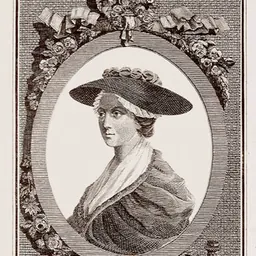
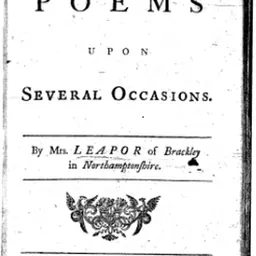

Related people
Same field, nearest in time



Contemporaries
People whose lives overlapped Mary Collier's




Frequently asked questions
Who was Mary Collier?
English poet
When was Mary Collier born?
Mary Collier was born on 9 October 1688 in West Sussex.
When did Mary Collier die?
Mary Collier died on 20 October 1762.
What was Mary Collier's occupation?
Mary Collier was a poet and writer.
Sources & further reading
Cite this page
APA: Biography.guide. (2026). Mary Collier. https://biography.guide/mary-collier/
MLA: "Mary Collier." Biography.guide, https://biography.guide/mary-collier/.
Chicago: "Mary Collier." Biography.guide. https://biography.guide/mary-collier/.
Data last updated: 2026-09-20 · Spot an error? Report a correction.
Page generated 2026-09-27 05:28 UTC