
About Mary Adela Blagg
Lived 1858 – 1944 (aged 85). Mary Adela Blagg was a British astronomer and cartographer.
Mary Adela Blagg FRAS (17 May 1858 – 14 April 1944) was an English astronomer. Largely self-taught in mathematics, she came to astronomy in middle age and became known for her work on selenography and variable stars. In 1916 she was among the first women to be elected a fellow of the Royal Astronomical Society.
Blagg's principal contribution was to the standardisation of lunar nomenclature, which at the time varied considerably between the major maps of the Moon. Appointed in 1907 to a committee of the International Association of Academies, she collated the inconsistent names earlier selenographers had given to lunar features, publishing her Collated List of Lunar Formations in 1913. After joining the Lunar Commission of the newly founded International Astronomical Union in 1920, she worked with the amateur astronomer Karl Müller to produce Named Lunar Formations (1935), a two-volume set that became the standard reference on the subject.
She also carried out extensive analysis of variable star observations in collaboration with H. H. Turner, co-authoring ten papers in the Monthly Notices of the Royal Astronomical Society for which Turner credited her with the majority of the work. The lunar crater Blagg was named in her honour after her death. Early life and education
Blagg was born in Cheadle, Staffordshire on 17 May 1858. She was the eldest of nine children born to Frances Caroline (born Foottit) and John Charles Blagg. Her father was a solicitor. She trained herself in mathematics by reading her brother's textbooks. In 1875, she was sent to a finishing school in Kensington, where she studied algebra and German. She later worked as a Sunday school teacher and was the branch secretary of the Girls' Friendly Society.
Scientific career By middle age, Blagg became interested in astronomy after attending a university extension course taught by Joseph Hardcastle, John Herschel's grandson. Her tutor suggested working in the area of selenography, particularly on the problem of developing a uniform system of lunar nomenclature. (Several major lunar maps of the period had discrepancies in terms of naming the various features.)
In 1907, Blagg was appointed by the newly formed International Association of Academies to build a collated list of all of the lunar features. She worked with Samuel Saunder on the task, and the result was published in 1913. Her work produced a long list of discrepancies that the association would need to resolve. She also performed considerable work on the subject of variable stars, in collaboration with H. H. Turner. These were published in a series of ten articles in the Monthly Notices, in which Turner acknowledged that a large majority of the work had been performed by Blagg. On 28 March 1906, Blagg was elected to the British Astronomical Association at the proposal of Hardcastle.
After the publication of several research papers for the Royal Astronomical Society, she was elected as a fellow in January 1916, after being nominated by Professor Turner. She was one of five women to be elected simultaneously, the first women to become Fellows of that society.
She worked out a Fourier analysis of Bode's Law in 1913, which was detailed in Michael Martin Nieto's book "The Titius-Bode Law of Planetary Distances." Her investigation corrected a major flaw in the original law and gave it a firmer physical footing. However, her paper was forgotten until 1953, when it was found that her predictions had been validated by discoveries of new planetary satellites unknown at the time of publication.
In 1920, she joined the Lunar Commission of the newly formed International Astronomical Union. (The crater Müller on the Moon was subsequently named after him.) Together, they produced a two-volume set in 1935, titled Named Lunar Formations, that became the standard reference on the subject.
Personal life
During her life, Blagg performed volunteer work, including caring for Belgian refugee children during World War I.
Honours The crater Blagg on the Moon is named after her. In March 2023, minor planet 2000 EO177 was also named 50753 Maryblagg in her honour.
Don’t just read it —
keep it.
Full-length biographies made to live with: read them, listen on the way to work, watch them tonight.
- E-book
- Audio
- Video
Instant download · yours to keep · every purchase keeps this site free
Important facts
People in Mary Adela Blagg's life
Named in this biography and alive at the same time

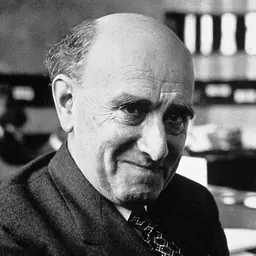



Related people
Same field, nearest in time
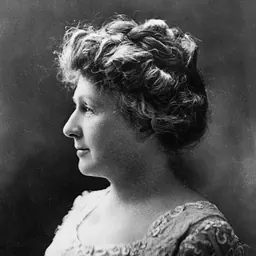

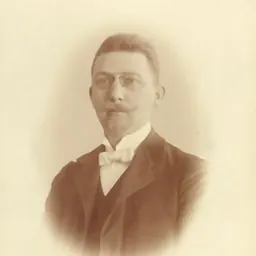

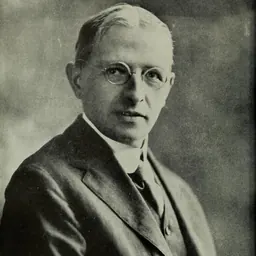
Contemporaries
People whose lives overlapped Mary Adela Blagg's

Frequently asked questions
Who was Mary Adela Blagg?
British astronomer (1858–1944)
When was Mary Adela Blagg born?
Mary Adela Blagg was born on 17 May 1858 in Staffordshire, Cheadle.
When did Mary Adela Blagg die?
Mary Adela Blagg died on 14 April 1944 in Staffordshire, Cheadle.
What was Mary Adela Blagg's occupation?
Mary Adela Blagg was an astronomer and cartographer.
What nationality was Mary Adela Blagg?
Mary Adela Blagg was British.
Sources & further reading
Cite this page
APA: Biography.guide. (2026). Mary Adela Blagg. https://biography.guide/mary-adela-blagg/
MLA: "Mary Adela Blagg." Biography.guide, https://biography.guide/mary-adela-blagg/.
Chicago: "Mary Adela Blagg." Biography.guide. https://biography.guide/mary-adela-blagg/.
Data last updated: 2026-09-25 · Spot an error? Report a correction.
Page generated 2026-09-27 05:13 UTC